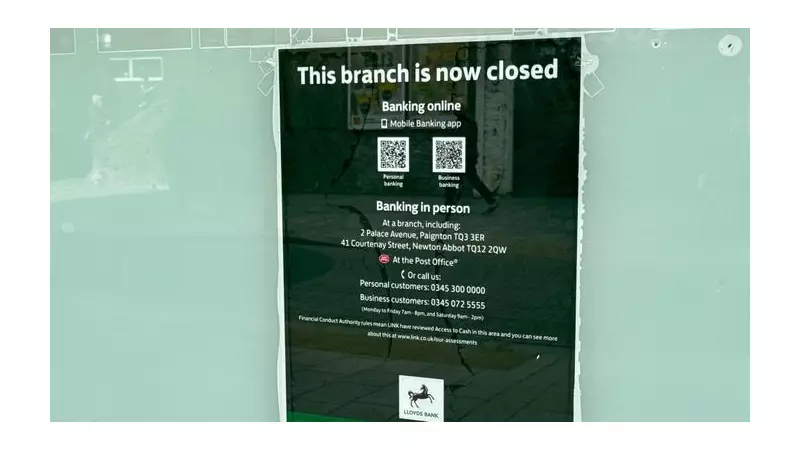
The familiar sight of shuttered bank branches continues to spread across British high streets as new figures reveal the staggering scale of closures affecting communities nationwide.
The Scale of the Banking Exodus
Since February 2022, a total of 2,209 bank branches have either closed or announced plans to shut their doors across the United Kingdom. This translates to approximately 11 closure announcements every single week, or nearly 50 branches disappearing each month.
The relentless pace continues with 24 additional banks scheduled to close this November alone, including 16 Lloyds branches. Looking further ahead, 536 banks will have vanished by the end of 2025, with dozens more already slated for closure in 2026.
Which Banks Are Closing Most Branches?
Lloyds leads the unfortunate tally with 460 confirmed closures, followed closely by Barclays with 413. NatWest and Halifax complete the list of major players with 350 and 347 closures respectively.
The impact has been felt in every corner of the country, though some regions have suffered more than others. Scotland has lost 231 branches, Wales 133, and Northern Ireland 57. England bears the heaviest burden overall with 1,788 closures or planned shutdowns.
Regional Impact Across Britain
Within England, the South East emerges as the worst-affected region with 308 closures. London follows with 285 branches lost, while the East of England has seen 229 disappear.
At a local authority level, Cornwall has experienced more closures than any other council area with 47 banks shutting down. Leeds comes next with 34 closures, while North Yorkshire has witnessed 32 branches close their doors.
Protecting Access to Cash Services
This wave of closures has occurred despite a voluntary agreement between major banking groups to review the impact of each shutdown. The LINK initiative, involving Barclays, HSBC, NatWest, Lloyds and Halifax, was specifically designed to protect vulnerable customers and small businesses.
When a closure leaves a town or village without any local banking options, the scheme mandates the introduction of new banking hubs or free ATMs. These measures aim to maintain access to cash and essential banking services for those who continue to rely on them.
Chris Ashton, LINK's chief commercial officer, emphasised their commitment: "It's our job to protect access to cash, whether that's through a free-to-use ATM, Post Office or increasingly through banking hubs. The good news is that when any bank branch closes or if a community asks us to assess their local area, we can recommend new services."
He added: "That could include enhancing existing services like the Post Office or new hubs. To date, we've recommended 246. We know that not everyone can or is able to use digital, and that's why we will continue to protect access to cash for as long as people need it."
Replacement Services Being Rolled Out
Gareth Oakley, CEO of Cash Access UK, provided an update on replacement services: "While more people may be more comfortable or choose to pay or bank for things digitally, we understand how important access to cash and basic banking services are for millions of people who prefer to use cash or are not yet comfortable to use digital."
"The good news is that we're delivering new services to make sure access to cash is maintained. This includes almost 200 banking hubs and over 100 deposit services, which crucially allow businesses to readily access or deposit cash. Two hubs are opening on average every week and we hope to have the 200th open before Christmas."
A recent House of Commons Library report suggested that changing consumer habits have contributed significantly to the decline of physical branches. The research also found that the industry itself is driving change, as ATM operators earn less each time a machine is used.
The transformation of Britain's banking landscape continues at pace, leaving communities grappling with the loss of familiar high street fixtures while adapting to new ways of accessing financial services.