Exploring the Stark Contrast Between Two West Midlands High Streets
This week, I embarked on a revealing journey between two high streets in the West Midlands that lie geographically close yet exist in dramatically different economic worlds. The experience highlighted profound contrasts that have lingered in my mind long after the visits concluded.
The Vibrant Intensity of Alum Rock
My first stop was Alum Rock, an area frequently characterized in official statistics by significant deprivation. The moment you arrive, you sense the palpable intensity of this environment—not in a negative manner, but through the relentless pace and pressure surrounding you.
Traffic flows constantly through the narrow streets, with buses inching forward and cars maneuvering through tight spaces. The pavements remain bustling with activity, voices overlapping in conversation, while shopfronts compete vigorously for attention from passersby.
It's an environment that feels loud, crowded, and perpetually in motion—a high street that never seems to pause for breath.
The Serene Atmosphere of Knowle
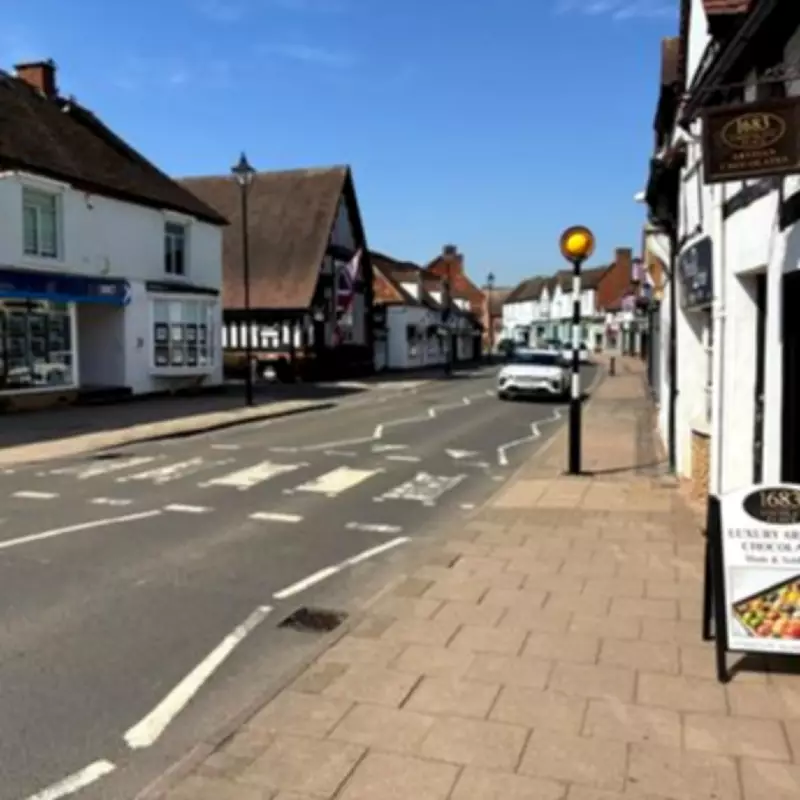
Shortly afterward, I traveled to Knowle in Solihull, where data indicates the average resident earns more than double that of someone in Alum Rock. Although geographically proximate, the atmosphere feels like an entirely different universe.
The traffic moves at a calmer pace, the streets appear more open and spacious, and there exists actual physical room to breathe comfortably. You notice this transformation immediately—the pavements aren't overcrowded, the roads avoid constant congestion, and everything progresses at a more gentle, measured rhythm.
Independent Businesses Thriving in Both Communities
Remarkably, both high streets share a crucial similarity: they're filled with independent businesses that form the backbone of their local economies. Knowle's shopping area features boutique stores, cozy cafés, quality restaurants, and specialized shops that depend on community patronage and contribute to the area's distinctive character.
Becca Webb from Cristal Boutique explained, "Being on the high street is very positive for us. There is a real sense of community. We have quite a large group of independents which a lot of high streets don't have any more."
John Ellis of Slow Century Records added, "There are lots of independent stores and supportive businesses." Meanwhile, Joe Vaughan, founder and head chocolatier at 1638 Chocolate Place, emphasized, "The people in Knowle are very supportive of local businesses. Generally, people are lovely around here—people need to shop local. Stop buying things on Amazon, get into your local shops."
Beyond Simple Contrasts: Shared Success Stories
It would be simplistic to frame this as merely a story of one struggling community versus one thriving community. Such interpretation misses the deeper, more nuanced reality. Both high streets demonstrate positive aspects of contemporary urban life despite their contrasting circumstances.
For years, narratives have proclaimed the death of traditional high streets, claiming online shopping has hollowed out town centers and made independent businesses unsustainable. Yet these two locations, despite their different contexts, prove this isn't the complete picture.
In Alum Rock, the high street functions effectively because it serves its community directly, responding to immediate needs and reflecting local identity. Its constant activity stems from genuine reliance by residents.
In Knowle, the high street succeeds by offering a particular experience—ample space, quality offerings, and a slower pace of life that people consciously choose to engage with regularly.
The Crucial Difference: Environmental Conditions
What truly separates these two high streets isn't the presence of independent businesses or the absence of chain stores. The fundamental distinction lies in their surrounding environments: available space, infrastructure quality, investment levels, and ultimately, economic inequality.
One community enjoys room to breathe comfortably while the other operates under constant pressure. This disparity matters significantly when considering potential.
Imagine if Alum Rock possessed similar physical space, calmer traffic conditions, and equivalent investment levels—what might it become? The essential foundations already exist: businesses operate successfully, community engagement remains strong, and clear demand persists.
We shouldn't view places like Knowle and Alum Rock as simple opposites. Instead, we should recognize them as evidence of what works effectively in different contexts and question why conditions for success aren't distributed more equitably across communities.