Australian surfer survives near-fatal box jellyfish sting in Fiji waters
A holiday surfing trip in Fiji turned into a terrifying brush with death for an Australian tourist after he was stung by what experts describe as the world's most venomous animal. Guy Rowles, visiting from Australia, encountered a box jellyfish during his first day surfing at the renowned Cloudbreak reef in the Mamanuca Islands.
Sudden and severe sting in the water
While surfing alongside his father, Rowles suddenly felt an intense, burning sensation on his arm. "All of a sudden something hectic stung my arm. It felt like someone had just poured burning hot oil on me," he recounted to surfing outlet Stab. Upon rolling off his board, he discovered jellyfish tentacles clinging to his skin, which he frantically tore away.
The pain escalated rapidly, with Rowles describing it as akin to burning oil. He was quickly pulled onto a boat, where he experienced convulsions, a tight chest, and uncontrollable shaking. In a moment of sheer panic, he asked his father, "F** Dad, am I going to die?" as vomiting and leg numbness set in.
Race against time for medical treatment
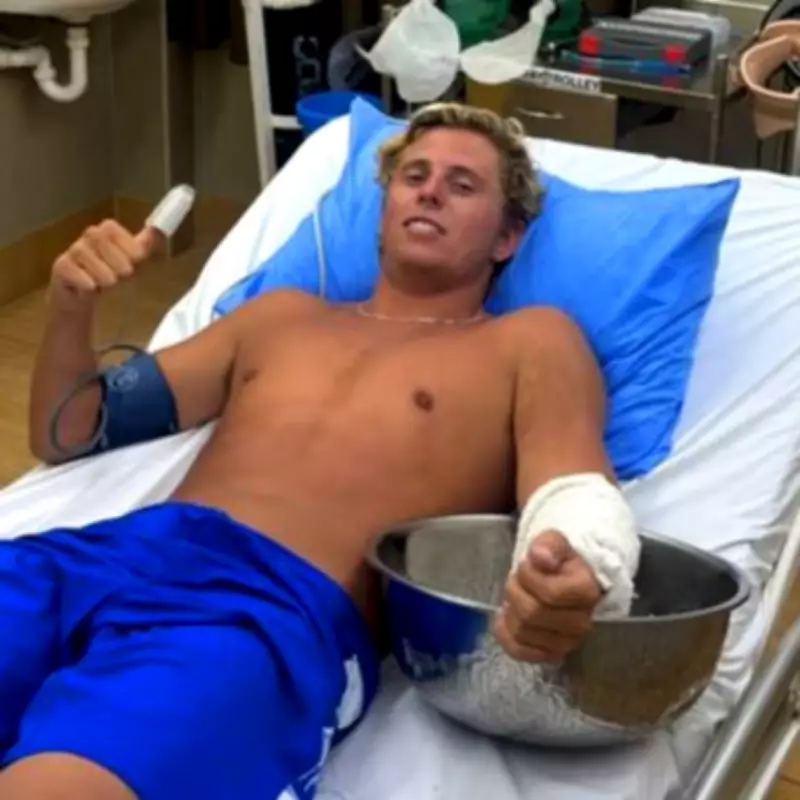
Rowles was rushed to a hospital in Nadi, over an hour away from the incident site. Before the high-speed journey, he managed to call his mother to express his love, fearing the worst. At the hospital, doctors delivered alarming news: "It's too late for antivenom, you've missed your window. It's been in you for an hour."
Medical staff doused the affected area with vinegar to neutralize any remaining stinging cells and carefully removed tentacle fragments. Despite the life-threatening nature of the injury, Rowles survived the ordeal. Doctors later informed him that his youth and health likely saved his life, noting that a sting to the face or neck could have been fatal.
Understanding the box jellyfish threat
Box jellyfish, named for their distinctive body shape, possess tentacles that can extend up to ten feet long. These tentacles are covered in nematocysts—tiny, venom-filled harpoons that can deliver a sting capable of killing a person in under five minutes. These dangerous marine creatures are primarily found in the Indo-Pacific region and northern Australia.
Prior to this incident, Fiji's government had issued a health alert regarding jellyfish presence in local waters. The Ministry of Health and Medical Services, in collaboration with the Ministry of Fisheries, urged the public to take precautionary measures at sea, following reports of patients with breathing problems after ocean exposure.
Recovery and reflection after the ordeal
Remarkably, Rowles has already returned to surfing, stating that the harrowing experience "definitely puts things into perspective." His survival serves as a stark reminder of the dangers posed by marine wildlife and the importance of heeding safety advisories in coastal regions.