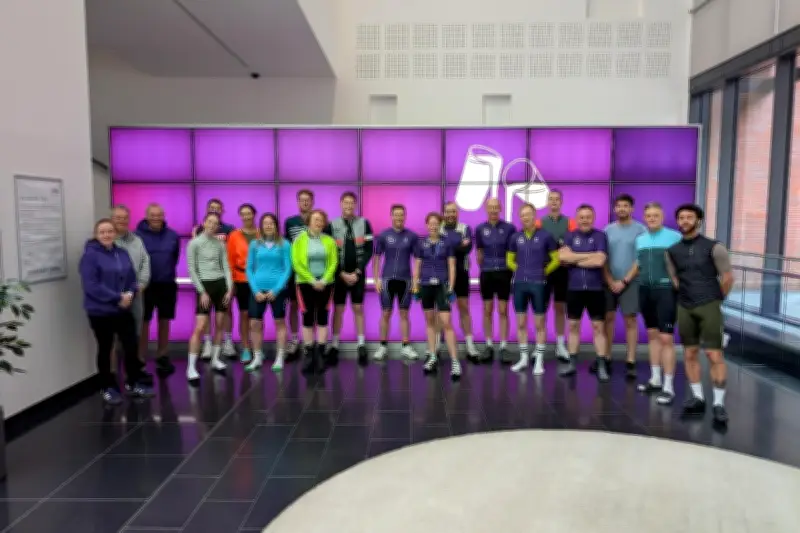
A team of 12 employees from Mondelez International has completed a 1,400-mile cycle relay across the UK, raising funds and awareness for Alzheimer's UK. The ride, which took place over seven days, saw participants covering the distance from Land's End to John o' Groats, with each cyclist averaging 116 miles per day.
Route and Logistics
The cyclists followed the classic End-to-End route, passing through major cities including Bristol, Manchester, and Edinburgh. Support vehicles accompanied the team, providing mechanical assistance and nutrition stops. The challenge was organised by Mondelez's corporate social responsibility team, aiming to highlight the impact of dementia on communities.
Fundraising Impact
So far, the initiative has raised over £10,000, with donations still coming in via a JustGiving page. According to a Mondelez spokesperson, the company will match employee contributions pound for pound, doubling the final sum for the charity. Alzheimer's UK stated that the funds will support research into early diagnosis and care for the 900,000 people living with dementia in the UK.
Employee Motivation
One of the cyclists, Sarah Thompson, a supply chain manager from Birmingham, said: "My grandfather had Alzheimer's, so this cause is very close to my heart. The pain from cycling is nothing compared to what families go through." Another rider, Mark Davies, added: "The camaraderie was incredible. We pushed each other through rain and hills, knowing every mile counted."
Company Commitment
Mondelez International, which owns brands like Cadbury and Oreo, has a history of community engagement. The 1,400-mile cycle is part of its 'Well-being for All' programme, which encourages staff to participate in health-related charity events. The company plans to make the cycle an annual tradition, with next year's route potentially circling around Wales and Northern Ireland.
Charity Response
Alzheimer's UK expressed gratitude through a statement: "We are thrilled by Mondelez's extraordinary effort. Every pound raised brings us closer to a cure." The charity also highlighted that corporate partnerships are vital for sustaining research projects.