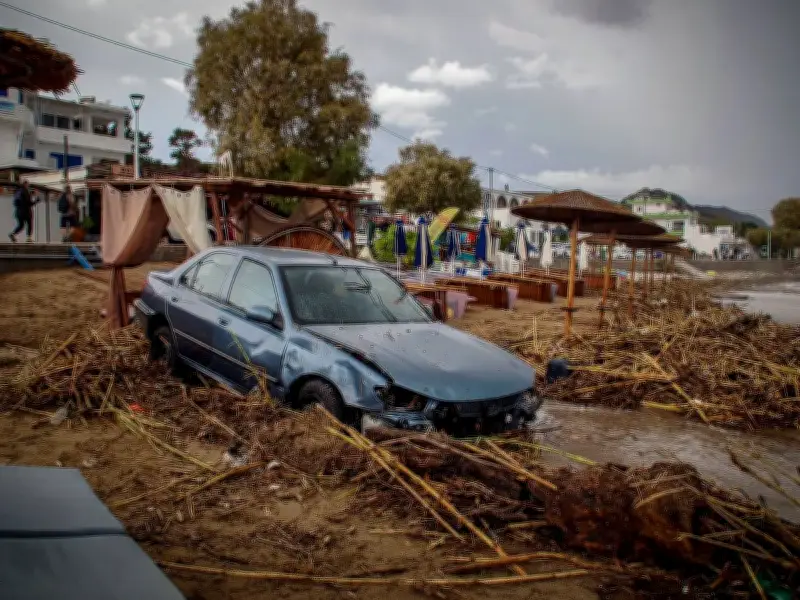
A 62-year-old man has died after flash floods swept his car onto a beach on the Greek holiday island of Rhodes, prompting authorities to declare a state of emergency. The victim, a hotel worker, was found in Stegna, a village about 20 miles south of Rhodes Town, according to the coastguard. His car was among four vehicles carried away by the torrential waters during a violent rainstorm.
Emergency response and rescue operations
Firefighters and coastguard crews searched the coastline as emergency services handled more than 100 calls for assistance. In total, 13 operations were conducted to evacuate people to safety, alongside 64 water-pumping operations, the coastguard confirmed. The severe weather has turned roads into rivers across the island, stranding vehicles in Ialysos, Rhodes town, Afandou, Faliraki and Archangelos.
In Archangelos, the largest traditional working village in Rhodes, an unoccupied car was carried off by the floodwaters. Traffic on the Archangelos-Malona road was suspended after a large boulder crashed onto the carriageway, damaging the road surface and safety barriers. A lightning strike also sparked a house fire in Ialysos, the island's second-largest town.
State of emergency and school closures
Rhodes has been placed under a state of emergency, and all schools across the island will close on October 15 to allow for inspections and damage assessments. Authorities are urging residents in Rhodes and other Aegean islands to limit travel to essential journeys only. Several bus routes in Rhodes town have been suspended, including services to and from the port of Akandia and along the Rhodes-Faliraki route.
The island is renowned for its medieval old town and beaches, making it a popular destination for tourists. The flooding has caused significant disruption to daily life and infrastructure, with roads left impassable and vehicles abandoned.
Wider regional impact
Greece has been battered by heavy rainfall and fierce winds, triggering code red weather warnings across seven regions, including Crete, Attica, Evia and the South Aegean. Climate Crisis and Civil Protection Minister Evangelos Tournas confirmed that the storms had caused extensive damage, with fallen trees, flooding and power cuts reported in numerous areas.
Meanwhile, Cyprus has been placed under an orange weather alert, with meteorologists warning of severe thunderstorms, powerful gusts and the possibility of hail. The severe weather is expected to continue affecting the region, with authorities advising caution and preparedness across affected areas.