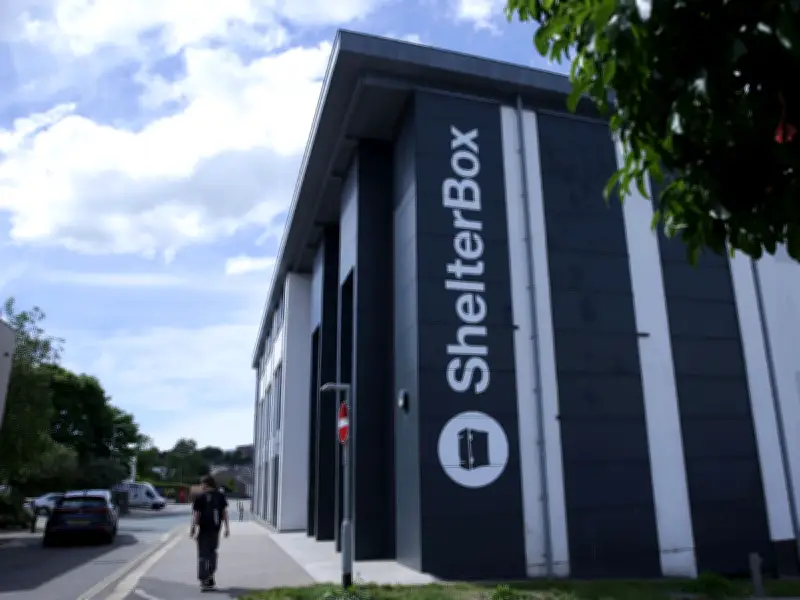
ShelterBox, the international disaster relief charity based in Cornwall, is moving to a new headquarters in Truro after more than a decade at its current location. The charity will relocate its team from Falcon House in the city centre to Osprey House on Malpas Road by the end of the month.
Reason for the Move
Chief Executive Sanj Srikanthan said the decision to move comes as the way the charity works "continues to evolve." He stated: "Cornwall has always been our home, and that's not changing. We've adapted to staff preferences for greater work-life balance with more staff working remotely than ever before. As our 10-year lease comes to an end, we're taking the opportunity to move to an office that better suits how we work today and means we can focus more of our resources on supporting families after disaster."
History and Impact
ShelterBox was founded in Helston in 2000 by the Rotary Club of Helston-Lizard. The initial idea was to help eight to 10 families a year, with each box containing a family-sized tent, sleeping bags, water purifying tablets, a trenching tool, and pots and pans. In 2003, it became a registered charity and since then has supported more than three million people across some 100 countries with shelter and essential items such as water filters, solar lights, blankets, and mosquito nets.
Current Operations
The charity has just launched an urgent appeal to support those impacted by the devastating double earthquakes that struck Venezuela on June 24. "The level of destruction has been significant," the charity said. "There has been extensive damage to buildings, homes, and hospitals, leaving tens of thousands of people without shelter. ShelterBox is working with local partners to carry out rapid needs assessments to understand what communities need." ShelterBox is also helping people in the Philippines, Lebanon, Syria, and Sudan.
In recent years, the charity has changed from packing supplies in a warehouse in Helston to pre-positioning aid around the world and increasing its database of approved suppliers and pipelines. "By storing aid closer to the communities that need it and working with local partners, ShelterBox can operate more efficiently and support more people," the charity said.
Future Challenges
Dave Raybould, emergency coordinator, said it was "becoming harder to predict" when and where disasters might happen and that crises were becoming "more complex." He added: "At ShelterBox, our focus on prioritising localisation and preparedness work over the last decade has put us in a strong position to navigate these challenges. By continuing to establish and strengthen strong relationships with local partners and preposition aid in more key locations around the world, we will have the best chance of reaching people quickly when disaster strikes."