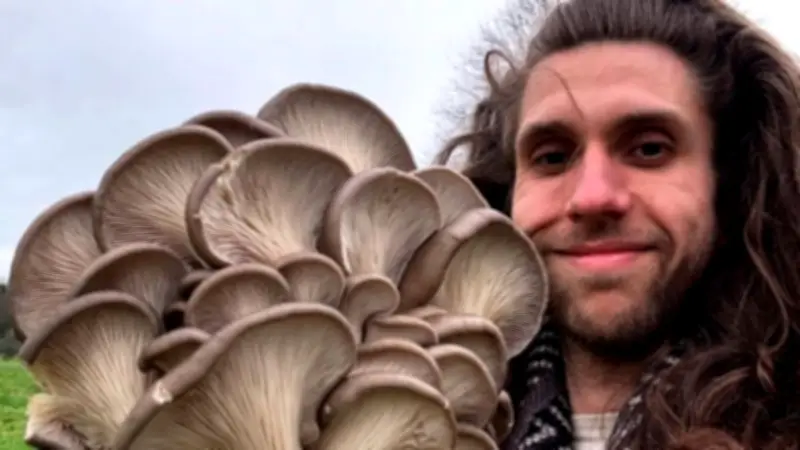
Leo Utton, a 34-year-old nature educator from Brighton, gathers wild plants every day to eat and has built an online following of more than 130,000 people by sharing his lifestyle of living off the land. His journey began in 2022 when he developed a strong interest in local plant species during walks around the city.
From pavement plants to woodland foraging
After months of studying his surroundings, Leo began collecting mushrooms, stinging nettles, berries and leafy greens – often without wearing shoes. He now includes gathered ingredients in his meals daily and even grinds acorns into flour for pancakes. His kitchen contains hundreds of jars filled with homemade preserves, syrups, tapenades and fermented wild sodas.
Leo shares his foraging trips on TikTok and Instagram under the handle @thebarefootforager, with some clips reaching two million views. His interest in the natural world started around age five, before he briefly pursued music as a band guitarist.

Speaking to Molly Powell, Leo said: "I'm obsessed with nature – a stinging nettle on the street corner is as exciting as a mushroom deep in the woods for me. Sometimes I will just say hello to a tree because I think we're all connected. Going barefoot makes me feel even closer to nature."
Learning from the urban landscape
He later felt a personal duty to understand how environmental damage occurs at a basic level. Without a car in 2022, he began walking from his home to a local park while examining garden plants along the pavement.
"Wild carrots are a fun one – there's a plant that grows out of the cracks in the pavement, and it's the wild ancestor of the carrots we buy. People consider them weeds, but it has actually shaped what the supermarket even has in it." He regularly caught the train to Sussex woodlands, using the forest as his main learning environment. Once he understood what was safe to eat, he began gathering his own food outdoors.
Walking barefoot and speaking to trees in the forest helped lift his spirits during these outings. However, he keeps his shoes on when walking through urban areas or visiting local businesses.
He added: "I don't go barefoot in the city or on concrete, I'd end up standing in glass or on a needle – I draw my line at going barefoot in the pub. I would go barefoot as a kid and then never really stopped when I was in nature."
Favourite finds and fermented drinks
Finding wild mushrooms remains his favourite activity because it requires learning about different host trees. He collects fresh greens like dandelions in spring before gathering summer fruits, pine needles and edible flowers.
"The facts are interesting – there's mushroom spores in every breath we're breathing. They come in so many different shapes and sizes – I've foraged a huge chicken of the woods and last year I found a rare purple mushroom called a violet webcap, that was really exciting," explained Leo.
He uses these summer finds to create natural fermented drinks using yeast, sugar and water. "I cover them with yeast, sugar and a bit of water and leave it, and you end up with a fermented natural soda, it's delicious," he said. While he still buys essential items like tinned coconut milk from supermarkets, he eats gathered food daily. He prioritises organic, locally grown produce when food shopping, even if it costs slightly more.
Daily meals and teaching workshops
Leo added: "I always make my own teas and drinks, and I have a lot of mushroom on toast for breakfast, yoghurt with foraged fruits like blackberries, cherry plums and mulberries. For lunch and dinner, I make a lot of stir fries and curries – there's a group of plants called the goosefoots, which are like a green leafy vegetable, I use all the new ingredients in a familiar way. I chuck wild garlic into everything too. I've taken it one step further and foraged seeds and acorns and ground them down to make flour, to make pancakes."
His kitchen shelves are filled with jars containing hot sauces, fruit syrups, dried herbs and mushrooms. He believes eating wild ingredients and spending time outdoors has improved his overall physical and mental health. "We need to go outside and spend time in nature. If I'm stressed, if I'm sad, I go to the woods or even a park and it helps."

Through his job as a nature educator, he runs teaching workshops covering the history and science of local plants. Each session ends with a practical demonstration on how to cook and ferment the gathered items. He works to address common misconceptions about foragers taking too much from the environment. He aims to teach people how to maintain a healthy relationship with the countryside rather than overharvesting.
"Foragers can get a bad rep sometimes because people think we are coming to the land and ravaging it, taking everything you find, and encouraging other people to do the same," he explained. "But we care for the land deeply, so we're out there educating people on how to maintain a good relationship with it, rather than taking everything you can."