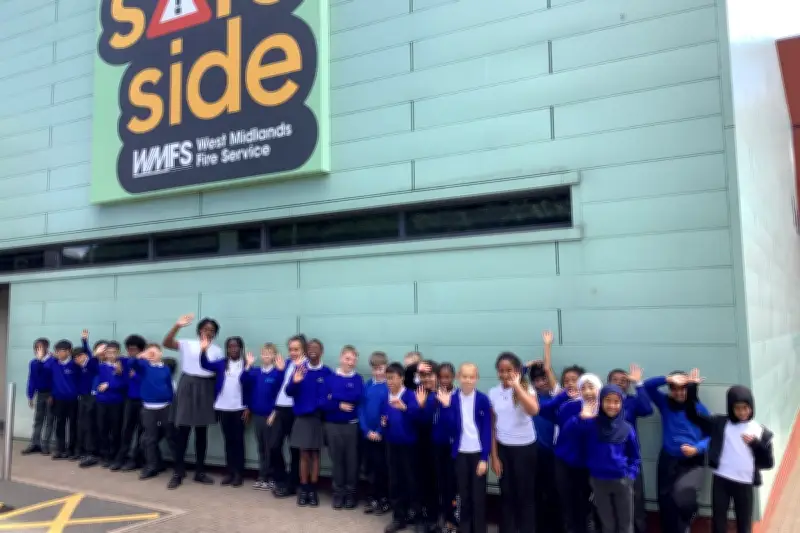
Birmingham schoolchildren are stepping into a purpose-built immersive safety village designed to teach them how to handle real-life risks, from road dangers to fire hazards. The initiative, which recreates a miniature town complete with crossings, shops, and mock hazards, aims to equip young people with the confidence and knowledge to stay safe in everyday situations.
The safety village, located in the city, offers hands-on scenarios where pupils can practice crossing roads safely, identify potential dangers in a home setting, and learn how to respond in emergencies. According to organisers, the experience goes beyond traditional classroom lessons, allowing children to engage with realistic situations in a controlled environment.
Hands-On Learning for a Safer Generation
The project, which has already welcomed hundreds of pupils from across Birmingham, is part of a broader effort to reduce accidents and improve child safety. Teachers have praised the approach, noting that the practical nature of the sessions helps children retain crucial safety messages far more effectively than textbooks or lectures.

One teacher involved in the programme said: "The children are absolutely captivated by the village. They don't just hear about safety – they live it. It's a powerful way to teach them skills that could one day save their lives."
The safety village includes realistic road layouts with working traffic lights, a simulated railway crossing, and even a mock house where children can spot hazards like unattended pans or faulty wiring. Emergency services, including local firefighters and police officers, are on hand to guide the pupils and answer questions.
Statistics Show the Need for Such Initiatives
Recent figures indicate that road accidents remain a leading cause of injury among children in the UK, with hundreds of youngsters killed or seriously injured each year. The safety village aims to tackle this by teaching children from an early age how to assess risks and make safe choices.
Organisers say the initiative is particularly important in urban areas like Birmingham, where busy streets and high traffic volumes present constant challenges. By giving children practical experience, the project hopes to instil lifelong safety habits.
Expanding the Programme
Following the success of the initial sessions, there are plans to expand the safety village to reach even more schools across the West Midlands. The programme is also looking to incorporate new scenarios, such as online safety and water safety, to reflect the evolving risks children face today.
Parents and community leaders have welcomed the expansion, emphasising the importance of equipping children with the skills to navigate an increasingly complex world. The safety village is seen as a vital tool in building a safer, more aware community in Birmingham.