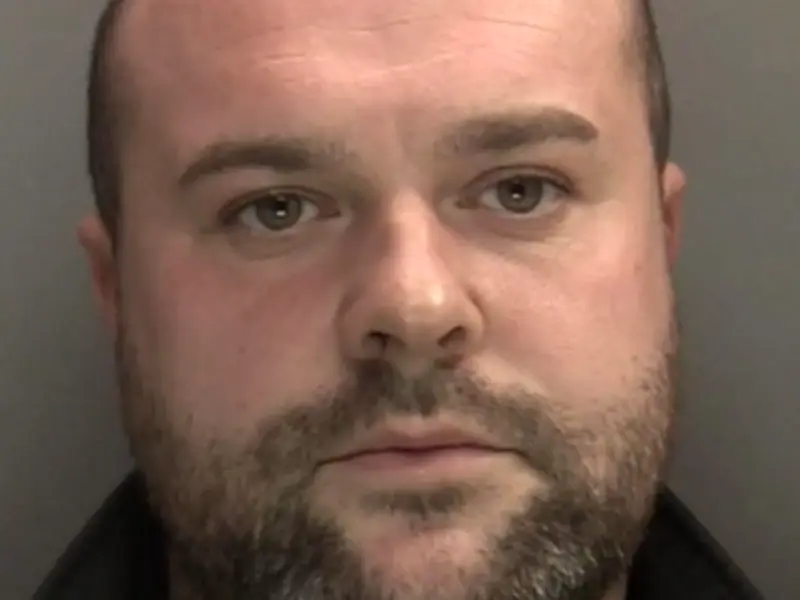
Daniel Sedgley, 35, is standing trial for manslaughter after a blind victim died from injuries sustained in a violent pub attack. The prosecution alleges that Neil Greenaway died as a direct result of being forcefully pushed by Sedgley outside the Lighthouse pub in Halesowen on October 8, 2022.
Mr Greenaway, who was blind, developed epilepsy after suffering a traumatic brain injury in the assault. He died 13 months later on November 3, 2023, following a seizure. Sedgley, of Lodgefield Road, Halesowen, has pleaded guilty to causing really serious harm but denies manslaughter.
Prosecution opens case at Wolverhampton Crown Court
Opening the case on Tuesday, September 8, prosecutor Harpreet Sandhu KC told jurors that Mr Greenaway's death was caused by injuries inflicted by Sedgley. There is no dispute that Sedgley injured Mr Greenaway, but the key issue is whether those injuries led to his death.

Mr Sandhu said: "On November 3, 2023, Mr Greenaway died. The prosecution say that he died as a result of injuries inflicted upon him by this defendant." He added that Sedgley caused injuries on October 8, 2022, 13 months before Mr Greenaway died.
The court heard that Sedgley's assault was captured on CCTV. Mr Sandhu described how the assault ended when Sedgley pushed Mr Greenaway forcefully, causing him to fall backwards and strike his head on the ground.
Brain injury leads to epilepsy and blindness
Mr Greenaway was taken to Queen Elizabeth Hospital Birmingham, where medics discovered a fractured skull and brain damage. Part of his skull was removed to relieve pressure, requiring him to wear a protective helmet. He was left blind and unable to live independently.
"As a result of his brain injury, Mr Greenaway developed epilepsy," Mr Sandhu told jurors. He experienced serious seizures frequently and was hospitalised several times, including at Russells Hall Hospital in Dudley and New Cross Hospital in Wolverhampton. Despite anti-seizure medication, his seizures were not controlled.
Mr Sandhu said: "Those who treated Mr Greenaway thought that his prognosis for recovery and his prospects for living independently were very poor." He added that they believed Mr Greenaway would remain on anti-epileptic medication for life and that his epilepsy increased the risk of sudden death.
Death at Perton Manor and post mortem findings
Mr Greenaway died at Perton Manor in Perton, near Wolverhampton. A staff member checked on him at 6.25am and found him asleep, but at 7.06am he was found on the floor, face down. He was still breathing but unresponsive, and paramedics declared him dead at the scene.
A post mortem found Mr Greenaway had a heart condition, but the prosecution argue it was stable and not the primary cause of death. Mr Sandhu noted signs consistent with an epilepsy-related death, including biting his tongue, being found in a prone position, and fluid in his lungs.
Mr Sandhu said: "Sedgley's actions made more than a minimal contribution to Mr Greenaway's death and we suggest, therefore, that his death is properly characterised as manslaughter at the hands of Sedgley."
Sedgley's defence argues that Mr Greenaway's heart condition cannot be excluded as the cause of death. The trial continues.