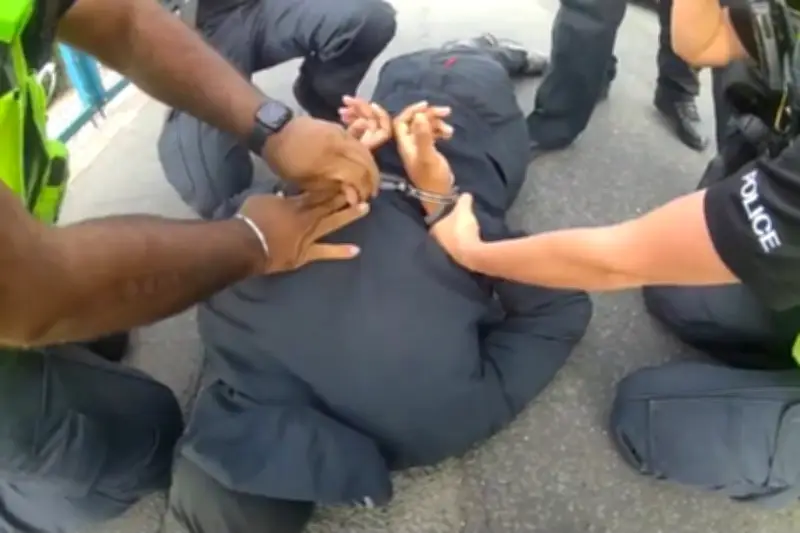
A young person was stopped and searched by officers in Birmingham, and a hunting-style knife was found and seized. The individual was subsequently taken into police custody, the West Midlands force has confirmed.
Discovery during proactive patrol
Officers conducting the stop and search recovered the weapon during what is understood to be a routine patrol. The knife, described as a hunting-style blade, was uncovered on the young person, prompting immediate action from the police team. Details about the exact location within the city and the circumstances leading to the stop have not yet been released by authorities.
The seizure is part of a broader operation aimed at curtailing knife crime in Birmingham. Stop and search powers allow officers to detain individuals and check for weapons if they have reasonable grounds to suspect possession. These powers are frequently used in areas identified as hotspots for violence.

What is a hunting-style knife?
Hunting knives are typically designed for outdoor purposes such as field dressing game, camping, or general utility work. They often feature a fixed blade, varying in length from a few inches to ten inches or more, with a strong handle designed for grip. While legal to own and use for legitimate activities, carrying such a knife in a public place without a valid reason is illegal under UK law.
The presence of a blade of this nature on a young person raises concerns about the influence of street violence and the availability of weapons to minors. However, police have not confirmed the age of the individual or whether the knife was intended for unlawful use.
Legal consequences and police strategy
Possession of a knife in a public place without good reason is an offence under the Criminal Justice Act 1988. Penalties can range from a fine to imprisonment, with harsher sentences for repeat offenders or cases involving threats. In this situation, the young person will likely be questioned and may be referred to the youth justice system depending on their age.
West Midlands Police have been vocal about their commitment to reducing knife crime, which has been a persistent issue in the region. Led by the force's Operation, officers regularly employ stop and search to intercept weapons before they are used. While the tactic is debated across the UK, police argue it is essential for public safety. Figures indicate that stop and search has led to a decline in certain categories of violent crime, though questions remain about its disproportionate impact on minority communities.
In this case, the swift recovery of the hunting knife is seen as a positive outcome, potentially preventing a serious incident.
Community and youth outreach
Local community groups and youth workers have responded to such incidents by calling for more investment in youth services, education, and intervention programmes. They stress that behind every knife seizure is a young person who may benefit from guidance and support rather than punishment alone.
Several initiatives in Birmingham work with schools and young people to raise awareness of the dangers of carrying knives, as well as offering mentoring and alternative activities. These partnerships aim to address the root causes of criminal behaviour, including deprivation, lack of opportunities, and peer pressure.
The incident serves as a reminder of the ongoing challenges facing the city. While police actions are necessary to remove weapons, long-term solutions require collaboration between law enforcement, education, and social services.
What happens next?
The young person remains in custody awaiting further investigation. The knife will undergo forensic examination, and evidence will be gathered to determine the circumstances behind its possession.
Police have appealed for anyone with information about weapons being carried in their neighbourhood to report it, emphasising that community tips are vital in preventing violence.
The investigation is in its early stages, and further details are expected to be communicated in due course.