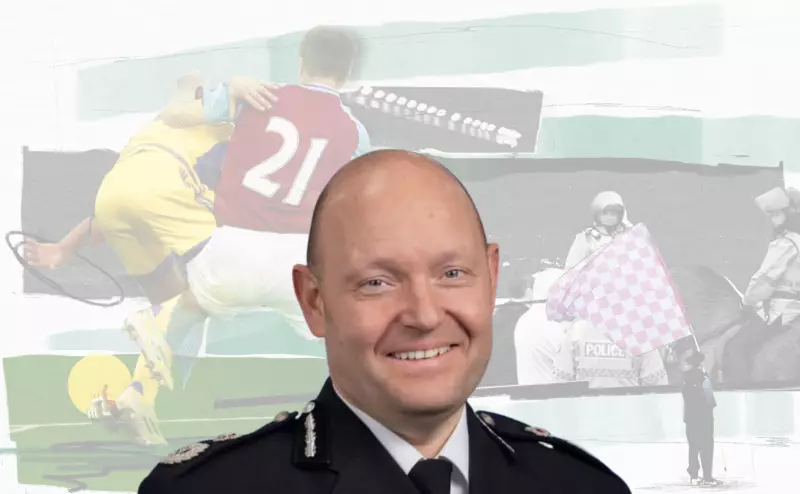
The resignation of West Midlands Police Chief Constable Craig Guildford marks the culmination of a months-long controversy that began with a decision to ban fans of an Israeli football team from a match in Birmingham. The fallout has exposed significant failures in police process, the use of flawed intelligence, and a deep community rift.
A Frosty Meeting and a Fateful Decision
The chain of events that led to the chief constable's departure can be traced to a tense meeting on Monday 20 October. Approximately 60 Jewish residents gathered at Lloyd House, the West Midlands Police headquarters in Birmingham, with Assistant Chief Constable Tom O’Hara. Chief Constable Craig Guildford joined via a video link. The attendees were demanding answers.
They wanted to know why the Birmingham Safety Advisory Group (SAG) had banned supporters of Israeli team Maccabi Tel Aviv from attending a Europa League match at Villa Park the following month. The police had recommended the ban. The Jewish community felt sidelined, their views sought far too late in the process.

"There was a clear anger in the room, for different reasons," said Michael Rowe, a lawyer and Conservative Party activist present at the meeting. He argued the police had not consulted the community beforehand and that their evidence for the ban was weak.
Flawed Evidence and Political Scrutiny
The police case rested heavily on incidents at a match between Maccabi and Ajax in Amsterdam in November 2024, where some fans chanted offensive slogans and there were clashes. Rowe was incredulous, asking why fans who were attacked in Amsterdam should be banned in Birmingham for their own safety.
Guildford and his team were subsequently grilled twice by MPs in Westminster. The scrutiny revealed a series of missteps. In early 2025, O’Hara apologised for falsely telling a committee that Jewish leaders supported the ban. This week, it emerged police had used an AI tool that produced a "hallucination" – citing a fictitious match between Maccabi Tel Aviv and West Ham as part of their evidence.
The crisis peaked on Thursday when Chief Inspector Sir Andy Cooke published a preliminary report. He found "confirmation bias" had influenced the decision, the evidence presented to the SAG was "imbalanced", and the force failed to grasp the wider consequences of its action. He found no evidence of antisemitism in the decision-making.
Resignation and Repercussions
On Friday, after both Home Secretary Shabana Mahmood and a Downing Street spokesperson declared they had "no confidence" in him, Guildford announced his retirement. In a statement, he blamed a "political and media frenzy" and said stepping down was best for the force and his family.
The 52-year-old officer, who had pulled the force out of special measures, leaves under a cloud. Former Chief Inspector Kizra Bano has accused him of bullying. The Board of Deputies of British Jews welcomed his departure, while Rowe argued he should have been sacked. Some MPs have also called for Police and Crime Commissioner Simon Foster to resign.
However, the reaction is not uniform. A local Muslim community organiser, who asked not to be named, called it "a sad day for Birmingham," praising Guildford's community engagement, especially after the 7 October 2023 Hamas attacks. While acknowledging police "blunders," he admitted some had welcomed the ban due to fears sparked by the Amsterdam footage.
Community activist Abdullah Saif noted the geopolitical dimension, stating: "From the moment the decision was made, it was like 'heads must roll'." Acting Chief Constable Scott Green has now taken over, with Commissioner Foster overseeing the selection of a permanent successor. Sir Andy Cooke's inspection continues, suggesting this saga may yet have further chapters.