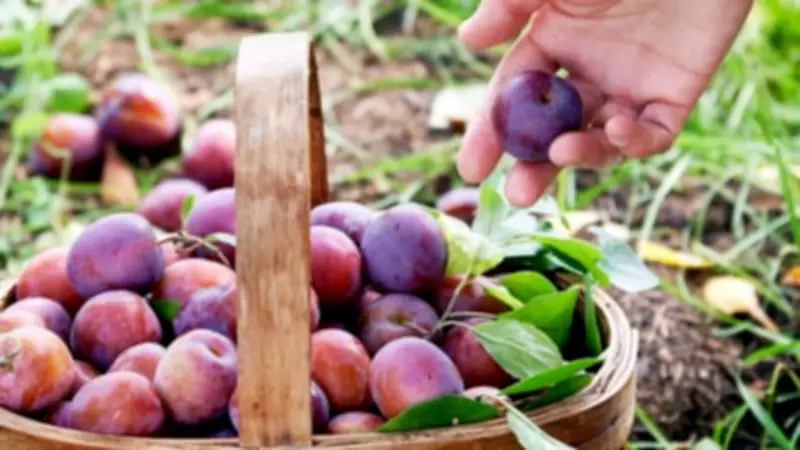
As August marks the peak of the British plum season, a gardening expert has shared five low-cost, eco-friendly ways to safeguard your harvest. Mark Dwelly, head gardener at Audley Stanbridge Earls retirement village, says that plums are often overshadowed by apple, pear and cherry trees because they are harder to grow and the fruit needs to be used quickly. He notes that plums are "notorious for dropping all at once or getting ruined right at the finish line by wasps, birds and rot."
Ditch nets for tights
Dwelly advises against standard tree netting, which he says can be expensive and a nightmare because birds get tangled in it. Instead, he suggests using a cheap pair of 15-denier nylon tights, cutting off the legs and pulling them over a fruiting branch, tying each end loosely. "Sunlight, rain, and air pass right through, but pests literally bounce off. You'll get 100% unblemished plums," he says.
Spray milk to stop rot
Humid August weather brings brown rot and mildew, which can spoil the skin before the fruit fully sweetens. Dwelly recommends mixing a 50:50 solution of skimmed milk and water and misting the leaves on a sunny morning. "The proteins in the milk bake under the sun, creating a natural antiseptic barrier that kills fungal spores on contact. It acts like a protective rain jacket for the leaves, allowing the tree to dump pure sugar into the ripening fruit," he explains.
Create a wasp hub
Ripening plums naturally ferment on the tree, making wasps slightly drunk and aggressive. Dwelly suggests cutting the top off a plastic bottle, flipping it upside down to make a funnel, filling it with stale brown ale and a mashed banana peel, then hanging it 20ft from the tree. "Pests pass over the fresh fruit, dive into the beer trap for a free drink and leave your fruits entirely alone," he says.
Three final steps before harvest
The last few weeks before harvest are crucial, says Dwelly. He recommends thinning fruit clusters in early summer so every plum has about three inches of clear space around it. "The fewer fruits on the branch means double the juice per plum." He also advises stopping light daily watering and switching to soaking the roots with two large buckets of water once a week, adding mulch around the base of young plants. "Deep watering builds the cell walls inside the fruit so it actually bursts when you bite into it." Finally, a fortnight before picking, he suggests snipping away any heavy leaves casting shadow directly over the best clusters, as plums need unbroken, direct sun on their skin to convert raw plant starches into pure natural sugar.
Quick de-stoning trick
Turning a perfect batch of plums into jam or crumble often leaves hands stained purple and the fruit mashed. Dwelly recommends setting a plum upright on the open neck of a glass beer or wine bottle, taking a wooden chopstick and pushing it straight down through the centre of the fruit. The stone will pop cleanly out of the bottom and drop into the bottle, leaving a perfectly intact, pitted plum in seconds.