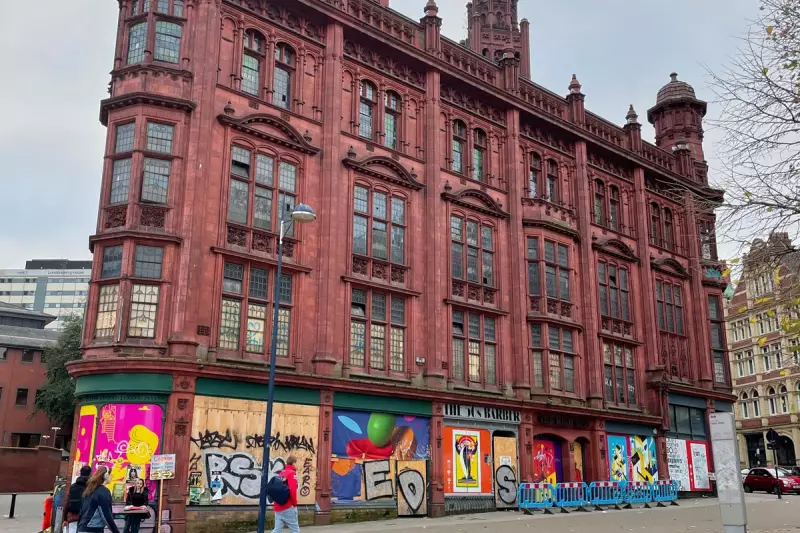
Birmingham's iconic Methodist Central Hall remains in mortal danger according to heritage campaigners, who warn that the Grade II* listed building continues to deteriorate despite repeated promises of restoration.
The Victorian Society has issued stark warnings about the condition of the once-grand terracotta building on Corporation Street, noting that rain damage, vandalism, and neglect have left the historic landmark in a perilous state.
Six Months of Worsening Crisis
Campaigners say that six months after urgent calls were made to save the building from potential collapse, the situation has only deteriorated further. The building was added to the Society's most endangered list earlier this year, with representatives noting that every storm causes additional damage to the already compromised structure.
A spokesman for the Victorian Society stated: "The Methodist Central Hall in Birmingham is very much still in mortal danger. Our group in Birmingham and West Midlands are keeping an eye on it. There are holes in the roof and elsewhere."
From Worship to Nightlife Legend
Built in 1903 by architects Ewen and J. Alfred Harper, Central Hall originally served as the heart of Birmingham's Methodist community, seating 2,500 worshippers in its prime. The building later transformed into the legendary Que Club nightlife venue, hosting music icons including David Bowie, Massive Attack, and Blur before closing its doors in 2017.
Since its closure, the building has remained empty and vulnerable. Approved plans for hotel and events space from 2018 never materialised, and while new owners purchased the site in early 2022 and submitted fresh proposals for mixed-use redevelopment, no visible work has begun.
Emergency Measures Under Discussion
Historic England and Birmingham City Council confirm they are working with the current owners to secure emergency temporary works to halt water ingress while development applications are considered.
Historic England continues to list the building as "at risk", describing its current condition as poor with a declining trend. The organisation and council maintain dialogue with owners to prevent further deterioration, though campaigners say these assurances are wearing thin as visible damage continues to accumulate.
Without immediate intervention, campaigners fear Birmingham could lose one of its finest historic buildings permanently, erasing a crucial piece of the city's architectural and cultural heritage that has served multiple generations in different capacities.