Chadwick's 1842 Report Reveals Horrific Conditions
In 1842, social reformer Edwin Chadwick published a parliamentary report that laid bare the appalling state of Birmingham's Victorian slums. The document described over 2,000 courts crammed with more than 50,000 residents, where sanitation was virtually nonexistent. Chadwick wrote of "open privies, close to which there is often one or more pigsties, tubs full of hogs' wash, and heaps of offensive manure." These conditions created a breeding ground for disease and squalor.
Life Expectancy and Infant Mortality Crisis
By 1871, the impact of these conditions was stark. Birmingham's average life expectancy stood at just 37 years, compared to the national average of 41. Even more shocking, 30 per cent of babies died before reaching their first birthday, with diarrhoea being the leading cause of death. The city's overcrowded courts and lack of clean water contributed directly to these grim statistics.
The Improvement Scheme Under Joseph Chamberlain
In response, the Birmingham Corporation took drastic action. In 1875, under the leadership of Mayor Joseph Chamberlain, the city adopted the Artisans' Dwellings Act, launching what became known as the Improvement Scheme. Entire areas were levelled, including Upper and Lower Priory, The Minories, and Thomas Street. These streets, described as "evil" and "stinking," were demolished to make way for a new vision of urban living.
Construction of Corporation Street
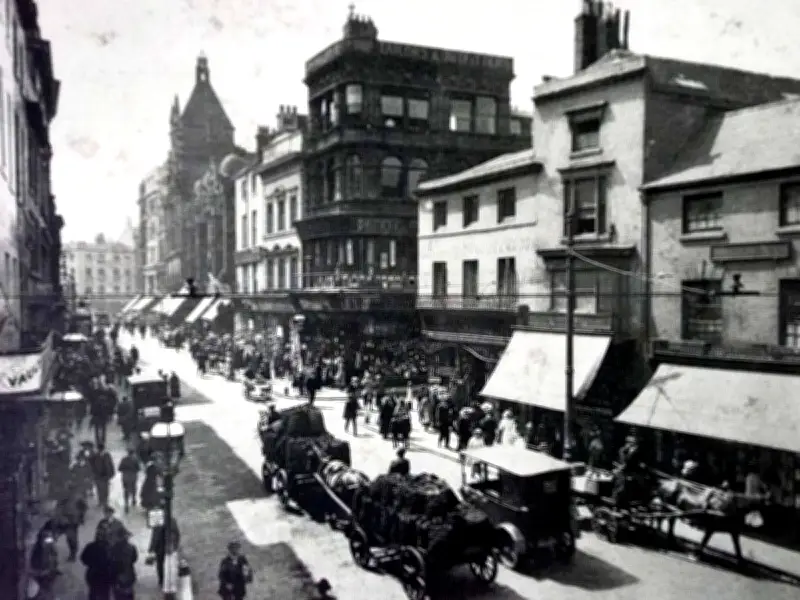
The centrepiece of the scheme was the grand Corporation Street, built as a replacement for the demolished slums. However, conditions remained dire for many residents. In 1903, journalist JC Walters documented how "the poor live - and wither away and die" in overcrowded courts filled with "pestilential air." The transformation was dramatic, but it took decades for the city to fully address its housing crisis.
Legacy of the Slum Clearance
This urban transformation shows how Birmingham's modern city centre literally rose from the ashes of Victorian slums. The clearance not only improved sanitation but also set a precedent for municipal intervention in housing. Today, while the city faces different challenges like bin collection issues, the historical record serves as a reminder of how far Birmingham has come from the days when entire streets were demolished to combat disease and poverty.