Wales Must Increase SME Housebuilders to Tackle Housing Crisis, Says Development Bank Chief
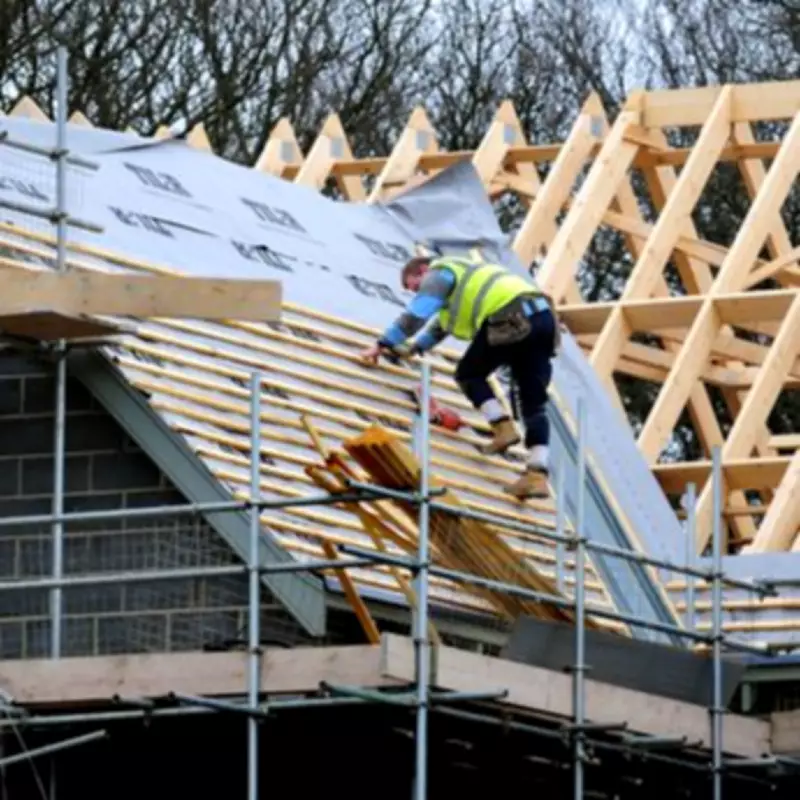
Giles Thorley, the chief executive of the Development Bank for Wales, has issued a compelling call to action, stating that addressing the housing crisis in Wales fundamentally requires more builders, particularly small and medium-sized enterprises (SMEs). In an opinion piece, Thorley emphasizes that pausing development during economic downturns is not an option for the nation's long-term prosperity.
The Critical Need for Continuous Construction
Thorley points out that while construction activity often slows when sentiment weakens, especially in private housing and commercial sectors, the underlying needs remain unchanged. Housing shortages persist, regeneration projects are essential, and businesses continue to require modern, energy-efficient premises. He warns that stalling these projects has ripple effects across the economy, impacting local subcontractors, architects, manufacturers, and logistics firms.
"Construction remains one of the economy's most important drivers," Thorley asserts, highlighting the need for synchronized investment rather than short-term fixes. Proper coordination across housing, property, and energy sectors is crucial to achieve long-term outcomes, aligning with Wales's strategic policy framework, including the Well-being of Future Generations Act.
The Decline of SME Housebuilders and Its Impact
A key concern raised by Thorley is the dramatic decline in SME housebuilders. In the late 1980s, SMEs delivered approximately 40% of new homes in Wales, but today, that figure has plummeted to just 9%. This over-reliance on a small number of large national housebuilders poses risks, such as reduced flexibility, narrowed site pipelines, and vulnerability to shifts in market appetite.
Smaller, locally rooted builders play a vital role, employing local subcontractors and operating based on local demand. They handle projects ranging from two-home infill schemes to developments with over 60 homes, making them well-suited to Wales's needs. However, after the financial crash, funding options for these SMEs nearly vanished, severely constraining housing delivery.
Financing and Partnership as Solutions
Thorley notes that over the past decade, £300 million in targeted property finance from the Development Bank for Wales has supported 2,400 new homes and more than 245,000 square feet of commercial space. This demonstrates that access to the right capital at the right time is essential for increasing housing supply.
He frames property investment not just as a balance sheet issue but as a matter of wellbeing and economic health. Good social infrastructure can reduce poverty, improve health, and support educational attainment, while modern commercial spaces help firms grow and retain talent. Mixed-use schemes can catalyze long-term community wealth creation by keeping spending power local.
"If Wales wants more homes, it needs more builders," Thorley concludes, stressing that delivery depends on partnership among developers, lenders, local authorities, and government. Projects like Parc Eirin in Rhondda Cynon Taf and Maes y Teirw in Carmarthenshire exemplify what is possible with accelerated funding and raised standards.
A Call for Accelerated Action
Thorley argues that Wales does not lack ambition, policy frameworks, or opportunity. What is needed now is more delivery at greater scale, grounded in place, backed by partnership, and financed to support long-term prosperity. He urges immediate action, stating that building Wales's future is a practical programme of work that cannot wait.
The demand is rising, with property investment growing by 27% last year, signaling both appetite and need. Without joined-up action, sites remain locked, costs escalate, and viable projects become unviable, underscoring the urgency of Thorley's message.