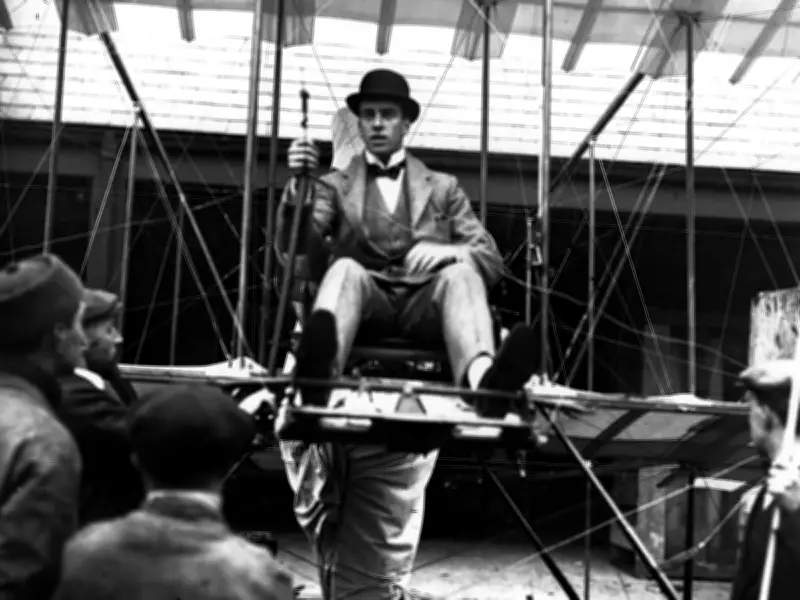
Alfred P Maxfield, a motor engineer from Victoria Road in Aston, made aviation history on September 27, 1909. On that day, his self-built flying machine climbed to around 50 feet above the ground at Castle Bromwich. Two earlier attempts had ended in failure, but the third try succeeded — "third time was indeed the charm." With that flight, Maxfield became Birmingham's first aviator, a full three decades before the city's airport would open its doors.
Maxfield was described as "an amateur inventor and an adventurous Brummie with a big dream to fly." He was not a trained pilot or an engineer with formal credentials; instead, he was a motor engineer with a passion for machines and a belief that human flight was possible. That he managed to construct a working aircraft and get it airborne in 1909 is a testament to his ingenuity and persistence.
Yet, despite this extraordinary achievement, Maxfield never flew again. The reasons for his abrupt departure from the skies remain a mystery. Did he lose interest? Was the risk too great? Or did circumstances beyond his control keep him grounded? The historical record is silent, leaving room for speculation among aviation enthusiasts and local historians alike.

Aviation fever sweeps Birmingham
Maxfield's pioneering flight may have been a solo achievement, but it was not long before aviation became a public spectacle in Birmingham. In 1911, only two years later, a crowd of 25,000 people flocked to Bournville's Men's Recreation Ground. Their purpose: to watch Claude Grahame-White land his biplane near the chimney stacks of the Cadbury factory. The event was a sensation, demonstrating just how quickly powered flight had captured the public imagination.
That landing was one of the first major aviation displays in the city, and it helped to build momentum for more permanent aviation infrastructure. At the time, the idea of a dedicated airport may have seemed far-fetched, but the seeds were being sown. The enthusiasm of those thousands of onlookers showed that Birmingham was ready to embrace the future of transport.
The arrival of Elmdon Airport
It would take another 28 years for that vision to become a reality. In July 1939, Elmdon Airport — now known as Birmingham Airport — officially opened its doors. The timing was poignant: it was the summer before the outbreak of World War II. For the people of Birmingham, it promised adventure, connection, and a new era of travel. Little did they know how important the site would become in the coming years.
The opening of the airport marked the culmination of efforts to give Birmingham a proper gateway to the world. It was a far cry from the homemade contraption that Maxfield had flown in 1909, but it stood on the same promise: that machines could carry people into the sky. The city had come a long way in just three decades.
A crucial role in the war effort
When war did break out, the airport and its surroundings were quickly repurposed for the national effort. The nearby Castle Bromwich Factory became one of the most important aircraft production sites in the country. It produced more than 10,000 Spitfires and Lancaster Bombers, providing a significant proportion of the aircraft that defended Britain and her allies. This industrial achievement was a direct continuation of the early aviation spirit, albeit on a massive scale.
The factory's output was staggering. With more than 10,000 aircraft built, it played a critical role in maintaining air superiority and supporting the war effort. The skills and technologies developed in the early days of flying had evolved into a formidable defence industry.
A lasting legacy
From Alfred P Maxfield's modest homemade flight to the roar of Spitfires and Lancasters, Birmingham's aviation history is one of extraordinary progress. Maxfield's brief moment in the sky might have been forgotten had it not been for the determination of those who followed. Today, Birmingham Airport stands as a reminder of how far aviation has come — and how one adventurous Brummie helped set it all in motion.

The story of Maxfield and his peers captures the excitement and ambition of the early 20th century. It is a story of risk, courage, and the relentless quest for discovery. As the city looks to the future, it does so with a proud aviation heritage that began with a homemade plane and a dream at Castle Bromwich.