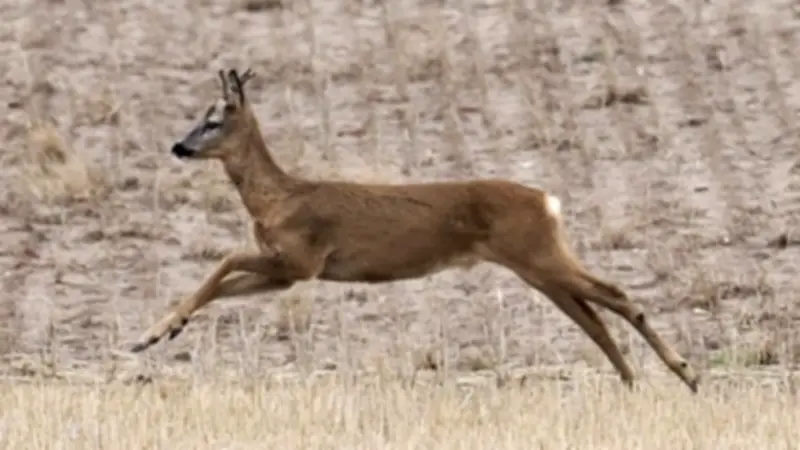
Roe deer, the smaller of Britain's native deer species, are increasingly common along the Sefton coast, with populations expanding both locally and nationally from Cornwall to Caithness. According to John Dempsey of Green Sefton, the Sefton Council service managing the coastline, these wild animals are now frequently encountered even in the middle of the day in quieter areas, a shift from their traditionally crepuscular habits.
Dempsey recently observed a small group of roe deer, noting a sprightly buck chaperoning females. He described the buck as alert and naturally bouncy, leaping with ease over low vegetation and stubble. The deer's growing presence across the borough makes encounters more common, but Dempsey emphasizes the importance of admiring them from a distance.
Best Times and Safe Viewing Practices
The best times to spot roe deer are early morning or dusk, when they often graze. However, as their numbers increase, sightings in the middle of the day are no longer unusual, especially in quieter areas. Dempsey advises that these creatures are far more wary than humans and are usually well aware of people long before they are noticed, bounding away quickly if they feel threatened.

For safe viewing, Dempsey recommends keeping a distance of 50 to 100 meters and avoiding attempts to get closer. He stresses that all dogs should be kept on a lead if deer are nearby, to prevent stressing the animals.
Unique Adaptations for Survival
Although the roe deer breeding season is just ending, Dempsey highlights an interesting adaptation: females can delay the development of embryos for up to four months after mating. This means some does won't give birth until May or June next year, ensuring youngsters have a better chance of survival rather than being born in winter when temperatures are lowest and conditions are harshest, even on the dune system.
Another adaptation is the hollow nature of deer coat hairs, which can retain warmth like a down jacket during winter. Observers on the coast may notice their hides changing color now, from the rich brown of summer to a greyer shade for winter.
Role in Dune Management and Ancient History
Roe deer use autumn to build up body fat by browsing on the rank vegetation of summer, making them beneficial to dune system management as natural grazers. Although they are a relatively recent arrival on the dune system, the species is no stranger to the area over longer timescales.
Prehistoric sediment beds, occasionally exposed on the shore especially around Freshfield, routinely reveal deer footprints frozen in time from the Mesolithic period thousands of years ago. While time and geomorphic processes have distorted some footprints, making cloven hoof prints appear unusually large, some crisp small roe deer prints can still be found.
Identifying Fresh Roe Deer Prints
For those who don't have the opportunity to explore these sediment beds when they emerge—revealing human, deer, aurochs, wolf, and boar prints—Dempsey notes it is fairly easy to find fresh roe deer prints anywhere along the coast these days. Look for crisp prints just a few centimetres long, made up of two thin parallel oblong shapes, pointed at the front and blunter at the back; that's a roe deer.
John Dempsey works for Green Sefton, the Sefton Council service that brings together the Coast & Countryside, Parks & Greenspaces, and Grounds Maintenance teams for a joined-up approach to managing Sefton's coastline, parks, and green spaces. This column looks at the flora, fauna, and history of the coastline and the work carried out to protect it.