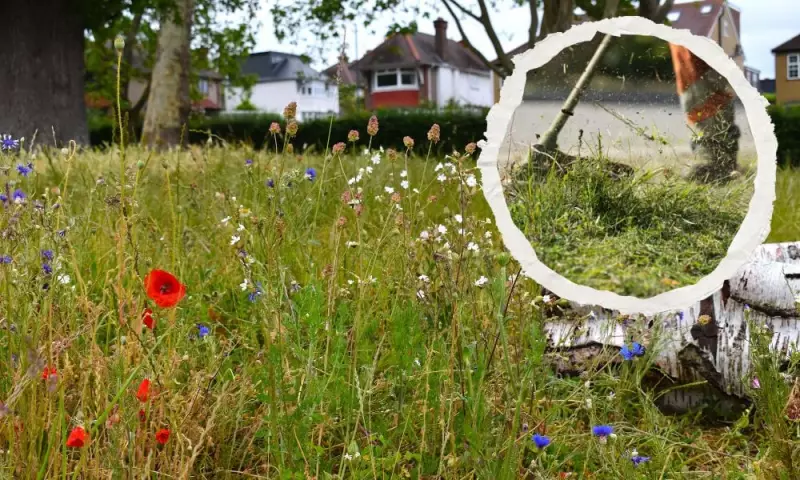
New research has uncovered what truly drives public opinion when it comes to letting nature take over in our local parks. A study published on November 11th reveals that while people broadly support reducing grass cutting in public green spaces, their approval hinges on one crucial factor: whether the wild areas look attractive.
The Beauty Factor in Wild Spaces
Researchers from Durham University and Durham County Council surveyed more than 900 people about their preferences for park management. The findings challenge long-standing assumptions about public resistance to rewilding projects.
Most participants actually expressed support for less frequent mowing and more natural areas, indicating a shift in public attitude toward ecological management. Nearly all respondents reported deep concern for the environment and recognised the ecological damage caused by regular grass cutting.
However, when researchers analysed what truly predicted support for greener mowing policies, environmental concern wasn't the deciding factor. Instead, aesthetic appeal emerged as the key driver of public opinion.
From Overgrown to Intentional
Participants who viewed unmown or rewilded areas as beautiful were significantly more likely to support them, while those who perceived these spaces as messy or untidy showed greater opposition. This suggests that public acceptance depends more on visual appeal than environmental benefits alone.
Lead researcher Jack Hughes from Durham University noted the importance of these findings. "It's great to find that people may be open to the idea of less mowing," he said. "It's also understandable that people want that change to make where they live prettier."
The research indicates that making wild spaces appear intentional and well-maintained could dramatically increase public support. Simple interventions like adding mown edges, planting colourful wildflowers, incorporating trees or art features could transform perceptions of rewilded areas.
Practical Implications for Councils
The findings offer valuable insights for local authorities seeking to implement biodiversity-friendly policies while maintaining public support. Durham County Council, which co-designed the survey, already plans to use these results to inform its open space management strategies.
This research helps explain why some rewilding projects face criticism despite their environmental merits. The study suggests that effectively communicating how changes enhance local beauty, alongside wildlife benefits, could be crucial for winning public approval.
Mr Hughes emphasised the broader implications: "Hopefully policy makers and land managers across the nation see what we've found and start thinking about beauty as a key part of rewilding messaging and strategy."
The study demonstrates that successful park management requires balancing ecological goals with public perception, proving that when it comes to wild spaces, beauty really is in the eye of the beholder.