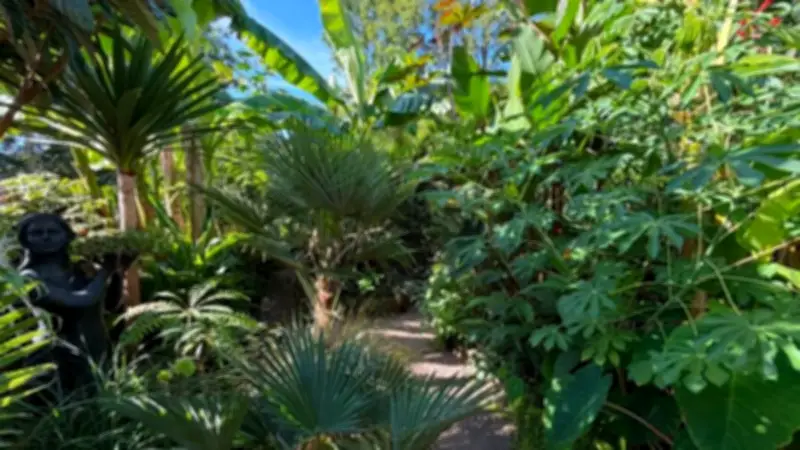
Gardeners across the UK are increasingly turning to tropical and exotic plants as a response to the hot, dry summer, according to industry experts. Róisín Wilson, managing director of UK-based garden design company HSK Exotic Gardens, which also imports rare exotic plants, said feedback from garden centres, nurseries and wholesalers indicates that demand for traditional cottage garden plants and bedding has declined, with tropical plants tipped as the next big trend.
Why tropical plants are gaining popularity
“In general, a tropical plant is quite a statement plant,” Wilson said. “People are definitely going for that statement in their garden. We are probably in a good position to have tropical plants in our garden, or plants that are used to the heat.”
One enthusiast, Dave Robinson, a garden centre worker and plant lover, has spent 10 years creating a subtropical haven in the back garden of his semi-detached home in south Wales alongside his girlfriend Gemma Furby. When they first moved in, the space was nothing more than decking and lawn. Today, it is filled with exotic and tropical species including tree ferns, fatsias, bananas, colocasias, cordyline, schefflera, monkey jar climbing plants, fiery cannas, vibrant crocosmias and ginger lilies.

Hardy tropical plants for year-round gardens
Robinson noted that only about 15% of his plants need to be brought indoors during winter. “Around 15% of our garden probably comes in in the winter – the more tender stuff like alocasias – but most of it stays out there. You've just got to be selective and find the right hardy cultivars,” he advised.
For those seeking to create an exotic feel, experts recommend starting with structural plants. Robinson suggested large palms as a backbone. “Make sure you get your backbone in first – your evergreens, your big canopy plants like larger palms, the trachycarpus fortunei (also known as the windmill palm) and the loquat trees,” he said.
Tree ferns are another key option. Wilson explained that they come from Australia and are found in rainforests, so they are used to extremes. “They are well set up in this country because once you put them in shade or partial shade, they are going to do really well and are certainly a statement in your garden,” she said. Tree ferns can be planted in pots and are suitable for small gardens as they grow very slowly. They like shade, making them ideal for sheltered courtyards or north-facing balconies. “Obviously, check the weight-bearing (limitations) allowed on your balcony, but other than that pots are great for them. A tree fern is an investment because you’re not going to buy it for £20. People forget how long that tree has been growing. In Australia, it’s only going to grow a maximum of an inch a year. If you want a 3ft (tree fern), buy a 3ft,” Wilson said. In winter, horticultural fleece should be applied to cover the crown and wrap the top third of the plant. Only water the crown, and feed into the crown from April to October. In a dry winter, watering is needed; if it rains a lot, wet fleece should be replaced with dry fleece to prevent freezing damage to the crown.
Fatsias, bananas and colourful additions
Fatsia japonica, also known as the castor oil plant, features lush, oversized foliage and is readily available, thriving in shaded or semi-shaded spots. Robinson noted that while full sun is not ideal, fatsias are resilient. “If it's in a full sun situation, you'll get smaller, lighter green leaves, whereas in a dark spot, the leaves can get enormous and stay green and glossy. So they are adaptable. They are even great for dry shade as well. This summer we've had a lot of drought and they can take it on the chin once they've established. But you have to get them established first,” he said. For a bold centrepiece in a compact garden, a sizeable fatsia in a container is recommended.

Bananas, with dramatic arching foliage reaching up to two metres in length, create a striking focal point. Robinson said the Musa basjoo (Japanese banana) is completely root hardy for the UK, though it requires some fleece winter protection in colder areas. “Being root hardy, even if you lose the height and the stem, they generally come back from the base reliably,” he said. These plants can reach heights of three metres or more and thrive in a sunny, sheltered location with rich, fertile, moist but well-drained compost, kept well-watered in spring and summer. Less hardy varieties need to be brought into a heated greenhouse over winter; if not possible, cut them back in autumn by removing leaves and leaving the stem intact, then protect with horticultural fleece and hessian.
For colour and texture, Wilson suggested agapanthus, salvias, fatsias, ground cover ferns, dahlias, and large alliums such as 'Giganteum', which bloom earlier in summer. Robinson incorporates fiery orange and red tones through Canna 'Cleopatra', bromeliad flowers, speckled toad lilies, and orange impatiens. “The planting has got to be suitable for shade as well as flowers. We've a lot of impatiens, hardy begonias and other shade-lovers. We use Crocosmia 'Lucifer' to cover up the old banana trunks, so there's not a massive gap after the bananas flower,” he said.