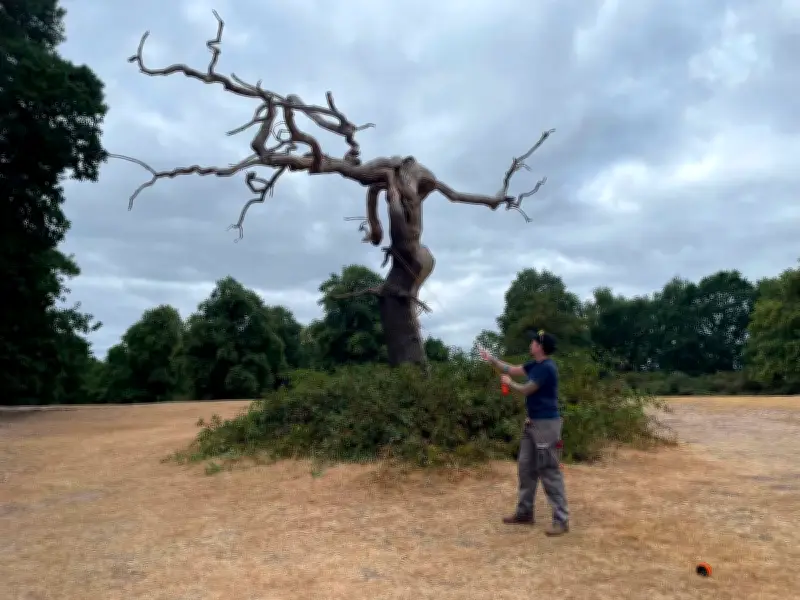
Sutton Park rangers have confirmed the death of the iconic 'Witching' oak tree, which stood for centuries near the Visitors Centre at Town Gate. The tree, one of Birmingham's most photographed landmarks, has succumbed, with its last living branch failing.
Folklore and Legend of the Witching Tree
According to local legend, the great gnarly oak was a gathering place for a coven of witches who plotted under its branches. Another tale recounts that during violent storms in 1839, witches rode on fog to snatch children and crashed into the oak. In modern times, the tree became a popular destination, especially during Halloween, where visitors left tokens and attached colorful trinkets to its branches.
Rangers' Announcement and Ecological Role
Sutton Rangers delayed the sad news after the announcement of the death of the Major Oak in Sherwood Forest. They posted on Facebook: 'Sadly the parks sentinel, the well loved and much photographed “Witching tree”, is dead; her one living branch low down on her trunk has failed.' They added that although dead, the tree will continue to serve the ecology of the 2,400-acre park as standing deadwood, providing a home for countless species of invertebrates, fungi, and bacteria that feed on structural compounds like lignin and tannin.

Rangers have performed regular tug tests on the tree for years to check for dangerous wood, and these will continue until no longer needed.
Public Tributes and Future Plans
Members of the public shared their memories. Andy Whitte said: 'Awesome tree hopefully it’ll be here a few more years before it completely deteriorates.' Mix Matthews wrote: 'This tree always catches my attention when I run past it…it makes me think about a lot of time related things in life.' Margaret Chamberlain commented: 'Thanks for keeping us up to date. As you say, dead trees can perform a function for many years to come.' Carol Lola added: 'She's still a very beautiful tree and I'm glad she's remaining to continue to be a part of the landscape.'
There are no plans to clear the tree, ensuring it remains a fixture of Sutton Park's scenery for years to come, continuing its role in the ecosystem and as a landmark for visitors.