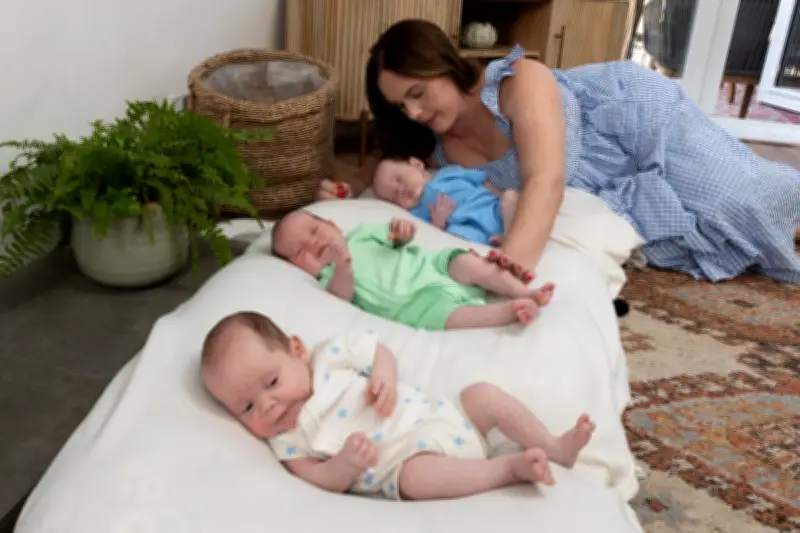
A mother from the Black Country has given birth to a set of rare mixed triplets, a phenomenon that occurs in approximately one in a million pregnancies. The triplets, born in October at Birmingham Women's Hospital, consist of two identical twin girls and a boy, making the birth exceptionally unusual.
Rare Medical Phenomenon
The triplets, named Macey, Miley, and Mason, were born to 27-year-old mother Chloe Smith from Tipton. The babies arrived at 33 weeks and were delivered by caesarean section. Macey and Miley are identical twins, sharing the same placenta, while Mason is their fraternal brother. This combination of identical twins and a fraternal sibling in a single triplet pregnancy is considered a rare medical event.
According to the NHS, the odds of having triplets naturally are about one in 8,000, but the specific combination of two identical twins and a fraternal triplet is far rarer, estimated at around one in a million. The babies were born healthy, with Macey weighing 4lb 5oz, Miley 4lb, and Mason 4lb 8oz.

Mother's Experience and Reaction
Chloe Smith, who already has a three-year-old daughter, said she was shocked when she discovered she was carrying triplets. She told BirminghamWorld: "I couldn't believe it. I was in complete shock. I already had one child, so to find out I was having three more was overwhelming."
She added that the pregnancy was closely monitored due to the high-risk nature of carrying triplets. The babies spent time in the neonatal unit at Birmingham Women's Hospital before being allowed home. Smith described the care she received as "amazing" and praised the hospital staff for their support throughout the pregnancy and birth.
Impact on Family Life
The family is now adjusting to life with four children under the age of four. Smith said that while the arrival of the triplets has been chaotic, she feels incredibly lucky. She noted that the babies are all doing well and are now home, where they are being cared for alongside their older sister.
The birth of mixed triplets has drawn attention because of the rarity of the event. Medical experts note that identical twins occur when a single fertilised egg splits into two embryos, while fraternal twins result from two separate eggs being fertilised. In the case of the triplets, two eggs were fertilised, with one splitting to form the identical twins. This combination is extremely uncommon in triplet pregnancies.
Smith expressed her gratitude for the support from family and friends, who have helped with childcare. She said: "It's been a whirlwind, but we are managing. The babies are healthy and happy, and that's all that matters."