Retirement Dreams Shattered as Full-Time Carer Calls for Government Action
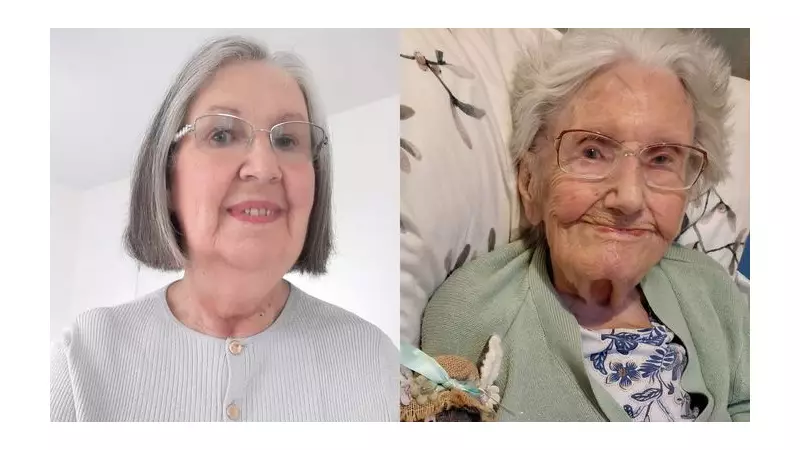
A former NHS project manager who has become a full-time carer for her elderly mother believes the Government must urgently increase support for those providing care beyond state pension age. Sara Wise, aged 66, has seen her retirement aspirations completely disappear since she began looking after her 94-year-old mother, Jean Autton, following a devastating fall in 2023.
Life Transformed by Caring Responsibilities
Jean, who previously worked as a care assistant herself, became permanently bed-bound and entirely dependent on others after breaking her leg during the incident. This prompted Sara and her husband Stephen to move in with Jean to provide constant, round-the-clock care. Sara describes feeling like "a bird that has very much had my wings clipped", with her life now revolving entirely around her mother's complex needs.
The mother of two rarely leaves Jean alone for more than an hour and must meticulously plan every aspect of daily life around care visits. "All my other friends and colleagues are doing the things I want to do, I can't do anything spontaneous," Sara revealed, adding that this wasn't how she envisioned her retirement years.

Health and Family Impact
Sara admits that looking after her own health has become a significant struggle, with all her time and energy focused on caring for her mother. "I can't remember the last time I saw my GP and I know I need to, but I just can't fit it in," she confessed. The situation affects the entire family dynamic, with Sara noting that her children don't receive the same attention they would otherwise, and her husband certainly doesn't get the partnership he expected.
Before her accident, Jean had been remarkably independent and active, involved with her local church, regularly socialising with friends, and driving until 2020 when her eyesight began deteriorating. Now completely bed-bound, doubly incontinent, and requiring hoisting into her wheelchair, Jean remains fully aware of her changed circumstances. "She's very frustrated about now being so dependent," Sara explained.
Financial and Systemic Challenges
Sara retired six months before reaching state pension age in late 2024, choosing not to apply for Carer's Allowance due to the administrative complexity and because those drawing a State Pension cannot receive the full amount of both benefits simultaneously. "I thought by the time I claimed it and jumped all those hoops, and I was far too busy, it wouldn't be worth the effort," she said.
The couple had saved diligently and organised their pensions with specific retirement plans, including spending more time with their eldest daughter in Scotland. "We saved hard, sorted our pensions, and we can't spend it," Sara lamented. "We can't go anywhere and we've no idea how much longer it's going to go on for."
Calls for Holistic Support System
Sara advocates for a more comprehensive approach to supporting carers, arguing that current systems focus predominantly on the person receiving care while often neglecting the carer's wellbeing. "There needs to be a much more holistic approach around being a carer – people focus on the person being cared for but not always the carer," she emphasised.
She specifically highlighted what she describes as a "postcode lottery in care", suggesting that the amount of respite care available varies significantly depending on where people live. Sara believes the Government should reconsider stopping carer support at state pension age when caring responsibilities frequently continue beyond this point.
Finding Community Support
Amid these challenges, Sara has found valuable support through The Carents Room, a free online peer-support community with over 50,000 members that offers round-the-clock advice from healthcare professionals. "The support group is just amazing," she said. "It's the only place where you can be completely honest and know that nobody's going to judge you, and you get sensible advice."

She particularly values how the community provides practical guidance and reassurance, noting that "even if they haven't got the answer, they will signpost you and you're not on your own. You feel as if you are, but you're not."
Jean now receives visits from four carers throughout the day, with daily life meticulously organised around her needs. Sara's husband Stephen, a senior transport planner, continued working for an extra year past his official retirement age, partly to "get out the house as much as possible" as caring responsibilities became increasingly demanding.
The family's experience highlights the growing need for improved support systems for the thousands of individuals providing unpaid care for elderly relatives across the country, particularly as demographic changes increase pressure on both families and public services.