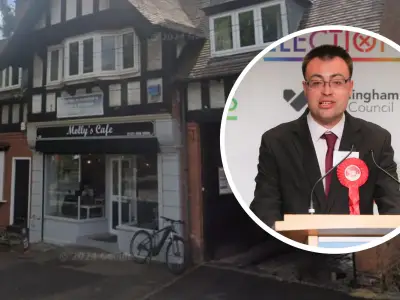
Refugees and asylum seekers living in Birmingham have voiced fear for their future amid concerns over 'changing attitudes' and 'divisive' politics. Their concerns emerged after Birmingham Reform councillors controversially called on the city council to end its status as a 'City of Sanctuary' and 'play no part' in any new voluntary refugee sponsorship scheme.
The motion, put forward by Reform councillors Graham Green and Cherie Waddingham, was ultimately lost after fierce criticism from other parties on the council. However, the request sparked sadness and anxiety among refugees and their supporters in Birmingham.
Voices of Fear and Disappointment
Algar Goredema-Braid, a migrant from Zimbabwe who moved to Birmingham nearly 40 years ago, described her reaction to the motion as a 'mixture of angry, disdain and sometimes pity.' The 68-year-old expressed concern that attitudes towards refugees had changed to a 'great extent' over the decades. 'We were very welcome at that particular time and a lot of the people I knew were academics, ambassadors and so on,' she said after attending the meeting. 'People came and really prospered. You were not frightened to say where you were from.'

'It's really sad now to hear the divisions that there are and people being treated differently because of their colour, their accent,' she added. 'I'm proud to be a Zimbabwean but I'm also a very proud Brummie – Birmingham is my home.' On why she thought attitudes were changing, she said: 'Maybe the divisiveness of our leaders [is the reason], you only have to look at Trump. There is that language in the media and everything else. But at the end of the day, I don't want to use that as an excuse.' She continued: 'I really would like to sit with [the councillors] and just have a conversation, have a cup of tea. I know that sounds naïve but I think you need to have that greater conversation to actually understand.'
Charley Jacobs, originally from South Africa, said the vast majority of people in Birmingham are welcoming but added the city would be a 'dark place without City of Sanctuary.' 'I think it would be a bad thing if [the council withdraw from the scheme] because like most of the councillors were saying, asylum seekers and refugees [would become] scapegoats for things that are not our fault,' she said. 'If City of Sanctuary should close, what is going to happen to all those people that are working as carers, doctors and all of those things. It would just fall apart.'
Fear of a Less Welcoming City
Angel, originally from Albania, said: 'The idea of making our city less welcoming is deeply upsetting to me. I don't think turning people away or making them feel unwanted reflects the values that make Birmingham such a special place. I hope Birmingham continues to be a city where people are treated with dignity, kindness, and respect, and where everyone has the opportunity to feel that they belong.'
'Being in a City of Sanctuary, it was really good for me,' said Temitayo Ajayi, 54, from Nigeria. '[There was an] atmosphere to express myself and be helped.' Asked how she felt about Reform's request, she said: 'It made me scared. I would say to the councillors just be compassionate and think sometimes, when you see or hear what people are going through on their own – they really need help.'
Mansour Masoud, who moved to Birmingham in 2017, said refugees want to 'contribute to this country and give back' once they have settled. 'I think I can see the future of Birmingham,' he said. 'You can see now it's a mixed, multicultural city. [The City of Sanctuary continuing] is a big relief.'
Reform and Tory Councillors' Arguments
Birmingham has been a recognised City of Sanctuary since 2015 and has supported people seeking safety through resettlement programmes, local partnerships and services. However, Reform councillors argued that the council faces 'significant challenges' including pressure on housing, neighbourhood services and local government finances. 'The council's first responsibility is to the residents of Birmingham and to delivering high-quality public services,' they wrote. 'Birmingham City Council should focus its resources on the needs of existing residents and the recovery of local public services.'

Presenting the motion, Cllr Green argued that the city had been reduced to 'a shambles' by the previous Labour leadership. 'What those who served on this council over the last 14 years appear to have forgotten is that their primary duty is to the Brummies that put them here – the tens of thousands of people who were born and worked in this city, bought a house here, raised a family here,' he said. Reform group leader Cllr Jex Parkin added: 'All we are proposing is that we put our city first. All we want to do is deliver public services effectively.'
The Tories put forward an amendment to Reform's motion, also calling for an end to City of Sanctuary status, citing thousands of people of 'all races and all faiths' on Birmingham's housing waiting list. 'We have a duty to make sure we are looking after every single person in this city,' Conservative group leader Cllr Robert Alden said.
Cross-Party Criticism and Support for Sanctuary
Calls to withdraw from the scheme were slammed by other parties. Green Cllr Jane Baston described Birmingham as a city 'that welcomes and celebrates our diversity because we know that it is our strength.' Labour group leader Cllr Nicky Brennan said Reform could have taken the opportunity to discuss something meaningful that 'actually helps Birmingham.' Independent Cllr Nosheen Khalid said 'putting Birmingham first' does not mean 'turning vulnerable people into political footballs.'
Shari Brown, chair of the Birmingham City of Sanctuary committee, said: 'I think there's misunderstanding, the money that comes into the city that supports asylum seekers is ringfenced. So as many a councillor said, withdrawing that sanctuary status is not going to make any difference. If we are concerned about housing, health and employment for everyone in the city, then sure we should be concerned but that doesn't exclude the vulnerable – it includes the vulnerable. Compassion and fiscal responsibility can complement each other.'