I transitioned decades ago. Now I am terrified of being forced back into men's spaces. By Louise, pseudonym. Published 6th May 2026, 05:05 BST. Transsexuals at the crossroads: what the public does not know. Trans woman Louise shares her story.
Louise, who has connections to Birmingham and the wider Midlands, is writing under a pseudonym because she fears for her safety. It is not a lifestyle choice. Transition is, for many of us, about survival. If a fulfilling life follows, that is something hard-won.
Upcoming Legislation Raises Fears
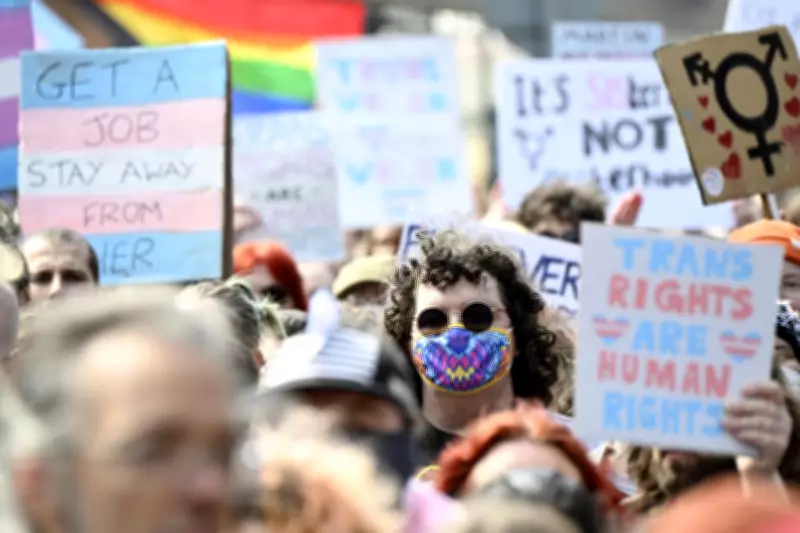
Within the next few weeks, the guidelines for excluding trans people from single-sex spaces are due to be published and are likely to be implemented into law. Once again, we few transsexuals who hold Gender Recognition Certificates will be holding our breath over what the wording of the legislation will be.

I use the term transsexual rather than transgender deliberately. The two groups are very different. For six decades, we have surgically transitioned under NHS-diagnosed severe gender dysphoria and integrated into the opposite sex. In contrast, many who identify as transgender do so through self-identification and generally do not undergo surgery.
This distinction is rarely reported today. That lack of clarity has led to public confusion and, for people like us, serious consequences.
A Medical Condition, Not a Choice
While many transgender people are proud of their identity, we do not feel the same about being transsexual. For us, this is a medical condition, as debilitating in its own way as dementia or cancer. Gender dysphoria is something I can only describe as cruel. It consumes lives. It can devastate not just the individual, but entire families. What can parents say when their child, after years of distress, breaks down and says they cannot go on living unless something changes?
That child was me. In 1978, at seventeen, I came very close to ending my life. There was little understanding or support at that time. Over the next fifteen years, I struggled deeply, and my parents suffered alongside me. Eventually, I followed the only path that made survival possible and underwent full reassignment surgery in the early 1990s.
My father never came to terms with it. He died in 2000, and I believe the strain played a part. My mother did come to accept me, though I lost her some years later.
Fears of Exclusion and Violence
Now, decades later, the prospect of being excluded from women's spaces is not a minor inconvenience. It is frightening. For those of us who transitioned long ago and have lived without issue, the idea of being forced into men's spaces, even hospital wards, raises real fears. There is the risk of being outed. There is the risk of harassment, violence, even sexual assault.
This is not hypothetical. Recently, at a social event, I was approached persistently by a man who would not leave me alone. That encounter made me realise how vulnerable I would be if forced into male spaces.
Public discussion is becoming more hostile. Some voices are calling for blanket policies that make no distinction, even for post-operative individuals with legal recognition. The Supreme Court ruling last year appeared to group us together with those who simply cross-dress, and we were not given a voice in that process. That raises a difficult question: why were we not heard?
A Small and Distinct Group
Another point that is rarely acknowledged is how small our group is. When the Gender Recognition Act was introduced in 2004, around 5,000 transsexuals held GRCs. Today, that number is roughly 8,500. It has remained relatively stable. By contrast, the number of people identifying as transgender has risen sharply in recent years, now estimated at over 400,000. These are very different populations, yet they are often treated as one.
There is also the unresolved issue of amended birth certificates. These were granted under the GRA, but since the Supreme Court ruling, their legal status is unclear. There has been little public discussion about this. What happens if someone with an amended birth certificate is challenged when using a single-sex space? What happens to marriages that relied on that legal recognition before same-sex marriage was introduced? These are not abstract questions. They affect real people.

It sometimes feels as though we are invisible. Many politicians may not even be aware that people like us exist, especially those of us who transitioned decades ago and have lived quietly since. Meanwhile, different sides of the current debate often treat all trans experiences as the same. That simplification serves various agendas, but it leaves us caught in the middle. We are a very small group, yet we risk becoming collateral damage.
Retreating from Public Life
If the coming legislation does not account for our situation, it could bring existing legal recognition into conflict with new rules. That would create uncertainty and fear. Many of us are already retreating from public life, choosing to remain unnoticed in the hope that things will settle. But being invisible also means our voices are not heard when decisions are made.
I have lived through more than I ever expected. I have written a manuscript about my experiences, not for recognition, but to help people understand what transsexuals have gone through. My hope would be for any proceeds to support women's charities, as a gesture of gratitude to those who have shown kindness over the years. Whether it is ever published, I do not know.
Perhaps these words will not change anything. Perhaps they will reach a few people and offer some insight. If nothing else, when the time comes to be reunited with my mother, I would like to be able to say that I did manage to make something of my life after all.