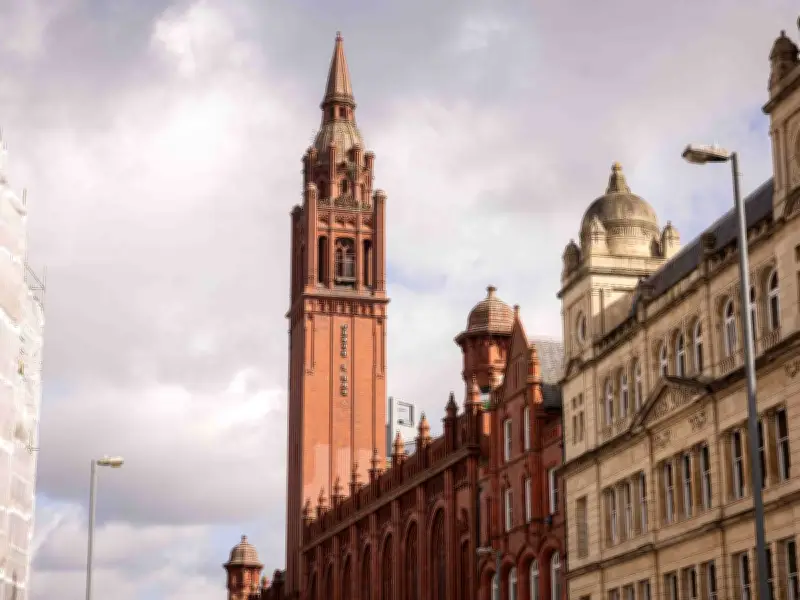
After more than a decade of neglect, Birmingham's iconic Methodist Central Hall on Corporation Street has been purchased by the Civis Foundation, a US-based organisation with plans to transform the Grade II-listed building into a major civic and cultural institution. Campaigners have hailed the move as the "good news the city needs" following years of uncertainty and deterioration.
Historic building rescued from further decline
The hall, built in 1904, had been left to rot since the closure of the much-loved Que Club in 2017, with successive owners failing to deliver on regeneration promises. Earlier this year, council bosses ordered the previous owner to carry out urgent repairs after a section of the roof collapsed. The building had also been named among the most at-risk Victorian and Edwardian structures in the country.
Jez Collins, founder of the Birmingham Music Archive, expressed relief and excitement at the news. "It had been left to deteriorate since the closure of the much-loved and missed Que Club in 2017. Successive owners had promised to regenerate the building with various schemes, but all have failed," he told BirminghamLive. "The news that Civis has completed the purchase of the hall, and are the new custodians of the building, is hugely encouraging."
Plans for a civic and cultural hub
The Civis Foundation, which is undertaking its first UK project, says it will restore the hall for public use, combining heritage preservation with performances, culture, education, hospitality and community activity. "Central Hall can once again become a public home for Birmingham's civic life and a working model of an interdependent future," the foundation stated.
Eric Galloway, president and portfolio curator at Civis, said the building "deserves a future as vital as its past." A spokesperson elaborated: "Its spaces will hold performance, exhibitions, civic dialogue, making, learning, and cultural enterprise side by side. The project is built around a public-benefit model in which commercial activity sustains civic purpose." Revenue from venue use, hospitality, studios, events, and creative enterprise will support public access, cultural programming, artist development, and long-term resilience.
Campaigners celebrate the news
Jez Collins highlighted the foundation's track record in the US of taking on heritage buildings and "lovingly and respectfully bringing them back into public use" as cultural, community and civic spaces, rather than apartments or offices. "It's some good news the city needs and you can see the reaction from people across social media on how much this building is loved and how excited everyone is to see it brought back to life," he said.
Social media users described the acquisition as "incredible news" for Birmingham. Karen Haines-Lea wrote on Instagram: "Great news!" Another commented: "This is amazing." Jez added that he "can't wait" to walk through the doors and "up those majestic steps again."
A new chapter for Corporation Street
The foundation said its approach is to ask "what collective responsibility the community has toward preserving the site and its history, and then build a new civic institution as a thesis of its own." Corporation Street, at the heart of a city shaped by culture, industry and exchange, provides a fitting setting for this first English application. "Restored for the present, the hall can once again become a public home for Birmingham's civic life and a working model of an interdependent future," the foundation added. "Central Hall will become a place for encounter, making, exchange, and participation across difference - a public hall for Birmingham's next generation."