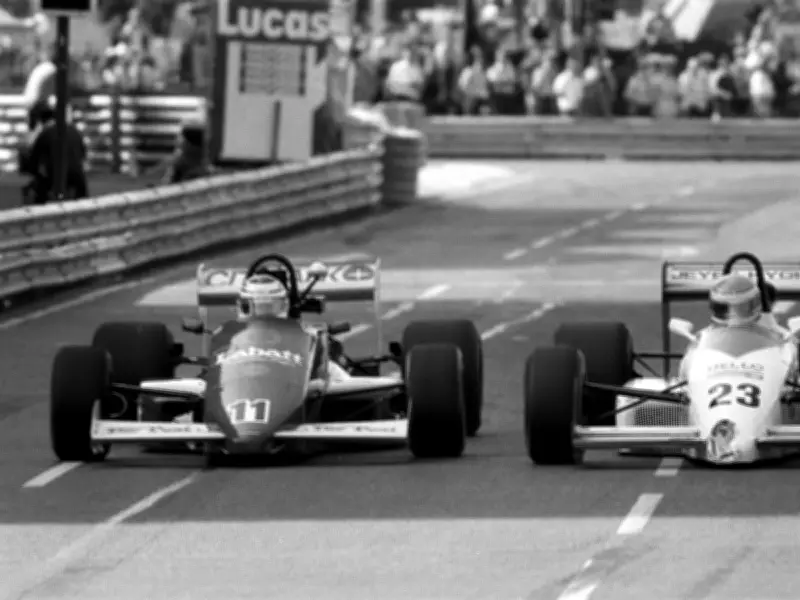
Next month marks the 40th anniversary of the Birmingham Superprix, a bizarre little episode in British motorsport history that has since become legend for local residents and fans of the sport alike. Its inaugural race was held over the August Bank Holiday weekend, as it did over the five years the event was held before ending in 1990.
Unique Legal Status for Street Racing
The uniqueness of the Superprix cannot be overstated. Birmingham was the only city on the UK mainland legally permitted to host racing on its public streets at the time. For a short while, the FIA Formula 3000 Championship (the feeder series to F1) called the second city their home.
The story of Brum's famous race dates back to 1966, when local businessman and racing driver Martin Hone and city councillor Peter Barwell first dreamed of the second city having a Monaco-style street race. The council was looking for a grand public relations stunt to put Birmingham on the map and promote its bid for the Olympic Games. Over nearly two decades, Hone built local appetite by running massive motoring festivals and high-speed demonstration runs on the streets. This even included Patrick Nève driving a Formula 1 Brabham around the Bullring in 1976.

Overcoming Legal Hurdles
There was one small issue getting in the way though: British law. It was strictly illegal to close public highways for motor racing or to exceed the speed limit. To get around this, the council successfully pushed the Birmingham Road Race Bill through Parliament. Receiving Royal Assent in October 1985, this special Act of Parliament gave Birmingham the unique legal right to turn its city streets into a racetrack.
1986: The Chaotic Debut
The first race saw decades of dreaming and planning all lead up to that fateful day in August 1986. The 2.5-mile track was centred on Bristol Street and Belgrave Middleway, with the local Bristol Street Motors dealership famously vacating its forecourt to serve as the official pit lane. Weather reports forecast sunshine for the bank holiday weekend, making it ideal to floor it through the city centre. As we now know, that wasn't the case.
It was utterly battered by the tail-end of Hurricane Charley. The storm brought a catastrophic, torrential deluge that turned the street circuit into a treacherous slip-and-slide. Street furniture, manhole covers, and severe bumps threw the cars violently around. Visibility was virtually zero, according to reports at the time. The race descended into carnage. On lap 21, British driver Andrew Gilbert-Scott spun his car and crashed directly into a stationary, previously crashed car belonging to Alain Ferté, effectively blocking the track. The race was red-flagged and stopped before it even reached the halfway point. Spanish driver Luis Pérez-Sala was declared the winner, and because the full race distance wasn't met, the drivers were only awarded half-points.
Peak Years and Decline
The Birmingham Superprix may have gotten off to a biblically bad start, but the subsequent years, from 1987 to 1989, enjoyed much better weather. Massive crowds of upwards of 80,000 spectators lined the streets to see the F3000 machines high-tailing it across Brum. Future F1 legends like Jean Alesi and Heinz-Harald Frentzen tore up the asphalt as well. The fifth and final race took place in August 1990, won by Belgian driver Éric van de Poele. It would be the last time racing cars ever competed on the streets of Birmingham.
Sadly, a myriad of factors led to the race's end. Despite claims that it wouldn't cost taxpayers a penny, the infrastructure costs—putting up miles of concrete barriers, grandstands, and Armco fencing, and then tearing them down every year—were staggering. By 1989, the event had accumulated over £1.6 million in losses. Then there was the disruption. Local businesses, particularly on Bristol Street, grew tired of the massive inconvenience it caused. The area was choked by construction for two weeks before and two weeks after the event, decimating regular retail revenue.

Legacy and Lasting Impact
In late 1990, the cash-strapped Birmingham City Council tried to keep the race alive by putting the event's organisation out to private tender. No private backers stepped forward to absorb the financial risk, and the race was quietly cancelled. Today, there is almost no physical evidence left on the streets to show that international motorsport history happened here. The concrete barriers are gone, the flowerbeds that used to spell out 'SUPERPRIX' have been paved over, and Monaco House, which served as the race media centre, was recently demolished.
However, for Brummies of a certain age, there remains a deep nostalgia for the sheer ambition it took for a city council to organise something so aggressively loud, fast, and dangerous in the middle of Birmingham. Decades later, when London began exploring Formula E street races, the legal framework and logistical blueprints they looked back on started with what Birmingham achieved in the 1980s.