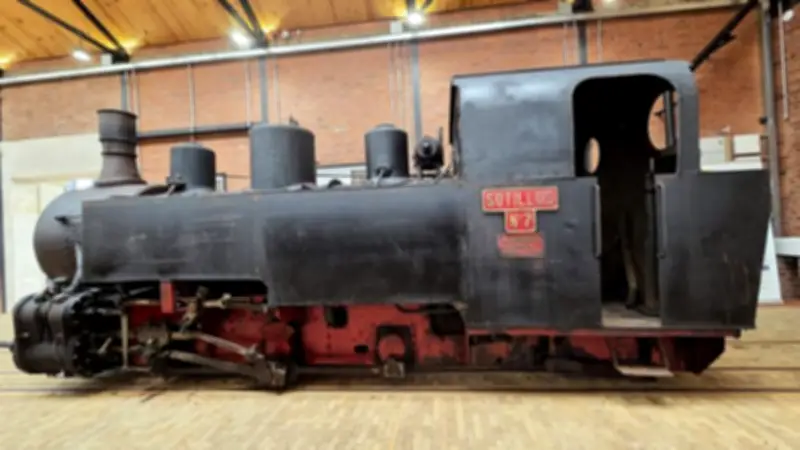
A historic steam railway locomotive that was hidden from view for almost 60 years has now been put on public display at the Vale of Rheidol Railway in Aberystwyth. The engine, Sotillos No.7, remains in the same condition as the day it hauled its last train in 1967, offering a remarkable survival story.
From Spanish Mines to Secret Storage
The powerful steam train was originally built by Berlin manufacturers in 1906 for use on demanding mining railways in Spain. It hauled hundreds of tonnes each day until the industrial line closed down in 1967. The vehicle was destined for the scrap heap before a wealthy British railway enthusiast, Peter Rampton, stepped in to buy the entire fleet. The engines were transported by ship and lorry to a farm in Surrey for safe keeping.
The locomotives were shunted into a large complex of barns for long-term storage and covered in a thick layer of oil. Over the next three decades, Rampton travelled the world hunting down more at-risk engines to join his secret collection. More than 50 historic locomotives were eventually acquired and stashed away inside various workshops on the farm.
The Legend of Collection X
Security was kept tight for decades to protect the valuable metal parts from scrap collectors, and few people were ever allowed to visit. This secret accumulation of engines became legendary among railway enthusiasts, who nicknamed the destination Collection X. Rampton died in 2019 but planned ahead so the reminders of past engineering could finally be brought into public view.
While some engines have been sent to new custodians, 32 locomotives have been brought to the Vale of Rheidol Railway in Aberystwyth over several years. Large storage sheds and a museum building have been constructed to house the vehicles.
Revealing the Time Capsule
The engineering team recently moved the train to the workshops for a thorough clean and de-grease after it sat covered in oil. The engine has now taken pride of place in the museum for visitors to see. Llŷr ap Iolo, Vale of Rheidol Railway chief executive, said: “Peter Rampton’s legacy to us – and the wider world – was unprecedented in terms of its scale and heritage value.”
He continued: “He saw his role as just a rescuer of engines: he wanted others to work out what to do with them, once he had done his bit. We’re so pleased to have had the opportunity to not just work on this fascinating piece of historic engineering, but also now share it with the world at long last.”
Tim Dunn, the railway’s head of collection development, added: “Sotillos is truly an extraordinary survivor: a piece of industrial equipment that should have ceased to exist a lifetime ago. But, because of Peter's passion, his foresight and dedication to preservation, we now have something that people thought had been lost.”
He concluded: “By itself this unrestored engine is a fascinating time capsule, but what's thrilling is that there are another two dozen further hidden locos, each with their own amazing stories to tell too. We’re only just assessing them now and realising their full, true potential. Watch this space!”
The display of Sotillos No.7 marks a significant milestone in bringing the hidden treasures of Collection X to the public. The Vale of Rheidol Railway continues to assess and restore the remaining locomotives, promising more revelations in the future.