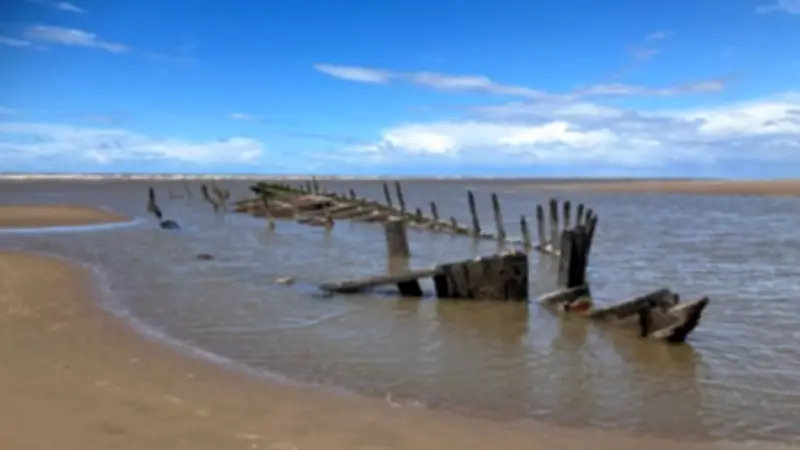
The wreck of the Star of Hope, a historic cotton trader, is one of the most fascinating pieces of maritime heritage on the Sefton Coast. However, this historic vessel only reveals itself when it chooses to. For long periods, the shipwreck lies hidden and preserved beneath shifting sandbanks and fast-flowing tidal channels. As sandbanks move along the coast due to longshore drift, which shapes the shoreline, the wreck becomes exposed again. This year, it is showing particularly well.
Free Guided Walk to the Wreck
Green Sefton will host a free guided walk to the wreck on Saturday, June 20, led by John Dempsey. Participants will meet at Ainsdale Discovery Centre (PR8 2QB) and set off at 10am sharp to take advantage of low tide. The walk is expected to return to the centre by approximately 12.15pm.
Essential Preparation for the Walk
Wellingtons are absolutely essential, as the route involves crossing a series of shallow channels before heading south along sandbanks to reach the shipwreck, located south of Ainsdale. Weather-appropriate clothing, whether waterproofs or sunhats, is also necessary, as there is no shelter from the elements in the intertidal zone. If weather conditions are unsuitable, the walk will be cancelled.
To book a place, email john.dempsey@sefton.gov.uk. Shipwreck walks are very popular and book up quickly, so early booking is advised on a first-come, first-served basis.
History of the Star of Hope
This enigmatic three-masted barque collided with another vessel, the Kuvus, as it approached Liverpool during a terrible January storm in 1883. The crew was bringing a cargo of cotton from Wilmington, North Carolina. Force ten winds battered Liverpool Bay that night, causing many ships to struggle. However, the demand for cotton in northwest England was so high that crews had little choice but to undertake the lucrative transatlantic crossing. By the early 20th century, 30% of all imports into Liverpool were cotton, and cotton-based goods accounted for 42% of all exports from the booming port.
While the storm claimed the life of a member of the New Brighton lifeboat, which overturned off the Mersey mouth, all hands on the Star of Hope escaped unharmed. They took refuge on the Crosby Lightship, but the unmanned ship drifted up the coast and ran aground on the sands south of Ainsdale.
The Star of Hope was built in Bremen, Germany, measuring over 36 metres long and 7.5 metres wide. Today, only the bare bones of the old ship remain, serving as a reminder of a fascinating period in history. The wreck is well exposed on suitably low tides at the moment.
Marine Life and Beyond
The walk also provides an opportunity to study the variety of shellfish and other sea life that often appears along the tideline, from jellyfish to sea potatoes. John works for Green Sefton, a Sefton Council service that combines the Coast and Countryside, Parks and Greenspaces, and Grounds Maintenance teams for a joined-up approach to managing, developing, and overseeing Sefton's beautiful coastline, parks, and green spaces.
This column explores the flora, fauna, and history of the coastline, as well as the work carried out to protect it.