After a summer of hot, dry weather, a fresh breeze from the west, or a strong storm system, brings its own excitement—especially in autumn. Strong westerlies or north westerlies push seabirds closer to the coastline, offering a chance to admire ocean wanderers as they seek shelter in Liverpool Bay.
Pelagic Species and the Role of Westerly Winds
Many of these “pelagic” species spend most of their lives at sea, coming ashore only to breed. Others are more adaptable, but all are pushed closer to land when the westerly wind picks up, particularly if it is coupled with a cycle of higher tides, according to John Dempsey of Green Sefton, the Sefton Council service that manages the coastline, parks, and green spaces.
If the hot, dry conditions persist, most seabirds will stay far out in Liverpool Bay or further away in the eastern Atlantic. Strong westerlies can push these birds up against the Scottish or Irish coastlines and then funnel them into the Irish Sea, sending them our way as they continue migratory journeys, some of which lead into the vastness of the Southern Atlantic, where many seabirds winter.
Declining Numbers and the Thrill of Seawatching
Numbers of these enigmatic creatures have been in steady decline in recent years for a number of reasons, not least because of a collapse in food chains in breeding areas and warming sea temperatures. Yet searching for them remains Dempsey’s favourite wildlife experience.
“You can’t beat seawatching over a high tide from a dune perch above the waves—when birds are passing it can prove a thrilling identification challenge, particularly if they are at range,” Dempsey wrote. “Then flight action maybe all you have to deduce what you are looking at—and some species can be distinctive several kilometres out. Nothing else flies like a Manx Shearwater, Gannet or Fulmar for example.”
When the seabirds aren’t playing ball, there are worse ways to spend your time than watching the waves, whether with binoculars or telescope.
Larger Seabirds and Skuas: Pirates of the Air
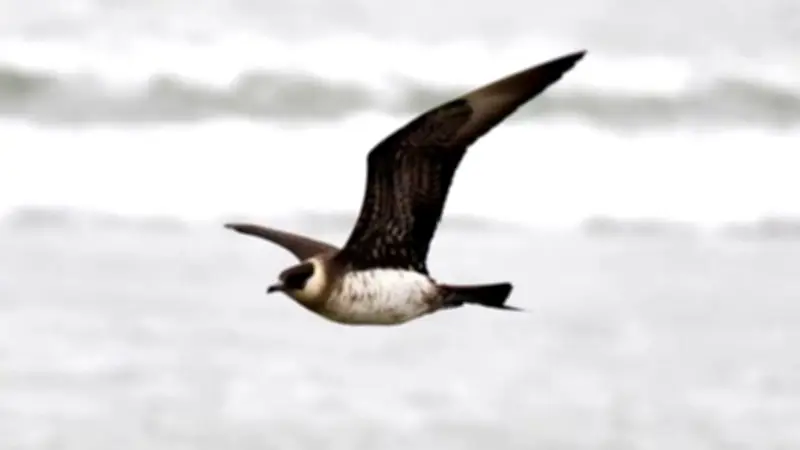
Larger seabirds dive for fish—Gannets are astonishing when they plunge like javelins into the waves. Others pick scraps from the surface, some are just passing through, and some are pirates. Skuas, numbers of which have really declined in the last decade, are kleptoparasites, chasing down other species on sharp, angled wings like giant falcons, until their unfortunate victims drop or regurgitate food to make it easier to escape the attentions of these robbers.
They are masters of the air, with Arctic Skua remaining the most regularly occurring species around here, albeit in smaller numbers than once enjoyed. Pomarine and Long-tailed Skuas were always rare locally and are even harder to find these days. Biggest of all, the gull-like Great Skua or “Bonxie” has also become a rare sight offshore now, when once good numbers used to lie in wait in the Liverpool Bay shallows from late summer onwards, springing up from the waves to batter, rob or even kill seabirds that strayed too close.
“Remarkable birds—just thinking about them has me wishing for a good, strong westerly and high tides,” Dempsey added.