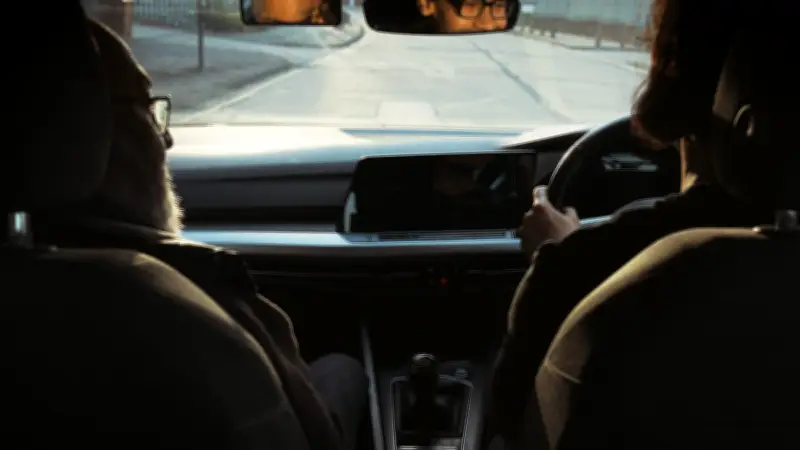
On a spring evening earlier this year, Bangladeshi artist Laisul Hoque chatted with his friend Mehrul about a book titled '50 Years of Bangla Brummies'. The term 'Brummies', referring to people from Birmingham, was unfamiliar to Mehrul, who confused it with 'Burmese'. Hoque, normally based in London, was staying in a city centre AirBnB while working on a commission to create a new artwork connected to Birmingham's Bangladeshi community.
Discovering Birmingham
Hoque, 28, admits he had never thought about Birmingham before starting the project. Even after five years in the UK, he had barely ventured outside the M25. When Grand Union, in partnership with Bow Arts, approached him to make work in Birmingham, he was intrigued. 'If somebody comes to me being like, there's a lot of cultural material here you might find interesting, that's a strong draw,' he says. He was also feeling restless in London. 'I [thought], okay, this can't be my life. I want to explore the rest of the island!'
On his first visit, the Christmas lights made the city beautiful, but subsequent trips were less magical. Arriving at New Street in harsh daylight, he saw the HS2 construction site stretching 'like a gaping wound'. He arrived an hour late for a meeting due to Digbeth's diversions. The city centre felt 'kind of empty' and unwelcoming.
Learning to Drive in Birmingham
Friends advised Hoque to explore Small Heath, Lozells, and Coventry Road. He took multiple-leg bus journeys that were often delayed or cancelled. 'They're streets with shops with uncles hanging out,' he recalls. 'How do I engage? How do I get a sense of people's lives and stories?'
Hoque had previously found a driving licence useful for taking his father to hospital. Now he saw learning to drive as a way to embed himself in the city. Birmingham is not short on Bangladeshi driving instructors; his instructor was Harun Al Faruque. Over three months, Hoque visited Birmingham every two weeks, taking lessons around Alum Rock and Saltley in the mornings, researching at the Library of Birmingham in the afternoons, and meeting younger Bangladeshi Brummies in the evenings.
One such person was Nilupa Yasmin, a Sparkbrook-born artist who appears in the film driving with Hoque. Another was street artist Mohammed Ali, who curated the 2018 exhibition 'Knights of Raj', correcting the history of curry in Britain by emphasising the role of Bangladeshi Brummies.
Personal and Political Stories
The film interweaves scenes from Bangladeshi-Brummie history, including protests and political visits, a thank you note from Margaret Thatcher, and observations about Birmingham. Hoque's research into Bangladeshi-Brummie identity made him reflect on his own. 'In Bangladesh, the history is: you were farming and from farming, industrialisation happened, you moved into the city,' he says. In Birmingham, he found more complicated narratives, such as thousands of Bangladeshi men who joined the Merchant Navy in World War II and later set up restaurants or became driving instructors.
Hoque recounts an incident from the 2018 Road Safety Movement in Bangladesh, when a politician pressured him to make propaganda. He refused, and the politician drove him to a remote location, leaving him stranded. 'These people have a proximity to political figures, revolutionaries, world leaders, sometimes turned oppressive rulers,' Hoque says of the people he met in Birmingham.
The film includes news footage of a 1971 protest at Edgbaston during a test match between Pakistan and England, where Bangladeshi activists burned the Pakistani flag. Tony Huq, a school teacher and activist, told a news anchor: 'The extent of genocide and inhuman butchery going on being inflicted by the West Pakistan Army on the unarmed people of Bangladesh is worse than any crime.'
The Car as a Confessional
Hoque has always wanted to be an artist. Despite his parents' insistence on STEM subjects and engineering, he secretly switched to literature at university, only revealing the truth at his graduation. 'They were really upset,' he says. He later secured a funded Postgraduate scholarship at Central Saint Martins.
His films and installations often explore his life and identity as a Bangladeshi person. 'The Purpose was to Document the Other Side' (2023) documents his mother's trip to London, while 'An Ode to All the Flavours' (2024) recreates an antique Bangladeshi sweet shop inspired by his father's favourite snack.
The car became 'a portal' to storytelling, Hoque says. 'The Bengali people who have made Birmingham their home rely heavily on private transport and to engage with them, I had to get access to a car. That speaks poetically to the history of Birmingham but it's also a problem. Public transport is a privilege.'
With three months of driving lessons under his belt, Hoque has booked a test for November. Nilupa Yasmin thinks he has nothing to worry about: 'If you can drive in Birmingham, you can drive anywhere.'
'Learning to Drive in Birmingham' is on show at Grand Union in Digbeth until 3 October 2026.