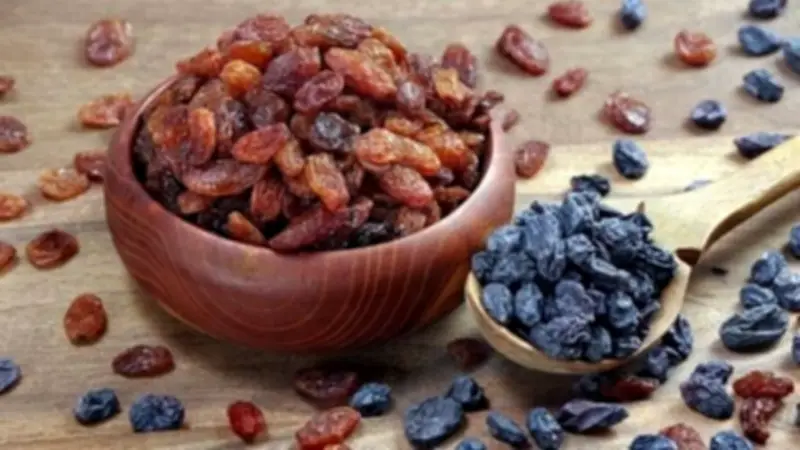
Raisins, sultanas and currants are often treated as interchangeable store-cupboard staples, but each dried grape has its own distinct character, flavour and best uses in the kitchen. Knowing the difference between raisins and sultanas, in particular, can make a real difference when you are baking, especially when texture and sweetness matter.
While they may look fairly similar at first glance, the three dried fruits come from different grape varieties and undergo different drying processes, which affects everything from their colour and size to their taste and how they behave in recipes.
What are raisins?
Raisins are dried grapes made from larger, darker grape varieties. They are typically dried naturally in the sun or through a controlled dehydration process. The drying method plays a big part in shaping the final result, affecting everything from the colour and size to the overall flavour.

Raisins taste quite different from fresh grapes because the drying process concentrates the fruit's natural sugars, giving them a much richer, more intense sweetness. You can expect a raisin to be deep in colour, chewy in texture and to carry a subtly caramel-like flavour.
Thanks to these qualities, raisins work brilliantly in baking, sprinkled over cereal or added to flapjacks. They can also bring a lovely depth to savoury dishes such as tagines or rice pilaf.
What are sultanas?
Sultanas are also dried grapes, but there are a few key differences, reports the Express. They come from green, seedless grape varieties and go through a slightly different drying process, which tends to be quicker. They are often coated in an oil-based solution before drying to speed things up, and may be treated to help preserve their lighter colour and moisture.
The result is a smaller, softer, plumper dried fruit that is noticeably sweeter and juicier than a raisin, with a much paler golden hue. This makes sultanas a go-to choice for baking, and you will find them in everything from cakes and scones to hot cross buns and fruit loaves.
Where do currants fit in?
Currants are a little different again. Although they are often grouped together with raisins and sultanas, they are made from an entirely different type of grape, the small, seedless Black Corinth variety.
They are considerably smaller than both raisins and sultanas, and pack a tangier, more intense flavour. That punchy taste makes them a favourite in classic British bakes such as Christmas pudding and fruit cake.