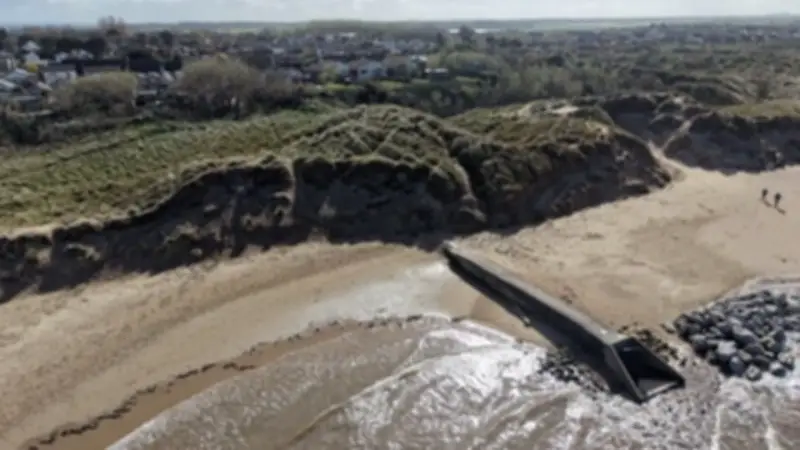
Visitors to the coastline at Hightown this week will notice emergency works ongoing on the beach to reduce flood risk and slow coastal erosion at the site. The work, which involves placing a barrier of rock armour to the north of the United Utilities outflow pipe on the sands, is being carried out by Sefton Council under the Coastal Protection Act of 1949 and will also protect the precious dune habitat at the mouth of the Alt estuary.
Storm Dave Worsens Erosion
Erosion has long been a concern at Hightown, but the situation has become more pressing following damage caused by Storm Dave in April this year. While much of the coast was unaffected by the fierce storm system, Hightown took a major hit resulting in widespread erosion of the sand dunes, lowering of beach levels and increased pressure on already vulnerable sections of the coastline.
Critical Flood Defence
The sand dunes at Hightown form a primary flood defence. In places, residential properties are located just 80 metres behind the dunes, making this a critical line of defence. A lowered beach level means there is less shoreline between the dunes and the sea, and the dune front is now at significant risk of being damaged by future storms.

Acting as a barrier to the waves, the outflow pipe on the beach is now refracting waves, so that they are focussed on the dunes to the north of the structure, further increasing the risk of erosion and dune damage. If nothing is done further storms could cause a breach in the dune system, leading to flooding of low lying land and nearby homes.
Rock Armour Solution
Damage could escalate rapidly, meaning more extensive and costly works later. The solution that FCERM (Flood and Coastal Erosion Risk Management) officers have arrived at is to put rock armour near the outflow to deflect and absorb wave energy and reduce dune erosion. Following this work in June, there will be a programme of dune restoration and reprofiling.
Sand Recovery and Dune Reinforcement
Sand will be recovered from the River Alt and redistributed to rebuild beach levels. The erosion of the dunes has meant sand has been pushed up the river, and this is being retrieved to rebuild the beach. Additional material will be put in place to reinforce the dune system and so improve the natural resilience of the coastline. The placed sediment will work with the natural processes and will be distributed across the beach and dunes.
Over time, that material will gradually accumulate in the Alt channel again and a similar exercise will need to be repeated in the future. The work is anticipated to start at the end of the summer 2026 and be completed by November 2026. These combined measures will stabilise the most vulnerable sections of coastline, reduce the immediate risk of flood and erosion, support the natural recovery of the dune system and avoid the need for more extensive and disruptive works in future.
Public Safety During Works
During the works access to some areas of the beach may be temporarily restricted as heavy machinery will be operating on the beach. Clear signage will be in place, so if you are planning a visit to the coast at Hightown, please follow all instructions to help keep everyone safe.
John works for Green Sefton, the Sefton Council service which brings together the Coast & Countryside, Parks & Greenspaces and Grounds Maintenance teams for a joined-up approach to the vital management, development and oversight of Sefton’s beautiful coastline, parks and green spaces. This column looks at the flora, fauna and history of the coastline, and the work that is carried out to protect it.