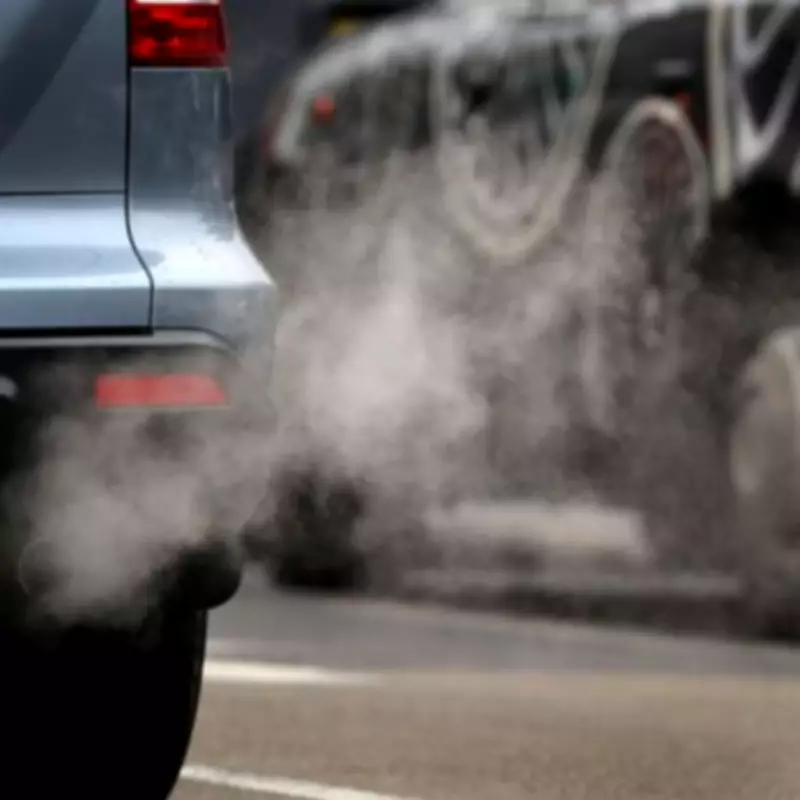
West Midlands Air Pollution Hotspots Revealed in New Data Report
Fresh measures to combat dangerously high levels of air pollution across the West Midlands are set to be implemented following the release of concerning new data. Members of the West Midlands Combined Authority's Overview and Scrutiny Committee will receive a comprehensive update on the regional air quality program during their meeting on Monday, February 16.
Pollution's Deadly Impact on Public Health
Air pollution is responsible for approximately 2,300 deaths annually within the West Midlands region, while also contributing significantly to serious chronic health conditions. The microscopic particulate matter known as PM2.5, which measures less than 2.5 micrometers in diameter, poses particular danger to residents. These tiny particles originate from multiple sources including wood burners, vehicle tire wear, construction sites, and industrial facilities.
Long-term exposure to PM2.5 can exacerbate numerous health conditions, including asthma, coronary heart disease, stroke, and lung cancer. There exists no scientifically established safe level for PM2.5 exposure, making even minimal concentrations potentially harmful to human health.

Sensor Network Reveals Fluctuating Pollution Levels
In 2025, authorities implemented a significant monitoring initiative by installing 90 specialized sensors at strategic locations throughout the region. These devices continuously measure atmospheric PM2.5 concentrations, providing real-time data accessible to the public through the dedicated website cleanair.wmca.org.uk.
The sensors have been strategically positioned outside homes, schools, businesses, hospitals, and sports centers across the West Midlands. Recent data collected over a seven-day period demonstrates considerable fluctuation in pollutant levels, with concentrations ranging from 2 to 17 micrograms per cubic meter (UG/3).
Disadvantaged Communities Bear the Brunt
The committee presentation reveals alarming statistics: when averaged to ward level, annual PM2.5 levels exceed 10 micrograms per cubic meter in 72 of the region's 192 wards. This environmental burden affects approximately 1.2 million people, representing 40 percent of the West Midlands population.
The highest annual average PM2.5 concentrations are consistently modeled in central Birmingham, Coventry, Sandwell, and Walsall. Analysis indicates that the least advantaged areas systematically experience the worst air quality, primarily because communities with the highest indices of multiple deprivation tend to be located near busy transportation corridors and industrial pollution sources.
Current and Future Pollution Control Measures
Beyond the sensor network, additional initiatives include the development of an air quality alert system that notifies registered users during medium to high pollution events. Educational and awareness programs have been implemented at schools throughout the region, while training sessions have been conducted for councilors and officers across local authorities.
The 2026–2030 Air Quality Implementation Plan is currently undergoing procurement processes. This comprehensive strategy will review existing pollution control measures while identifying innovative solutions to support local authorities in implementing effective environmental changes.
Environmental targets established by the Environment Act 2021 aim for PM2.5 concentrations of 12 UG/3 by 2028 and 10 UG/3 by 2040. However, these levels remain substantially higher than the World Health Organization's recommended guideline of just 5 UG/3, indicating significant challenges ahead for regional air quality improvement efforts.