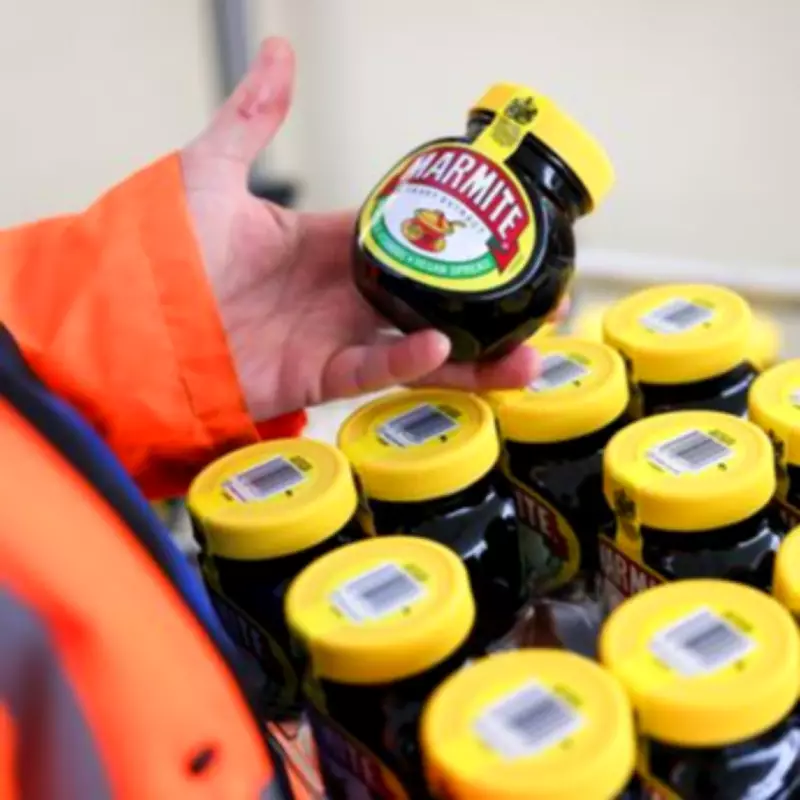
Marmite's Brewery Yeast Origin Revealed on Food Unwrapped Leaves Viewers Divided
The iconic British spread Marmite has long been a polarizing staple in kitchens across the UK, famously sparking debates between lovers and haters. Now, a recent episode of Channel 4's Food Unwrapped has ignited fresh controversy by uncovering the surprising manufacturing process behind this divisive condiment.
Factory Visit Uncovers Yeast Extract Production
Presenter Kate Quilton traveled to the historic Burton-on-Trent factory in Staffordshire, where Marmite has been produced since 1902. The facility specializes in creating yeast extract products, with Marmite being their most famous offering enjoyed on toast and in various recipes for generations.
During the educational segment, quality specialist Sinjin Skelton explained the fundamental process: "When breweries make beer, they take a sugary solution and they'll add yeast to it, and the yeast will convert the sugar into alcohol."
The Brewery Connection That Surprised Audiences
The revelation that stunned viewers was Marmite's origin as a brewery by-product. As beer production occurs, yeast cells reproduce and generate alcohol, creating approximately seven times more yeast than initially needed. This excess spent yeast is then sold to facilities like the Burton factory for yeast extract manufacturing.
The process involves pumping the yeast into enormous vats and heating it to 95°C, which eliminates live yeast and decomposes the cell walls. Sinjin detailed: "What's happening there is we adjust the temperature so the yeast starts to decay."
A centrifuge then separates what's described as "yeasty soup", isolating the broken-down cell walls from the cellular contents. This liquid extract undergoes evaporation to create the thick, dark paste recognized as Marmite.
Viewer Reactions Range from Disgust to Amusement
Social media and viewer responses revealed complete surprise at Marmite's alcohol by-product origins. One person declared: "Oh gosh, I can't eat this anymore, but my childhood though." Another commented humorously: "Toast, marmite, and beer. Yeasty way to start the day."
The manufacturing revelation has created a new dimension to the traditional love-it-or-hate-it debate, with some consumers reconsidering their relationship with the spread after learning about its production methods.
Nutritional Profile and Processing Classification
Despite the surprising manufacturing process, Marmite maintains its distinctive nutritional characteristics:
- Rich in Vitamin B12, riboflavin (B2), and niacin (B3)
- Contains salt, barley, celery and vegetable juice concentrates for flavor
- Brewers' yeast serves as the primary nutrient source
- The paste is enriched with additional vitamins during processing
Due to this multi-step manufacturing approach, Marmite is classified as an ultra-processed food (UPF), a categorization that has gained increased attention in recent nutritional discussions.
The Food Unwrapped episode has undoubtedly added a new layer to the ongoing Marmite conversation, proving that even after 124 years of production, this iconic British spread can still surprise and divide the nation.