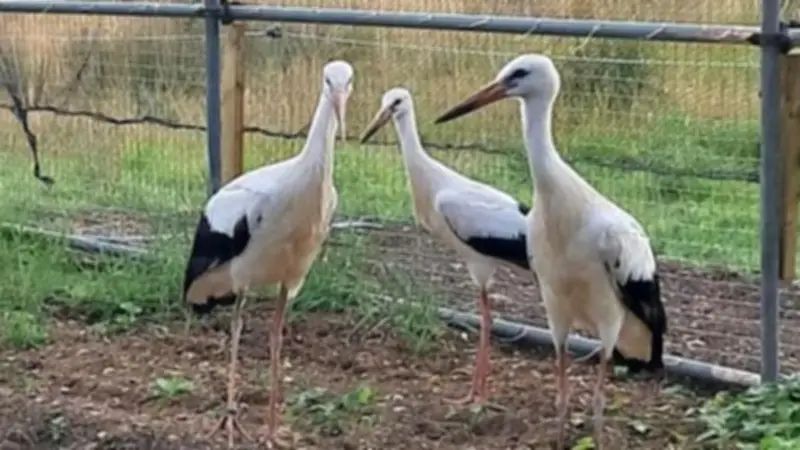
Three white storks have arrived at Willington Wetlands in Derbyshire, marking the first time in over 600 years the species has been recorded in the region. The birds are now settled in a purpose-built enclosure designed to help them acclimatise and eventually breed.
Historic Arrival at Willington Wetlands
The 113-acre nature reserve, managed by Derbyshire Wildlife Trust, now hosts the trio of storks within a secure enclosure. The structure was made possible by a grant exceeding £300,000 from the Veolia Environmental Trust. Conservationists hope the birds will attract other wild storks flying through the Trent Valley to stop and nest, potentially establishing a breeding population.
Expert Insights and Community Role
Katie Last, Living Landscape Officer at Derbyshire Wildlife Trust, said: “We are thrilled to have welcomed our storks to Willington and to see them settling into their purpose-built enclosure. Their arrival marks an exciting step forward for the project. This whole project is about more than the return of an iconic bird though. It’s about reigniting people’s sense of wonder in nature and demonstrating what is possible when communities come together for wildlife.”
Local volunteers will assist in maintaining the site, while a new online platform allows the public to share photos and updates. Harvey Tweats, Director of Celtic Rewilding, added: “This project offers a rare opportunity to facilitate the return of a key missing species. The Trent Valley is uniquely placed to support white stork recovery in the Midlands, combining extensive wetland habitats with restoration opportunities in former gravel pits.”
Historical Context and Future Hopes
Storks were once common across the region before disappearing in the 1300s due to hunting and habitat loss. Their return is seen as a milestone for rewilding efforts. The reserve already hosts a beaver population, and the new arrivals are expected to enhance biodiversity. Events and volunteering programmes will engage the community in nature recovery.