
Endangered Monkey Welcomes Newborn After Groundbreaking Surgery
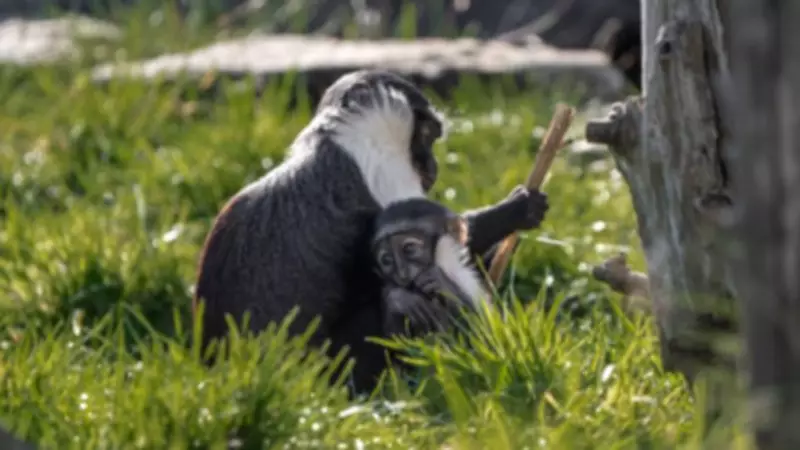
A critically endangered roloway monkey has given birth just months after a pioneering surgical procedure saved her from undergoing a potentially life-altering amputation. Masaya, a 15-year-old resident at Chester Zoo, underwent a complex operation last summer to remove a golf-ball-sized mass from her foot, a collaborative effort between zoo veterinarians and surgeons from the University of Liverpool's Small Animal Teaching Hospital.
Innovative Veterinary Care
Despite no prior documented examples of such surgery on roloway monkeys, the medical team successfully performed the delicate procedure, preserving all but one of her toes. This innovative approach has allowed Masaya to maintain her mobility and natural behaviors, which are crucial for her role as a mother and for the species' survival.
Zoe Edwards, primate keeper at Chester Zoo, expressed relief and joy at the outcome. "Masaya is a very experienced mum and she's parenting magnificently," she said. "Lagertha is only a few weeks old and is very dinky, but already curious about the roloway monkey habitat and inquisitive about us. The fact Masaya’s foot has healed so well is a huge relief. If she'd had an amputation, we'd have been left with real questions about whether she could hold her offspring or continue with her normal behaviours."
Conservation Significance
The birth of Lagertha, Masaya's third daughter, represents a significant milestone for the roloway monkey species, which faces severe threats in the wild. According to the International Union for Conservation of Nature (IUCN), fewer than two thousand individuals remain in their natural habitats of Ghana and the Ivory Coast, where they are endangered by habitat loss and poaching.
Chester Zoo is one of only two locations in the UK where roloway monkeys can be found, making Masaya an essential figure in the European Endangered Species Programme. "Masaya is very important - not just to her family, but to her whole species," added Zoe Edwards. "There are only a few breeding females in zoos in Europe, so her health and reproductive success are highly significant."
Medical Journey and Recovery
Masaya had been experiencing recurring issues with her foot since her arrival at the zoo in 2023. Despite extensive diagnostic efforts, including x-rays, ultrasounds, and biopsies, veterinarians initially struggled to pinpoint the cause, eventually suspecting a persistent abscess from an old thorn injury. When the condition worsened in 2025, she was transported to Liverpool for a CT scan.
Charlotte Bentley, veterinary officer at the zoo’s Animal Health Centre, described the challenges of the case. "It’s not every day you take a monkey to vet school. We had to bring everything she might need, from anaesthesia equipment to medications and blankets," she said. "Following the scan, we decided an operation was the way forward. She's been an absolute trooper all the way through, and I'm just glad we were able to do something for her."
Rachel Burrow, a veterinarian and lecturer at the University of Liverpool, played a pivotal role in both the CT scan and the subsequent surgery. "This was the last chance to save Masaya's foot before amputation," she explained. "Working with primates is completely different from my usual patients, who are typically cats and dogs, and it was a real privilege to care for such a rare animal. It's great to see the surgery was a success - she's comfortable, active and using the limb well."
Masaya and her newborn daughter Lagertha, named after a Viking queen, can now be observed alongside four other monkeys at Chester Zoo, showcasing a heartwarming story of resilience and conservation success.