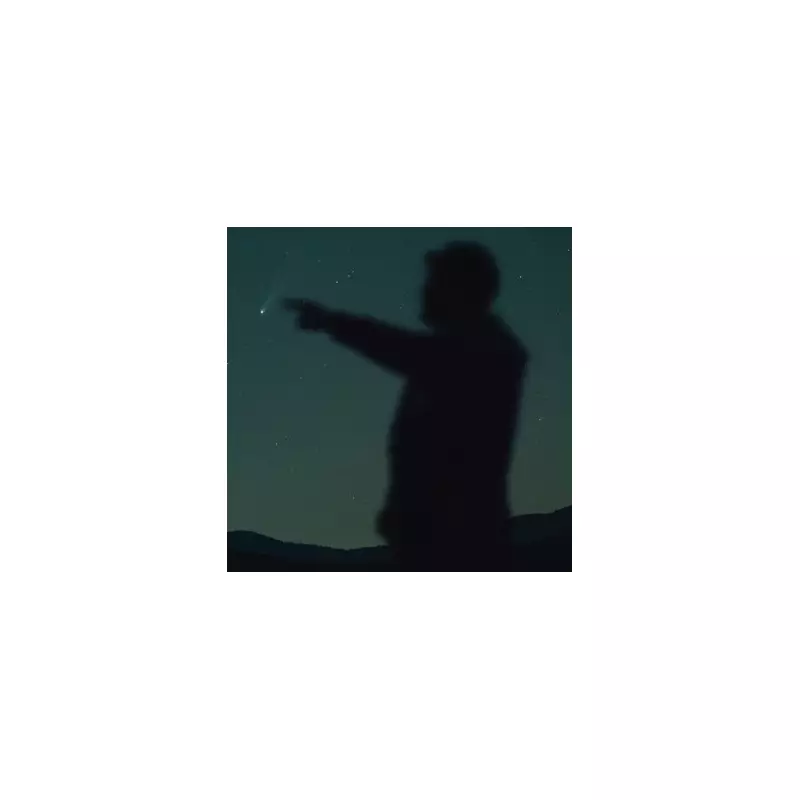
A mysterious object hurtling through our solar system has captured the attention of NASA scientists and sparked a flurry of speculation, including theories of an alien spacecraft. The celestial body, identified as comet 3I/ATLAS, has been confirmed as an interstellar visitor, one of only three such objects ever recorded.
An Interstellar Visitor
Experts confirm that this comet originated from beyond our solar system, a fact denoted by the 'I' in its name. Qicheng Zhang, a postdoctoral fellow at Lowell Observatory, explained the significance to Weather.com, stating, "This comet in particular is interesting since it's actually from outside of our solar system... we can actually see it outgassing and producing dust." This process of outgassing, where the comet releases gas and dust as it approaches the Sun, is what classifies it as a comet rather than a simple asteroid.
Scientists theorise that this cosmic rock could have come from an entirely different planetary system, possibly one located on the far side of the galaxy, beginning its journey billions of years ago.

Alien Theories and Public Speculation
The unusual nature of 3I/ATLAS has inevitably led to theories extending beyond conventional astronomy. On social media platform X, users have enthusiastically proposed otherworldly explanations for the object. One user claimed, "It is an alien spacecraft and when it views our beautiful blue planet earth, all bets are off. Aliens with ray guns are not out of the question." Another added to the speculation, suggesting, "The aliens are here for an intervention. We will never be the same again. 3IAtlas is an alien ship." While these views represent the more imaginative public reaction, they highlight the profound intrigue surrounding this interstellar visitor.
UK's Resurgent Space Ambitions
This cosmic discovery coincides with a significant milestone for the United Kingdom's own space ambitions. Earlier this year, Britain launched its first space rockets in 50 years. The rockets, named Skylark, are capable of reaching an altitude of 62 miles and mark the first launch from British soil since the Black Arrow programme was retired in the 1970s.
Mike Kane, the Aviation and Space Minister, celebrated the achievement, stating, "I am thrilled we’ve reached this important milestone in the UK space sector, and I congratulate Skyrora for being the first UK company to receive a rocket launch licence. This is the kind of scientific innovation and exploration that will help the UK cement itself as a global player in the space race."
Rob Bishton, Chief Executive of the Civil Aviation Authority (CAA), which granted the licence, added, "Granting a home-grown company, Skyrora, its launch licence is a major milestone for our space sector and our nation. Our work as the UK’s space regulator is enabling the burgeoning launch industry to safely grow, bringing new jobs and investment with it."
The detection of 3I/ATLAS serves as a thrilling reminder of the mysteries that lie beyond our planet, while the UK's successful rocket launch demonstrates a growing national capability to explore them. As scientists continue to study this interstellar comet, it fuels both scientific inquiry and the boundless human imagination.