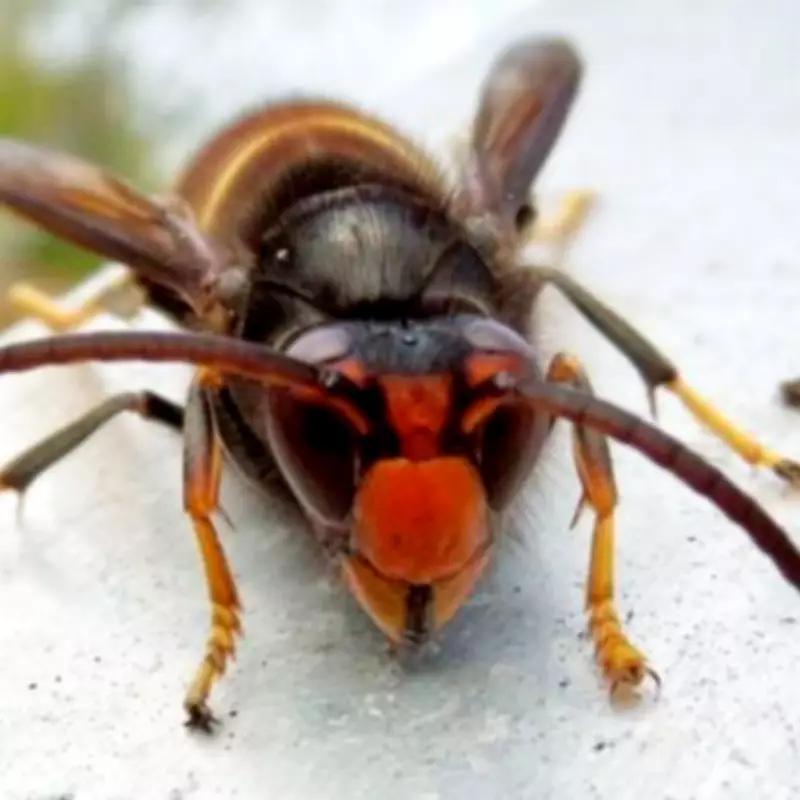
A gardening expert is urging Brits to purchase a fly screen and download the Asian Hornet Watch app ahead of a warm Bank Holiday weekend, as sightings of the invasive species continue to rise across the UK.
Spring temperatures are forecast to reach highs of 29C this weekend, with parts of the country expecting warmer than typical conditions over the Bank Holiday. The elevated temperatures are likely to attract Asian hornets, prompting a call for caution.
Expert Warns of Growing Threat
Luke Newnes, speaking on behalf of Hillarys, suggests this year will be the most concerning for Brits to date. He said: "The concern with Asian hornets is how quickly populations can scale once queens establish successfully in spring."

"Right now, across April to early June, queens are still operating alone before colonies expand, which means this is the only realistic opportunity to disrupt nests before numbers grow significantly later in the summer," reports the Express.
He added: "What makes 2026 particularly concerning is the acceleration we're now seeing in both sightings and geographical spread. We're no longer talking about isolated coastal incidents. Sightings are appearing much further inland, and many experts now believe the focus has shifted from eradication to long-term management."
Key Recommendations
Newnes, a gardening expert and influencer, identified one item that will prove particularly effective in keeping Asian hornets at bay this weekend. He said: "The most important thing people can do right now is stay vigilant during the spring queen-trapping window between April and June, as this is the point where populations are still manageable before colonies expand later in summer."
"Downloading the Asian Hornet Watch app and reporting suspected sightings quickly can make a significant difference in slowing the spread. Also, investing in a fly screen for windows or patio doors can be invaluable during May and into the summer months."
Residents were also urged to monitor any plants or fruit trees in their gardens as the Asian hornet may be observed hovering in the vicinity. "Homeowners should keep an eye on flowering plants, fruit trees and areas with high bee activity, where hornets are often seen hovering while hunting pollinators," Newnes cautioned.
"If a nest is suspected, it's extremely important never to approach or attempt to remove it yourself, as Asian hornets can become aggressive when disturbed. Beekeepers in particular should be inspecting hive entrances regularly throughout spring as activity begins to increase."
Geographical Spread
While Kent and the South East remain the UK's principal risk areas, confirmed sightings have been documented from the North East, North West, South West and Ireland. Specialists anticipate the spread will persist throughout 2026 as queens disperse during milder conditions.
According to the UK Centre for Ecology and Hydrology, the Asian hornet is an extremely efficient predator of insects, including honeybees and other pollinating species. Native to Asia, it was accidentally brought into France in 2004 and has subsequently expanded swiftly throughout surrounding nations.