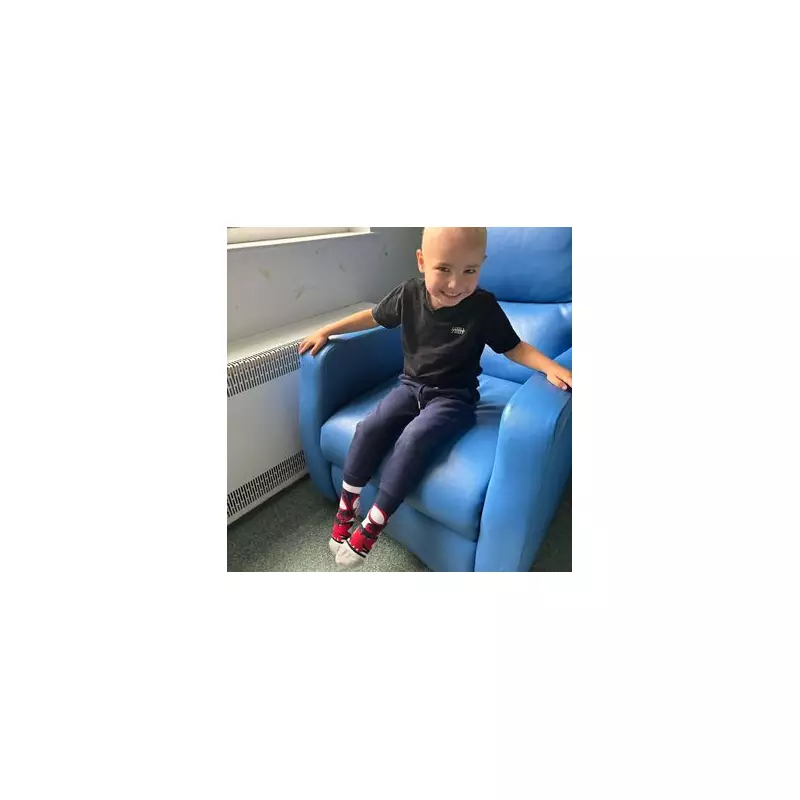
A four-year-old boy from West Yorkshire has made a miraculous recovery after a life-threatening brain tumour was initially mistaken for acid reflux.
A Mother's Instinct Proves Right
Reggie Davison, from Morley, first became ill in the spring of last year. He began suffering from sudden vomiting and extreme fatigue. His mother, Kirsty Benson, 34, took him to the GP repeatedly, but his symptoms were attributed to acid reflux and he was prescribed indigestion medication.
As Reggie's condition worsened, Kirsty's concerns grew. "Even though my gut instinct told me he had a brain tumour, it was still a huge shock being told that was the case," she said. Her fears were confirmed when Reggie became unsteady on his feet and started being sick at school, reminding her of another child with similar symptoms.

Race Against Time for Treatment
After a trip to A&E at Leeds General Infirmary resulted in another referral back to the GP, Reggie was finally examined properly. A CT scan revealed a medulloblastoma, a type of brain tumour. Doctors delivered a chilling prognosis: if he had been admitted just one week later, he would not have survived.
Reggie immediately underwent a gruelling 12-hour operation to remove the tumour. Kirsty described the wait as "the worst day of my life". The surgery was followed by a severe complication known as Posterior Fossa Syndrome (PFS), which left Reggie unable to speak, walk, swallow, or even open his eyes for seven days.
Gruelling Therapy and a Family's Sacrifice
Reggie's recovery journey was arduous. He was enrolled on an international clinical study called 'SIOP-HRMB', funded by Cancer Research UK and The Brain Tumour Charity. His treatment involved two cycles of chemotherapy followed by five weeks of intensive proton beam therapy, administered twice daily at The Christie Hospital in Manchester.
This required two general anaesthetics every day. In his short life, Reggie has now endured an astonishing 61 general anaesthetics. His family, including his 10-year-old brother Rio, relocated to a flat in Manchester city centre for the duration of the treatment, with Rio attending the hospital school.
Back at home, his parents conducted their own physiotherapy, carrying him around and preparing soft meals he could manage. After the proton therapy, Reggie completed six months of oral maintenance chemotherapy at home.
A Clear Scan and a Star Award
The family's resilience has been rewarded. Reggie's most recent scan came back clear and he has now returned to school in Morley, though he will need regular check-ups. In recognition of his bravery, Kirsty put him forward for Cancer Research UK's Children and Young People Star Award, which he received.
"We are so incredibly proud of Reggie for staying as cheerful as possible through the darkest of times," Kirsty said. She also praised Rio for "stepping up and being caring, patient and showing such maturity at the age of 10."
Alongside a star-shaped trophy, Reggie received a £50 TK Maxx voucher, a T-shirt, and a certificate signed by supporting celebrities, including children's author Joseph Coelho and TV doctor Dr Ranj. Rio also received a certificate for his bravery.
The case highlights the importance of specialist clinical trials for childhood cancers, like those run at St James' University Hospital in Leeds, which provide access to cutting-edge therapies. Cancer Research UK remains the largest charitable funder of research into cancers affecting children and young people in the UK.