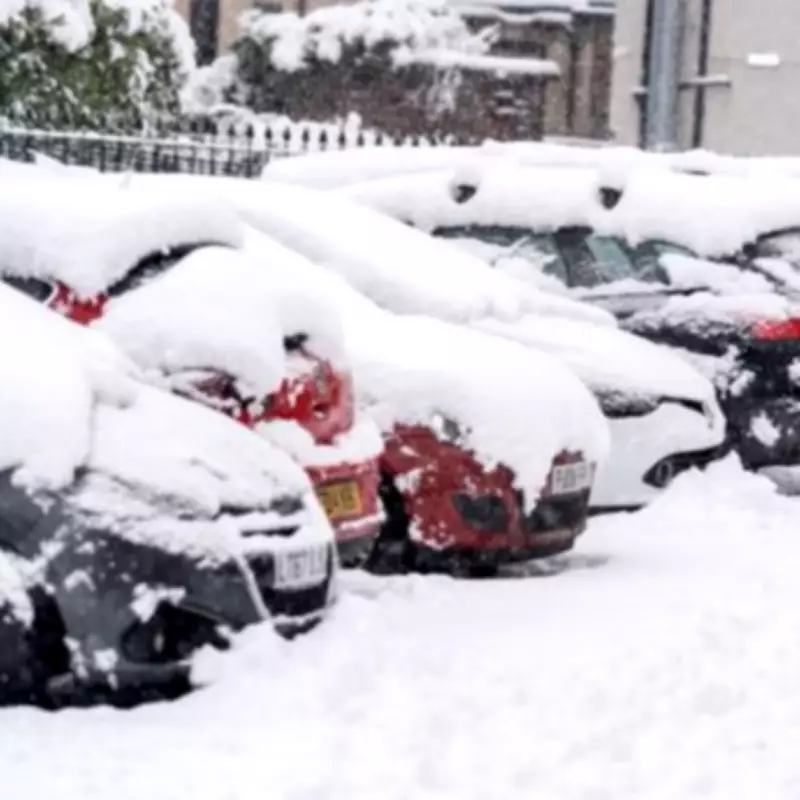
The Met Office has activated a significant yellow weather warning for snow, targeting multiple towns across the Midlands. The alert is set to commence at 6pm on Tuesday, February 3, and will remain in effect until 9am on Wednesday, February 4, covering a substantial 15-hour period of anticipated wintry precipitation.
Affected Counties and Towns
The warning specifically impacts two key Midlands counties: Derbyshire and Staffordshire. Residents in these areas are advised to prepare for potential travel disruptions and hazardous conditions.
Derbyshire Locations at Risk
The following towns in Derbyshire have been identified as being particularly vulnerable to the incoming snow:

- Chesterfield
- Buxton
- Bakewell
- Matlock
- Ashbourne
- Belper
- Glossop
- Swadlincote
- Wirksworth
- Bolsover
- Ilkeston
- Dronfield
- Castleton
- Cromford
- Melbourne
Staffordshire Locations at Risk
In Staffordshire, the Met Office has listed these towns as likely to experience significant snowfall:
- Stoke-on-Trent
- Stafford
- Burton upon Trent
- Newcastle-under-Lyme
- Tamworth
- Cannock
- Lichfield
- Leek
- Uttoxeter
- Rugeley
- Stone
- Biddulph
- Burntwood
- Kidgrove
- Cheadle
Travel Advice and Precautions
The Met Office has issued specific guidance for motorists who may need to travel during the warning period. Drivers are strongly recommended to carry essential supplies in their vehicles to prepare for potential delays or becoming stranded. This includes items such as warm clothing, blankets, food, water, and a fully charged mobile phone.
Broader Context on Weather Forecasting
This warning comes alongside recent discussions from the Met Office regarding the evolution of weather prediction methods. Met Office Science Fellow Ken Mylne has emphasised the increasing reliability of ensemble forecasting systems over traditional single-model runs.
Mylne explained, "Ensemble forecasts have often operated as a supplementary system for meteorologists, running alongside single deterministic model runs to provide a measure of uncertainty. However, studies over many years show how ensembles provide better predictive skill than single deterministic runs and could, with greater focus on ensembles, capture the range of uncertainty to provide the public with the information they need to make better decisions."
He further addressed public perception of probabilistic forecasts, stating, "Most previous discussions on expressing probabilities in forecasts started from an assumption that they can be hard for people to understand and that expressing uncertainty could undermine people's confidence in the forecast and therefore undermine their ability to make decisions. However, this research suggests that this assumption is wrong. People can understand probabilistic forecasts and could indeed find it more useful for informing weather-based decisions."
This yellow warning represents a practical application of these advanced forecasting techniques, providing residents across Derbyshire and Staffordshire with crucial advance notice to plan accordingly for the challenging weather conditions expected over the coming hours.