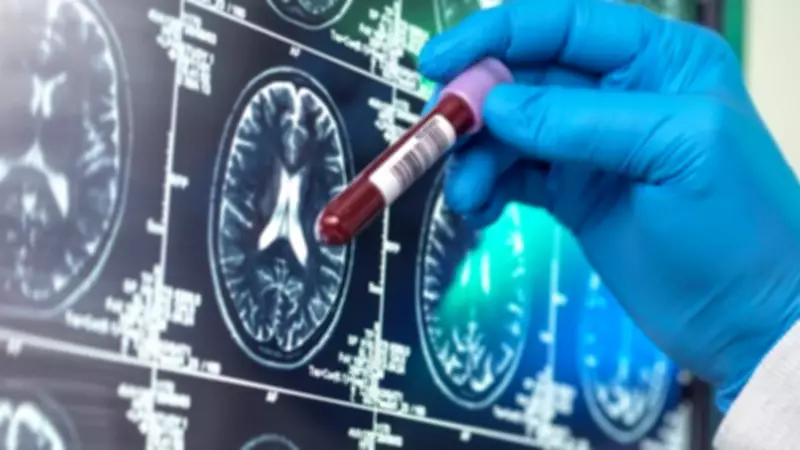
A straightforward blood test that identifies specific proteins could detect Alzheimer's disease decades before noticeable symptoms emerge, according to recent research. These findings indicate that the condition may quietly develop during middle age, already affecting cognitive abilities.
While further studies are necessary, health experts emphasize that using blood tests to identify early brain changes could be highly beneficial. Alzheimer's disease begins when amyloid and tau proteins accumulate abnormally in the brain. To investigate this process, scientists collected blood samples from 1,350 individuals without memory problems or dementia. They focused on three warning signs in the blood: two types of the protein amyloid and another protein called p-tau217, which serve as markers of Alzheimer's before full development.
Key Findings
Analysis revealed elevated levels of these biomarkers in 86 participants, linked to worse cognitive performance, faster decline in verbal memory, and slower processing speed. Samples were taken five years apart. The findings, published in The Lancet, expand on earlier studies by showing that evidence of Alzheimer's is present in midlife, though infrequent, and already associated with measurable cognitive differences. Identifying early Alzheimer's neuropathology through accessible blood tests could help target preventive strategies and clinical trials aimed at delaying or preventing dementia onset.
Advancements in Brain Imaging
Another study in The Lancet highlights a new brain-scanning method that maps tau protein tangles before symptoms appear. Tau proteins are essential for healthy neural networks, but in Alzheimer's, they become misshapen and sticky, forming tangled clumps that disrupt communication and lead to cell death. Researchers compared two scanning fluids in nearly 700 volunteers across the US and Canada. The newer fluid, MK6240, proved twice as effective as the older Flortaucipir at detecting the earliest stages of tau tangles.
Implications for Diagnosis
The Alzheimer's Society estimates that around one million people in the UK live with dementia, with projections rising to 1.4 million by 2040, primarily affecting those over 65. Dr. Jacqui Hanley of Alzheimer's Research UK commented: "These studies show progress in detecting biological changes linked to Alzheimer's much earlier, using blood tests and advanced brain imaging. Identifying these changes sooner could be incredibly valuable, opening opportunities for participation in new treatment studies and benefiting from disease-modifying treatments for early-stage disease."
She added: "In the UK, many people wait too long for a dementia diagnosis, missing these opportunities. Excitement surrounds blood tests and other assessments. The tau PET scan study suggests newer methods may detect Alzheimer's-related changes earlier, enabling earlier identification and precise selection of clinical trial participants. However, further research in larger, diverse groups is needed before routine use."
Work is underway to improve diagnostic tools. The Blood Biomarker Challenge, a multimillion-pound program, aims to make blood tests available on the NHS by 2029.