The family of the first patient in Yorkshire to successfully receive a groundbreaking miniature heart pump has expressed profound gratitude to the cardiology team at Sheffield Teaching Hospitals NHS Foundation Trust. This innovative device, funded by Sheffield Hospitals Charity, has provided a vital lifeline for the region's most critically ill heart patients.
A Life-Saving Intervention for John Barrass
John Barrass, a 78-year-old resident of Chesterfield, faced a dire medical situation following a cardiac arrest that severely impaired his heart function. He required an urgent operation to unblock his arteries, but extensive calcification and a critically weakened heart meant his chances of surviving a standard percutaneous coronary intervention (PCI) were less than fifty percent.
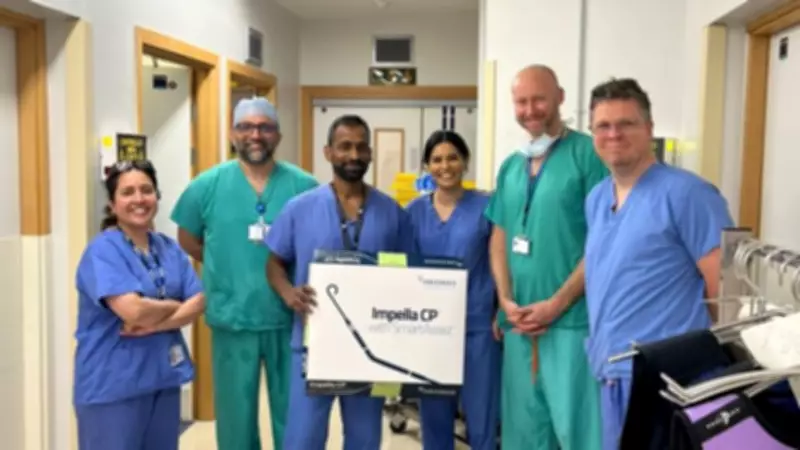
Thanks to the acquisition of fifteen new Impella heart pumps by Sheffield Hospitals Charity, a novel treatment pathway was established. This technology offered a crucial alternative for high-risk patients like John, who might otherwise have had limited options.
How the Impella Heart Pump Works
The Impella device is a miniature pump that is positioned inside the heart's left ventricle. Its primary function is to temporarily assume the heart's pumping role during complex surgical procedures. By providing robust blood pressure and ensuring adequate blood flow to the heart muscle and vital organs, it stabilises the patient while surgeons operate on the heart itself.
"We didn't know Dad was going to be the first to have one of the new pumps," explained Kirsty Lowden, John's 47-year-old daughter. "His arteries were like calcium, so all the doctors reviewing his case agreed that they would use the device should they need to."
The Critical Moment During Surgery
The decision proved to be life-saving. During the operation, John's blood pressure plummeted to dangerously low levels, bringing him minutes away from another cardiac arrest. "His heart blood pressure went and his heart stopped, and the device had to kick in for about five minutes. So, without that, he wouldn't be here now," Kirsty added, highlighting the pump's immediate impact.
Medical Team Hails "Excellent Result"
The procedure was led by Dr Aetesam Rahman, Consultant Cardiologist at Sheffield Teaching Hospitals, who is spearheading the Impella programme. He was supported by a team of experts including Professor Paul Morris, Dr Arvin Krishnamurthy, and Dr Jon Rosser.
Dr Rahman described the outcome as a "really excellent result." He detailed how "the pump was able to deliver an additional 3.5 litres of blood a minute – which was in addition to what John’s heart was already able to pump, bringing it to near-normal levels during the procedure. This enabled us to successfully perform the procedure safely and in a controlled manner."
John received four stents to widen his arteries and is now recovering well. Dr Rahman noted that while most heart procedure patients won't require such a device, "for patients like John undergoing high-risk procedures, research shows these pumps increase survival by more than 70% up to six months after surgery."
He extended significant thanks, stating, "We are enormously grateful to Sheffield Hospitals Charity for enabling us to deliver this life-saving programme to the immediate benefit of patients."
Family's Gratitude and Wider Impact
Reflecting on the harrowing experience, Kirsty shared her family's relief and humour. "We’ve been joking that he's a medical marvel now. Everyone at the Northern General Hospital was just amazing and explained everything to us. We’re really, really grateful: that device saved my dad’s life, no question."
The fifteen pumps donated by the charity are set to benefit approximately one patient per month. This includes individuals referred from hospitals in Chesterfield, Doncaster, and Barnsley who are experiencing conditions such as:
- Cardiogenic shock
- Acute cardiac distress while awaiting a heart transplant
- Multiple co-existing illnesses
- Those undergoing other high-risk cardiac procedures
Proven Benefits for Patient Recovery
Recent research underscores the significant role of the Impella cardiac support system. Evidence indicates it improves survival rates, enhances recovery, and boosts the quality of life for patients. An additional benefit is that it can shorten the length of time patients typically need to spend in cardiac intensive care units, easing pressure on critical care resources.
This case in Chesterfield, Derbyshire, marks a pivotal moment for cardiac care in Yorkshire, demonstrating how charitable funding and medical innovation can directly save lives and transform treatment outcomes for the most vulnerable patients.