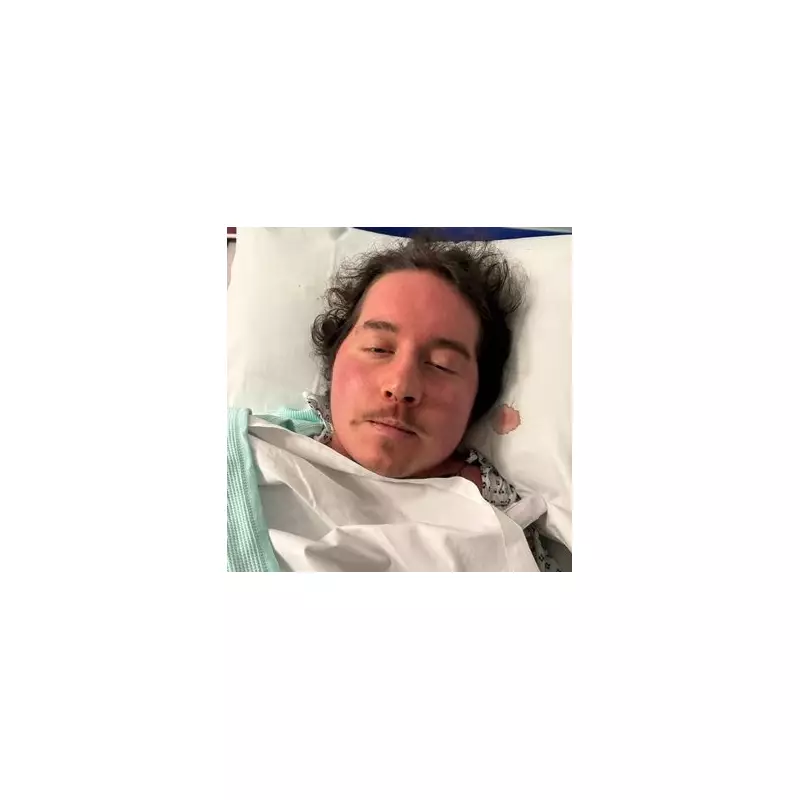
A 23-year-old law graduate who put his exhaustion and mental fog down to the pressures of university exams was later rushed to hospital after collapsing with an aneurysm, where he was diagnosed with a pituitary tumour.
From University Stress to a Shocking Diagnosis
Ollie Cook, from Sleaford in Lincolnshire, first began to experience troubling symptoms during his final year studying law at the University of Manchester. He suffered from persistent fatigue, crippling headaches, and a noticeable inability to concentrate. As a fit and active young man, he dismissed these issues, attributing them to the natural stress of his degree.
"I had a lot going on at university," Ollie explained. "I wasn't considering that my symptoms could be a result of something more sinister." His problems did not abate after graduation. Over the following twelve months, he noticed his body was in constant pain and he was failing to build muscle despite regular workouts.
A Journey for Answers and a Critical Collapse
After returning from a four-month solo trip across South East Asia in December 2023, Ollie visited his GP. However, his broad symptoms led to no specific diagnosis, and he was discharged with physiotherapy exercises. "My pride became self-destructive," Ollie admitted. "I convinced myself I was fine and just got on with life."
In February 2025, he travelled to Kenya for a three-month legal placement, but his health continued to decline. Upon returning to the UK in June 2025, the adrenaline of travel wore off, leaving him in a "bad place." Soon after, he suffered an aneurysm at his home and was rushed by emergency ambulance to Lincoln Hospital.
It was there that blood tests finally uncovered the root cause of his two-year ordeal: a pituitary tumour. This type of growth forms in the pituitary gland, located at the base of the brain. "I was somewhat relieved when they told me," Ollie said. "Finally we knew what was causing me pain for so long."
Life After Surgery and a Warning to Others
Ollie was transferred to Sheffield Hospital, where surgeons successfully performed an operation to remove the entire tumour and half of his pituitary gland. Doctors estimate the tumour had been growing for around eighteen months, correlating directly with the start of his symptoms.
He now requires no further treatment but must take medication, including hormone replacement therapy, and undergo an MRI scan every six months to monitor for any recurrence. Reflecting on his difficult journey to a diagnosis, Ollie highlighted the challenge of his vague symptoms. "I seemed to be a medical mystery," he said. "The frustration of not knowing why I was deteriorating meant I was hitting rock bottom."
Shannon Winslade, Head of Services at The Brain Tumour Charity, said: "We're really grateful to everyone who shares their - often heartbreaking - story to raise awareness. That's why The Brain Tumour Charity offers support to anyone who needs it." The charity's Support and Information Line is 0808 800 0004.