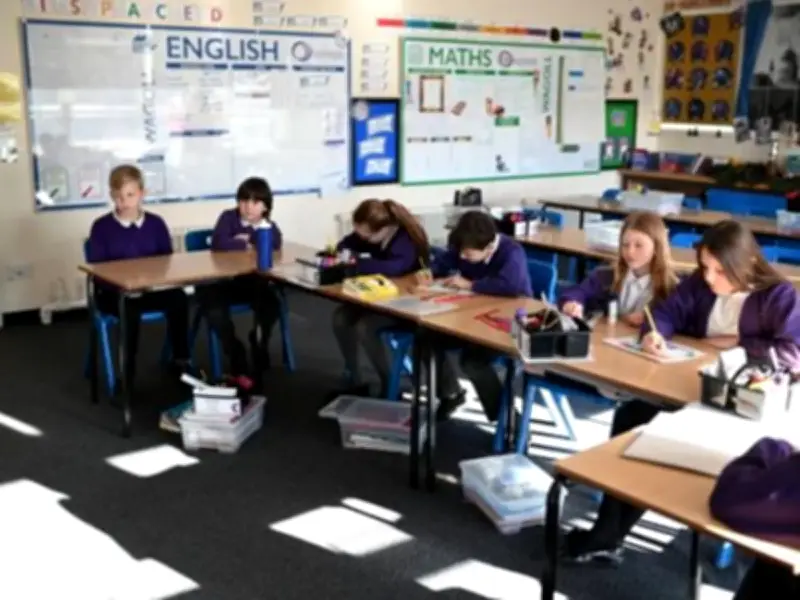
The Department for Education (DfE) has confirmed school absence rules for child medical appointments, effective from September. The Labour Party government's department has issued an 'attendance toolkit' to primary and secondary schools, outlining 'recommended actions' for parents who need to take children out of classes for medical appointments.
DfE recommends advance requests and after-school appointments
The DfE stated: 'Where a session is missed due to a medical appointment, around half of pupils also miss the other session that day (i.e. are likely to be absent for a full school day).' To address this, the toolkit advises schools to 'ensure clear and consistent messaging to parents/carers that leave of absence for medical appointments should be requested in advance.'
The guidance further urges schools to 'encourage appointments outside of school hours wherever possible. Where this is not feasible, set the expectation that pupils attend before/after appointments, where they are well enough and logistics allow.' This includes encouraging pupils to wear school uniform to reduce barriers to returning to class after the appointment.
Attendance ambassador highlights progress and persistent challenges
Jayne Lowe OBE, Attendance and Behaviour Ambassador, commented: 'Attendance remains one of the most pressing educational challenges of our time.' She added: 'Everything you do well in schools – your curriculum and enrichment offer, your approach to teaching and learning, and how you care for pupils and keep them safe – relies on your young people coming through the school gates every day. The good news is that we are starting to see progress.'
According to Lowe, the 2024/25 academic year saw pupils spend over 5 million more days in the classroom compared to the year before, with 140,000 fewer pupils persistently absent. Of those, 45,000 were young people from deprived backgrounds. She noted: 'These improvements reflect the tireless efforts of everyone working in education and your communities to improve attendance, particularly for the most disadvantaged. But the legacy of the pandemic is continuing to shape patterns of absence around the world.'
Two distinct challenges in attendance data
Lowe described the data in England as telling 'two stories. The first is one of scale and volume, with a large number of pupils missing occasional days of school. The second is one of severity and complexity, with a smaller, but growing, number of pupils missing more than 50% of school.'
The DfE responded: 'With these two distinct challenges in mind, we must go further. The positive impacts of attendance – on attainment, on safety and wellbeing, and on future earnings – are too important to ignore.' The toolkit is part of the government's broader effort to improve school attendance, building on the progress seen in the 2024/25 academic year.