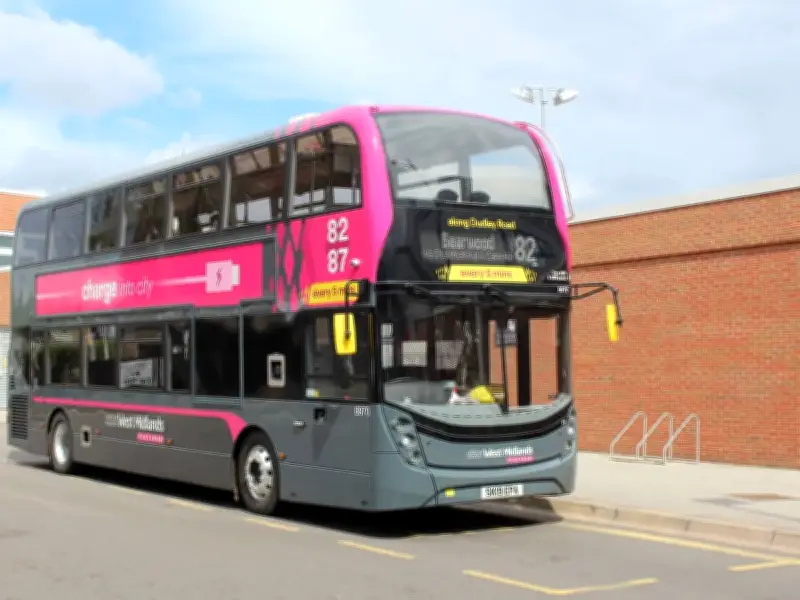
West Midlands Combined Authority (WMCA) will take over National Express West Midlands' bus operations, a move Mayor Richard Parker said was necessary to protect thousands of jobs and hundreds of services. However, Birmingham Local Conservatives have criticised the deal, arguing it leaves taxpayers with all the financial risks while the private operator can potentially return to bid for contracts under the new franchising model.
Conservatives slam buy-out as taxpayer burden
On Tuesday, August 18, Mayor Richard Parker announced the WMCA would acquire the company's operations in the region. According to the Local Democracy Reporting Service, the decision was made to prevent the withdrawal of hundreds of buses and the loss of thousands of jobs. But Birmingham Local Conservatives have condemned the move, saying the public takes on buses, staff, infrastructure, and liabilities of National Express, while the operator will be free to bid for contracts under the franchising model the network is moving to.
Councillor Robert Alden, Leader of Birmingham Local Conservatives, said: "Labour politicians are desperately trying to spin this bailout as some great victory for municipalisation. The reality is rather less glamorous: taxpayers are spending a huge amount of money taking on a business, its costs and its risks just before the existing operating model is dismantled anyway." Alden added: "I don't blame National Express for acting in the interests of its shareholders. It is a private company and that is precisely what people would expect it to do. The question is why Labour has engineered a situation which means handing so much of the risk to the taxpayer instead."
Franchising transition under scrutiny
When the deal was announced, Mobico Group, the parent company of National Express West Midlands, said it was "de-risking" the company from potential uncertainty as a result of the move to franchising. The Conservatives have called for the full financial case to be published, including liabilities assumed, and market safeguards for smaller operators competing against the likes of National Express.
Councillor Tim Huxtable, Birmingham Local Conservatives transport spokesman, said: "This isn't some great act of municipalisation. Labour isn't buying the buses so that the public sector can permanently operate them. It is buying an entire bus company as a bridge to a franchising system in which private companies will once again be paid to operate the routes. So taxpayers take the risk now and then taxpayers pay operators to run the services afterwards." Huxtable added: "Meanwhile National Express has been allowed to de-risk ahead of franchising and can potentially return to bid for routes without carrying many of the overheads and liabilities it previously faced. Smaller operators won't necessarily enter that competition from the same position. Labour needs to explain how this creates the competitive market that franchising was supposed to deliver rather than handing the incumbent a taxpayer-subsidised head start."
Mayor defends decision as 'catastrophic' warning
Mayor Richard Parker defended the buy-out, saying not taking action would have been "catastrophic" for the region. He said: "What we did, a big decision, was all about ensuring we protect bus services and jobs because there was a real risk hundreds of buses would have been withdrawn, thousands of jobs would have been put at risk and frankly the private operator wanted to withdraw from the market." Parker added: "We know how important bus services are to people in this region, whether they are getting to work, school or hospital appointments and they depend on the buses. National Express have got a near monopoly here and the impact for this region would have been profound, it could have been catastrophic. We had to make this intervention and, by doing so, it makes our transition to the next stage of franchising more straight forward and, having protected the market, it allows us to properly effectively plan for the future. We've got absolute confidence that is the right thing to do for this region and we're building on the success they've had in Manchester."