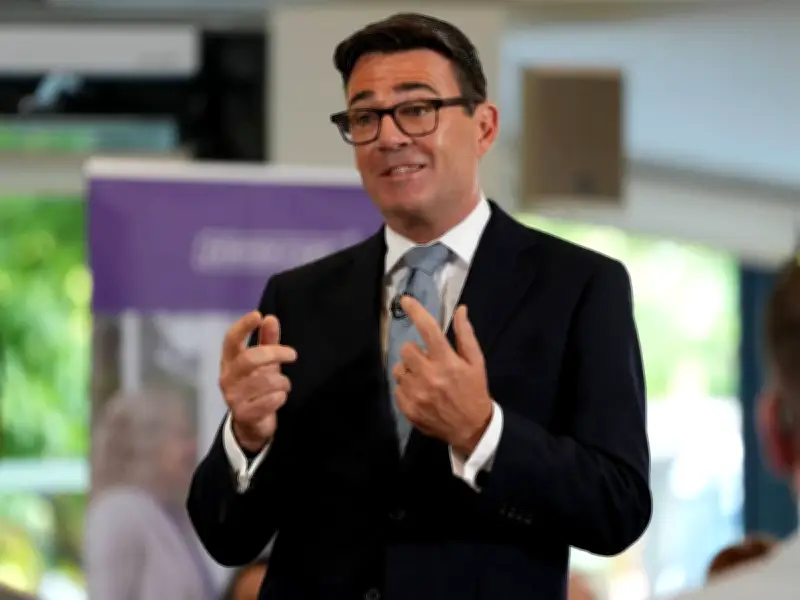
Labour's projected seat count in the West Midlands has doubled from seven to 13 in less than two weeks since Andy Burnham became party leader on July 20, according to new polling data. The surge, dubbed the 'Burnham Bounce', comes at the expense of Reform UK, which previously held more than double Labour's projected seats in the region.
Conservatives also lose ground
The Conservatives are also losing ground, with their projected seats dropping from five to three. Reform UK is now expected to gain Bromsgrove and Aldridge-Brownhills from the Tories, though both remain highly marginal. This shift reflects a broader realignment in the region's political landscape, with voters seemingly responding to Burnham's leadership style and policy direction.
Despite Labour's gains, Birmingham would still be 'a lot less red' with four seats projected to go to independent candidates. The 13 Labour seats would represent a significant drop from the 23 secured in 2024, indicating that while the party is recovering, it has not yet returned to its previous dominance in the region.
Key battlegrounds remain too close to call
Several constituencies remain too close to call, including Northfield where Labour and Reform are neck-and-neck, and Yardley where Labour and independents are within 1% of each other. These tight races underscore the volatility of the current political climate and the potential for further shifts as the next general election approaches.
Nationally, PollCheck projections show Labour as the largest party on 274 seats - 52 short of the 326 needed for a majority. This suggests that while Burnham's leadership has boosted Labour's fortunes, the party still faces an uphill battle to form a government outright.
Implications for the West Midlands
The polling data, compiled by PollCheck and reported by Reach PLC's Editor-in-Chief for the West Midlands, Graeme Brown, indicates a significant political realignment in the region. The 'Burnham Bounce' is not just a national phenomenon but is being felt acutely in the West Midlands, where Labour's resurgence is reshaping the electoral map.
However, the rise of independent candidates in Birmingham highlights a growing dissatisfaction with traditional party politics. With four seats projected to go to independents, the region could see a more fragmented political representation, which may complicate governance and policy implementation.
What this means for the parties
For Reform UK, the loss of projected seats in the West Midlands is a setback, but the party remains a significant force, particularly in areas like Bromsgrove and Aldridge-Brownhills where they are expected to gain from the Tories. The Conservatives, meanwhile, face continued erosion of their support, dropping to just three projected seats in the region.
Labour's challenge now is to consolidate these gains and convert them into actual seats at the next election. The party's ability to maintain momentum will depend on Burnham's leadership and the effectiveness of his policies in addressing the concerns of West Midlands voters.
Looking ahead
As the political landscape continues to evolve, the West Midlands remains a key battleground. The 'Burnham Bounce' has injected new energy into Labour's campaign, but the region's voters are clearly open to alternatives, as evidenced by the strong showing of independents and the resilience of Reform UK.
The next few months will be crucial in determining whether Labour can sustain its upward trajectory or whether the bounce will fade. For now, the polls suggest that Andy Burnham's leadership has given Labour a much-needed boost in the West Midlands, but the path to a majority remains uncertain.