Home secretary Shabana Mahmood has misled the public about her role in a 2005 election fraud trial in Birmingham, The Dispatch can reveal. Evidence from the court transcript shows that Mahmood’s postal ballot was mentioned in court and that she submitted evidence, contradicting her statements earlier this month that she had no involvement. The transcript suggests that her ballot documents were passed to the Crown Prosecution Service after doubts about the “unsustainable” discrepancy between two signatures on her voting forms, although no action was taken.
Judge Disputes Mahmood’s Account
In another major development, the judge in the case, Richard Mawrey KC, has told us he doesn’t recognise Mahmood's claim that allegations of elections fraud against the family were “dismissed”. When we showed Mawrey the explanation offered by Mahmood’s spokesperson, which was also given to the Daily Mail when they followed up the story on 4 May, the recently-retired deputy high court judge said that it “appears to bear no relation to reality as I recall it”.
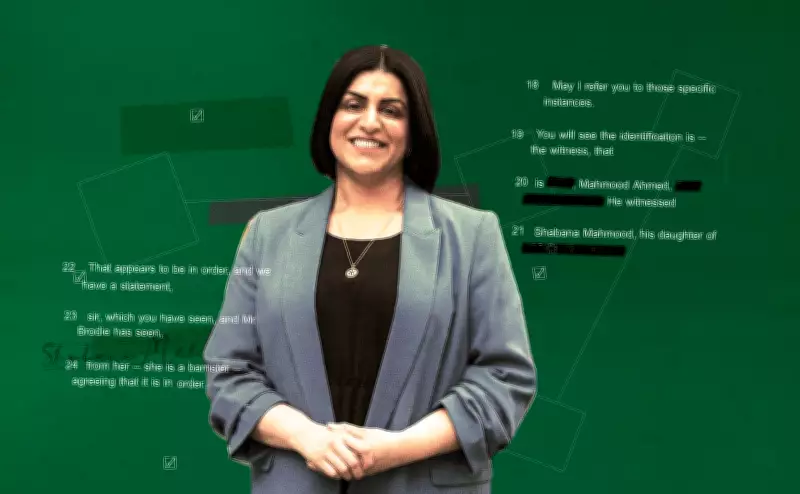
A highlighted passage from the court transcript. 'The director' refers to the Director of Public Prosecutions. In early 2005, a special election court was convened to examine widespread allegations of voting fraud, including ballot theft and forgery, during the 2004 local election. After a two-week trial, Mawrey found that “there were corrupt and illegal practices committed by the Labour Party Respondents and their agents”, saying the wrongdoing would “disgrace a banana republic”. Mawrey voided the elections of six Labour councillors, including three in Bordesley Green, where Mahmood’s father was the party’s election agent.
Spokesperson’s Explanation
Mahmood’s spokesperson says the misleading statements about her involvement in the case were an innocent mistake. “This will just be a case of misremembering one element of something that happened 20+ years ago,” they told The Dispatch. They say that prosecutors did not pursue action against her.
The home secretary is a key player in the ongoing Labour leadership intrigue, and is said to have put pressure on the prime minister Sir Keir Starmer to set out a timetable for his departure earlier this week. She is unlikely to run for the leadership, but “has nonetheless been seen as a future leader and a rising star representing the right of the Labour Party,” reported the Daily Telegraph on Wednesday.
Previous Evidence
Earlier this month, we published evidence that: Mahmood’s postal ballot application form and her ‘declaration of identity’ form bore signatures that appear strikingly different; The then 23-year-old barrister voted using her brother’s ballot — not the one assigned to her by the elections office; Her sister’s application to vote by post bore a signature that looks almost identical to the one on Shabana’s application.
‘No involvement’
On Friday May 1, the evening before we published our first story, Mahmood’s special advisor Joshua Williams sent a letter to The Dispatch that made a series of serious legal threats if we went ahead with our story about her involvement in the case. In that letter, the advisor wrote: “Shabana Mahmood had no involvement in the proceedings arising from the Birmingham election petitions whatsoever.” He added: “She did not give oral evidence, did not provide a witness statement, and was not called or asked to participate in any capacity.”
We have now obtained the transcript from the trial, which shows that — contrary to her advisor’s statement — Mahmood was named in court and submitted a witness statement. She was named by the barrister representing her father Mahmood Ahmed, who was accused of being “party to the forgery” because the declarations of identity used to certify the postal ballots of Shabana and various members of the family were alleged to be forged. Shabana Mahmood and her siblings told the court via written statements that the ballot declarations were genuine, but this created a further problem: that the signature provided by them on their declarations appeared very different from the ones written on their applications for postal ballots.
Addressing Ahmed’s lawyer in court, Mawrey clarified the argument the lawyer was making to prevent his client from being named in the judgement and therefore barred from voting and standing in elections for five years. “So if you are able to show that the signatures on the declarations of identity are genuine, and there is no evidence to show that your client participated in or knew of the false signatures on the applications to vote, because obviously they must be false if they are not the same as the ones which have been tested as genuine,” Mawrey said to the lawyer. “So in that circumstance you would argue that I could not be satisfied on the heightened civil standard of proof that Mr Mahmood Ahmed had been guilty of the corrupt or illegal practice.” “That is precisely Mr Ahmed's case,” the lawyer replied.
Graham Brodie, the barrister representing the petitioners in the case told the court that the family’s claim that they had signed the applications to vote was “unsustainable” and that the documents were being passed to prosecutors.
‘On the substantive merits’
In his letter, Mahmood’s advisor Williams told us on 1 May that allegations that the family’s postal ballot paperwork was forged “were dismissed on the substantive merits of the evidence” over 20 years ago by the judge overseeing the historic case. A similar statement was given to the Daily Mail. The Dispatch now has proof that this statement is untrue. At the close of the trial, Mawrey made a point of saying that people whom he had decided not to examine for possible “naming and shaming” – including Mahmood Ahmed, the home secretary’s father – should not claim to have been exonerated. “They may assert they have been cleared [but] in my view they have neither been cleared or condemned,” he said.
Mawrey maintains this position now. We went back to him several times via email, and he confirmed that Mahmood’s account of the claims against her family being “dismissed” is not accurate. At the time, he decided against singling out individuals such as Ahmed because the process would have been too cumbersome and time-consuming to justify the cost to taxpayers, an account that is confirmed by contemporary press reports. “I was aware that they would claim to be cleared and it appears they still do,” Mawrey told us last week. “In reality my judgment makes it clear that the frauds were orchestrated by the Birmingham Labour Party and were not just a local effort by the individual respondents,” he wrote, referring to the councillors he ultimately unseated. Mawrey added: “The reason why all the documents weren’t fully examined was purely time and expense.”
Because of Mahmood Ahmed’s prominent role in the Bordesley Green Labour election campaign, and because he had witnessed his family members signing their declarations, the judge considered naming and shaming him along with 18 other Labour activists. The 19 men had to submit arguments why they should not be named and were invited to appear in court. The test was limited to whether Ahmed could provide substantial evidence that the signatures on the declarations of identity he had witnessed were genuine. Shabana and her brother and sister provided witness statements saying they had signed their declarations. As a result, Mawrey said he was “minded not to name” Ahmed, which would have disqualified him from voting and running for office for five years. The possibility that forgery took place on the sisters’ applications to vote was never considered by the court, which means that the key allegation in our story was not “dismissed”.
Brodie, the barrister acting on behalf of the petitioners in the case, said: “Our position is that this man was the election agent for the Labour Party candidates and must have been aware of the corruption in support of their election.” He stressed that the petitioners were not disputing the declarations but the applications: “The signatures between the declarations of identity and the applications for a postal vote differ because he forged or was responsible for forging the applications for postal votes.” “They have all said that they themselves signed the applications for postal votes,” Brodie said of Mahmood and her siblings. “On the face of it that is unsustainable and these documents are to be passed to the Director.” He was referring to the Director of Public Prosecutions. A spokesperson for the CPS was not able to confirm what happened next, citing the gap of more than 20 years.
Mahmood’s spokesperson reiterated her stance when we got in touch last week, saying: “The false allegations within this reporting were tested and dismissed, with no adverse finding, over twenty years ago. Shabana Mahmood is a dedicated public servant, who serves Birmingham, this country, and has long championed our democracy.”