The Political Centre Ground is Lost, Voters Drawn to Disruptive Voices
There was a time when the political 'centre ground' held genuine significance. It represented balance, common sense, and the notion that politics was about steady governance rather than perpetual crisis. Today, however, that centre feels less like a meeting point and more like an empty space that few truly believe in anymore.
As the poet W. B. Yeats famously wrote, 'when things fall apart; the centre cannot hold.' Once a poetic line, it now feels uncomfortably close to reality. The middle ground is saturated with vacuous rhetoric and lacks the substance needed to inspire trust or engagement.
Personal Experience in Public Life
This observation comes not from a distant commentator but from years of work in arts, education, and public life. Speaking honestly about issues affecting ordinary people often leads to being labelled, sidelined, or pushed out of conversations. This happens not because of extremism, but due to deviation from approved scripts.
For instance, decades ago, a former employer described me as 'dangerous' simply for encouraging young people to question government, politics, and the narratives they are given. Critical thinking, it seems, is not always welcomed by those in power.
Recent Criticisms and Real-World Impacts
More recently, I have faced criticism for speaking out on topics like the Covid response, education policy direction, and failures in the asylum system. These are not abstract debates; they directly impact real communities, contributing to social tension, rising suspicion, and resource pressures. Most people can feel this strain without needing it explained.
Simultaneously, there is a widespread sense that control has drifted away. Politics feels distant, managed, and heavily influenced by global markets, institutions, and bureaucracy. The language of the centre, filled with careful phrases and jargon, resembles corporate management more than genuine conversation.
The Dominance of Economic Thinking
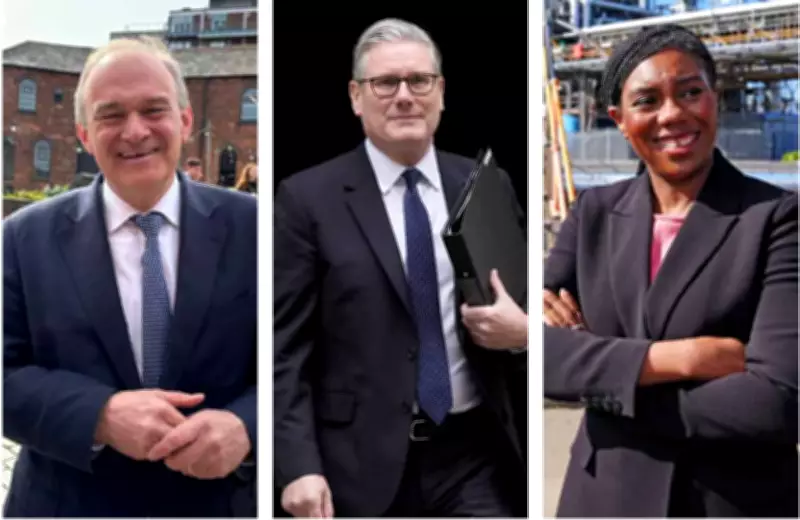
A significant issue is the overwhelming dominance of economics in political discourse. Whether Labour, Conservatives, or Liberal Democrats, arguments often revolve around growth, budgets, fiscal responsibility, and market confidence. While important, this narrow focus makes politics feel predetermined, with little room for alternative outcomes.
For many, differences between main parties now seem minimal. Politics has been reduced to symbolic colours—red, blue, yellow—with little genuine distinction underneath.
Voter Disengagement and the Rise of Disruptive Voices
Consequently, people are switching off, disengaging not just from politicians but from politics itself. Phrases like 'working people,' 'tough choices,' and 'long-term plan' no longer resonate; they sound rehearsed. When language loses authenticity, trust evaporates.
This disengagement explains why more voters are drawn to voices promising disruption. These figures, whether one agrees with them or not, often speak with conviction about identity, control, and belonging—topics that feel immediate and human. In contrast, the centre appears hesitant and out of touch.
Reflection on Upcoming Elections
With local elections approaching, it is worth asking: are any main parties truly speaking for you, or merely repeating slightly different versions of the same script? Voting should feel like a real choice, not an automatic action.
Moderation and compromise are not inherently bad; they have always mattered. However, in the current climate, they fail to inspire or connect. In a country where many feel unheard and hesitant to speak openly, the political centre no longer feels like a safe middle ground.
Instead, it feels like a place where ideas are watered down. Unless this changes, we risk witnessing the very scenario Yeats warned about—the moment 'when things fall apart; the centre cannot hold.'