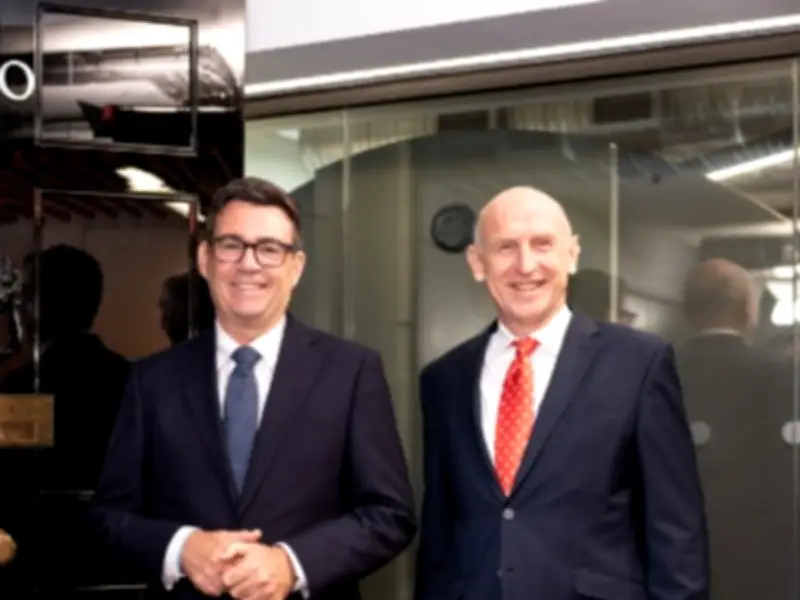
Prime Minister Andy Burnham and John Healey have confirmed that pensioners living solely off their State Pension will not face HMRC tax bills. The commitment is part of the new Labour government's approach to protecting older people on low incomes, following pressure from campaigners.
The announcement means that for this Parliament, anyone whose only income is the full new or basic State Pension — without any increments — will remain outside the income tax system. An HM Treasury spokesperson said: “Anyone whose only income is the full new or basic State Pension without any increments will not pay income tax and we are committed to that over this Parliament.” The spokesperson also highlighted the government’s retention of the Triple Lock, which will lift the incomes of 12 million pensioners by up to £470 this year.
Independent Age says exemption is welcome but questions remain
Morgan Vine, director of policy and influencing at Independent Age, described the recommitment as “a welcome signal” that the new Prime Minister is “listening to the concerns of older people on low incomes”. However, she immediately cautioned that “questions remain about how the policy will be implemented across a complex pensions system where one solution does not fit all.”
Vine pointed out that different versions of the State Pension exist, meaning that some older people who receive a lower State Pension plus a small private pension could still be “dragged into the tax system”. In contrast, those receiving only the State Pension would be exempt — even if the total amount they receive is “largely the same”.
She said: “Clearly, this is a situation that needs to be addressed so no older person on a low income loses out.” The charity hears from older people with chronic money worries every day, she added, with many forced to make difficult choices such as “rationing their energy and water use to skipping meals”.
Treasury defends commitment
The Treasury spokesperson countered that the policy is clear for those solely on the State Pension, while the Triple Lock remains in place. “By keeping the Triple Lock, 12 million pensioners will see their income rise by up to £470 this year, and they continue to benefit from the highest Personal Allowance in the G7,” the spokesperson said.
The statement did not, however, address the specific scenario raised by Independent Age involving pensioners with modest private pensions on top of a lower State Pension.
Call for clarity on how exemption will work
Independent Age is now asking the UK Government for detailed guidance on how the State Pension tax exemption will be implemented across different pension arrangements. Vine said the charity looks forward to receiving clarity on how the policy will protect all pensioners on low incomes.
The organisation argues that without that clarity, pensioners on similar overall incomes could be treated very differently. One person might escape tax entirely while another, with just a small additional pension, would face an HMRC bill. This cliff-edge, the charity says, is unfair and must be resolved.
What pensioners should know
For the majority who depend entirely on their State Pension, the immediate impact is positive. They will not need to file a tax return or worry about a tax bill. The Treasury’s commitment covers the whole of this Parliament.
For those with additional income from private pensions, savings or part-time work, the situation remains unchanged — they will continue to be taxed on income above their Personal Allowance. The government has not yet set out whether it will introduce a specific exemption for State Pension income or adjust the Personal Allowance to address the anomaly.
With millions of pensioners already struggling with the cost of living, charities are urging the government to act quickly. The Triple Lock increase of up to £470 will help many, but the new exemption only applies to a specific group. Independent Age’s warning suggests that without further refinements, some of the poorest pensioners could still miss out.
Burnham and Healey have yet to respond directly to the charity’s call for more detail. However, the Treasury’s commitment to protecting those on the State Pension alone appears firm. The next step will be to see how the policy is translated into practice across a pensions system that, as Vine noted, is far from uniform.