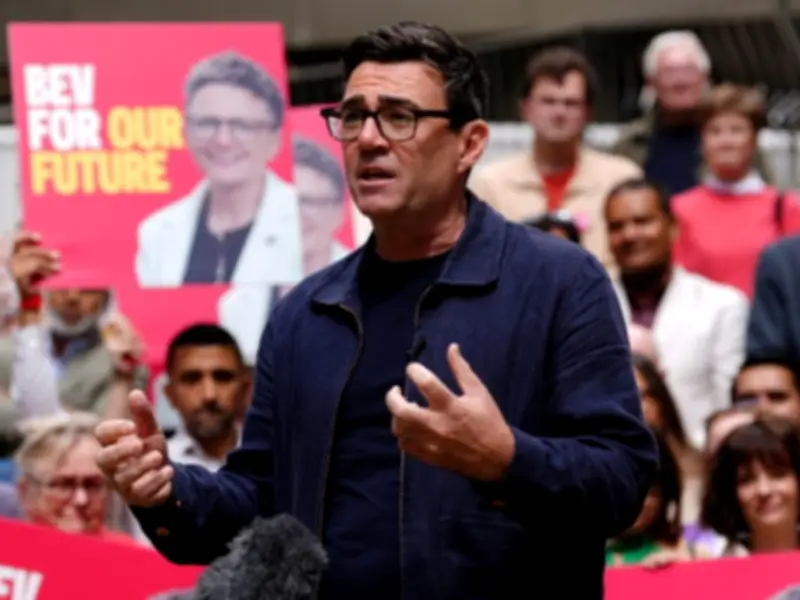
Prime Minister Andy Burnham has confirmed his government will keep the Triple Lock on state pensions, a decision that will leave pensioners aged over 73 receiving £59 less per week than those on the full new State Pension. The commitment, which Burnham reaffirmed during a Reddit AMA with voters, is set to widen the existing gap between the two state pension rates when the next annual uprating takes effect.
The Triple Lock, introduced in 2010 by the Conservative-Liberal Democrat coalition government, guarantees that the state pension increases each April by the highest of inflation, average earnings growth, or 2.5 per cent. Current forecasts put the next rise at 4.3 per cent, a figure that would have very different consequences for the two cohorts of pensioners.
How the £59 weekly gap emerges
Under a 4.3 per cent increase, those receiving the full new State Pension—typically people who retired after April 2016—would see their weekly payment rise to a forecast £251. Over the course of a year, that amounts to an extra £539. In contrast, pensioners on the older basic State Pension, many of whom are aged 73 and above, would receive only £192 per week, an annual uplift of £413.
The difference between the two rates stands at £59 a week, which accumulates to more than £3,000 over a full year. This disparity has long been criticised by campaigners, including the WASPI movement, which represents women born in the 1950s. WASPI has previously described the two-tier pension system as "unfair and slipped under the radar years ago". The latest confirmation of the Triple Lock will only exacerbate that inequality.
Fiscal watchdog warns of unsustainable costs
The Office for Budget Responsibility, the UK's official fiscal watchdog, has raised serious concerns about the longevity of the Triple Lock. According to the OBR, the policy could place the government's finances on an "unsustainable path" and cost up to £15 billion a year by the end of the decade. The watchdog's analysis underscores the mounting pressure on the public purse as the state pension bill continues to grow.
These concerns are shared by influential think tanks. The Resolution Foundation, which was once led by the current Pensions Minister Torsten Bell, has explicitly called for the Triple Lock to be scrapped. In its assessment, the foundation states: "As well as being unfair, it is also not fiscally sustainable for the state pension to rise forever by more than the earnings of a typical worker." The Tony Blair Institute, established by the former Labour prime minister, has gone further, branding the policy "unaffordable".
Burnham sticks to manifesto promises
Despite these warnings, Mr Burnham has shown no intention of abandoning the Triple Lock. In the Reddit AMA, the Prime Minister—who is also the MP for Makerfield—said he would keep the policy despite mounting pressure to axe it. He also reaffirmed his government's commitment to the 2024 Labour manifesto, which ruled out increases to the headline rates of income tax, VAT, and national insurance.
The decision places Burnham in a politically delicate position. On one hand, he is honouring a key manifesto pledge that appeals to older voters. On the other, economists and fiscal experts are warning that the policy is financially reckless. With the OBR's £15 billion estimate looming and the Resolution Foundation's call for abolition, pressure is expected to intensify on the government to reconsider its stance before the next budget.
Widening intergenerational divide
The persistence of the Triple Lock also highlights a growing generational imbalance. The Resolution Foundation's own criticism points to the unfairness of increasing state pensions faster than typical workers' earnings. Combined with the OBR's warning of an unsustainable fiscal path, the policy is expected to remain a contentious issue within cabinet.
For now, over-73s can expect a smaller relative increase than their younger counterparts, deepening the financial divide that WASPI and others have spent years campaigning against. As the April 2027 uprating approaches, the political and economic debate over the future of the Triple Lock is unlikely to subside.